Indigenising Knowledge for Current and Future Generations symposium proceedings
Year of publication
Publication type
Conference ProceedingsPublisher(s)
Ngā Pae o te Māramatanga Te Whare KuraPublication ISBN
978-0-9864622-3-8Jointly published by Ngā Pae o te Māramatanga and Te Whare Kura, these proceedings bring together the refereed contributions to the Indigenising Knowledge for Current and Future Generations symposium (23–24 March 2012) convened by the Te Whare Kura: Indigenous Knowledges, Peoples and Identities Thematic Research Initiative.
Contents
Implementing Te Ao Māori - Valmaine Toki
Mana, Rangatiratanga, Kaitiakitanga and Local Government - Lena Henry
Exploring the Nature of the Intergenerational Transfer of Inequalities. Experienced by Young Māori People in the Criminal Justice System - Tracey McIntosh and Leon Radojkovic
Alcohol and Tobacco Use in Niue - Vili Nosa, Seini Taufa, Teuila Percival, Malakai Ofanoa and Yvonne Underhill-Sem
Polynesian Tectonics - Jeremy Treadwell
Whare for Grabs - Ngarino Ellis, La‘a Tamarau and Chloe Weavers
War Memorial Wharenui and Wharekai - Bill McKay, Fiona Jack and Taarati Taiaroa
Kia Tangi Te Tītī: Permission to Speak
Year of publication
Publication type
BookPublisher(s)
NZCER PressPublication ISBN
978-1-877398-98-8Editor(s)
Paul WhitinuiWhat constitutes successful schooling for Māori students in the 21 st century? Editor Paul Whitinui has reached across the disciplines for research insights, different voices and new models to address this critical and complex educational question. The book brings together academic contributions from the fields of mātauranga (education), mātauranga hinengaro (psychology), whakaako hauora (health), akoranga takakauā-ora (sport and leisure) and others. It aims to provide a critical, reflective and forward-thinking view of how schooling for Māori students can be improved. The subject matter is diverse, exploring topics such as the importance of te reo, Māori pedagogies, culturally relevant assessment, teacher education and creating a culture of care. Underpinning it all is a powerful call for recognition of Māori as culturally connected learners. The book, which received support from Ngā Pae o te Māramatanga, is an important addition to scholarship on Māori education. It is for researchers, policy makers, school leaders, and Māori communities looking at positive, creative and dynamic ways of improving schooling for Māori students. To buy this book, click here
Ngā Mōteatea: An Introduction/He Kupu Arataki
Year of publication
Publication type
BookPublisher(s)
Auckland University PressPublication ISBN
9781869404901Author(s)
Jane McRae Hēni JacobThe songs of Māori tradition are a living art form and an abundant source of knowledge about tribal history and culture. From the 1920s, Sir Āpirana Ngata began collecting and annotating these songs – a massive undertaking that, with the help of translators Pei Te Hurinui Jones and later Hirini Moko Mead, became the treasured four-volume Ngā Mōteatea.
This new book, Ngā Mōteatea: An Introduction/He Kupu Arataki, is an introduction to Ngata’s classic collection. Its first essay outlines the origins and publication history of the Ngā Mōteatea volumes; the second celebrates the power and meaning of Māori song, discussing styles, roles, poetry, cultural content, tribal origins, composers and methods of composition. With dual text in English and Māori, illustrations, and 10 songs reproduced from the volumes, Ngā Mōteatea: An Introduction is a perfect entry point for students, teachers or singers interested in the rich and vibrant poetry of the traditional songs. Ngā Mōteatea: An Introduction/He Kupu Arataki is published by Auckland University Press in association with the Polynesian Society, with assistance from Ngā Pae o te Māramatanga and Creative New Zealand.
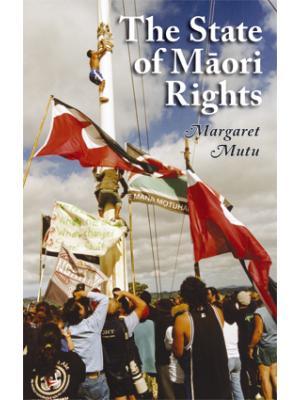
The State of Māori Rights
Year of publication
Publication type
BookPublisher(s)
Huia PublishersPublication ISBN
978-1-86969-437-1Editor(s)
Margaret MutuThis book brings together a set of annual reviews of Māori issues written between 1994 and 2009 for the University of Hawai‘i Contemporary Pacific journal. It places on record a Māori view of events and issues that took place over these years that had a direct impact on Māori; issues that have been more typically reported to the general public from a ‘mainstream’ media perspective. It documents the increasing determination of Māori to assert our rights as indigenous people of New Zealand over this 15-year period.
The reviews report the ongoing attempts to settle Māori grievances against the Crown for breaches of the Treaty of Waitangi. Māori protest against policies imposed by successive governments is recorded, in particular the 1995 protests against the fiscal envelope for settling Māori grievances, the 2004 protests against the legislation which confiscated the foreshore and seabed from Māori and the 2007 protests against the terror raids on Tūhoe.
Ongoing criticism and recommendations by the Waitangi Tribunal and the United Nations in respect of government treatment of Māori are documented. Media attacks on Māori MPs feature throughout the book. These are all contrasted with a number of positive highlights such as outstanding Māori achievements, and sporting and business successes.
The book includes 100 photographs of events that captured the nation’s and the world’s attention and of Māori leaders who fought over many decades for Māori rights. Ngā Pae o te Māramatanga’s contribution of a publishing grant and technical expertise in preparing the photographs for publication has ensured a handsome and well presented book. To buy this book, click here
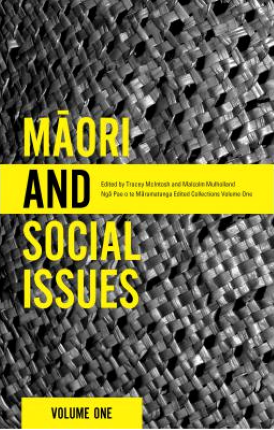
Māori and Social Issues
Year of publication
Publication type
BookPublisher(s)
Ngā Pae o te Māramatanga Huia PublishersPublication ISBN
9781775500025Editor(s)
Dr Tracey McIntosh Malcolm MulhollandPublished in collaboration with Huia Publishers at the end of 2011 is the first volume of the Ngā Pae o te Māramatanga Edited Collections Series, Māori and Social Issues co-edited by Dr Tracey McIntosh and Malcolm Mulholland. This book is the first in a series of edited collections that will look at Māori research in areas that are critical for Māori and for broader society.
Māori and Social Issues canvases a range of social issues that are significant for a better understanding of the experience and social environment of Māori, and important in that they highlight the need to ensure research-based solutions to these issues. The majority of the chapters deal with social problems. However, this book is not a call to a return of deficit research. Rather it is an opportunity to collectively provide power-centred, Māori-centred perspectives and solutions. The second volume in the series is expected later this year. To buy, click here
Table of contents
Preface - Te Ahukaramū Charles Royal
Introduction - Tracey McIntosh
Contemporary Issues in Māori Demography - Tahu Kukutai
Māori Education and Achievement - Elizabeth McKinley and Te Kawehau Hoskins
Māori Perspectives on Parenting in Aotearoa New Zealand - Averil M. L. Herbert
Māori Mental Health: Past, Present and Future - Te Kani R. Kingi
Obesity - Issac Warbrick
Māori Smoking: An Epic Saga of Love and Abuse - Marewa Glover
Poverty - Fiona Cram
Healing: Towards an Understanding of Māori Child Maltreatment - Erana Cooper and Julie Wharewera-Mika
Māori Women and Gambling: A Social Issue for Māori Communities and Whānau Ora - Laurie Morrison
Māori Gangs - Rawiri Taonui and Greg Newbold
Māori and Homelessness - Shiloh Groot, Darrin Hodgetts, Linda Waimarie Nikora and Mohi Rua
Incarceration - Robert Webb
Marginalisation: A Case Study: Confinement - Tracey McIntosh
Resilience as a Conceptual Framework for Understanding the Māori Experience: Positions, Challenges and Risks - Amohia Boulton and Heather Gifford
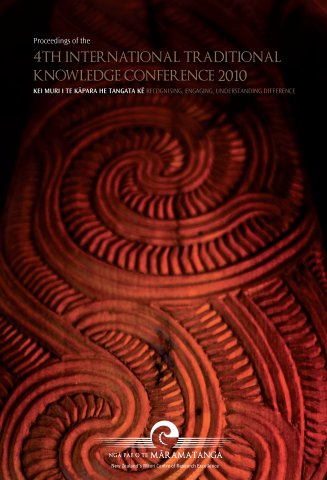
Proceedings of the 4th International Traditional Knowledge Conference 2010
Year of publication
Publication type
Conference ProceedingsPublisher(s)
Ngā Pae o te MāramatangaPublication ISBN
978-0-9864622-0-7Editor(s)
Dr J. S. Te Rito Dr S. M. HealyThis Proceedings contains 60 papers on the theme “Kei Muri i te Kāpara He Tangata Kē: Recognising, Engaging, Understanding Difference”. It is a unique collection of writing by indigenous researchers and those acutely interested in the knowledge and life worlds of indigenous peoples. The papers come from across all disciplines and move beyond identifying and understanding problems toward creative solutions that seek to meet the needs of present and future generations. These papers will be of interest to a wide audience because they demonstrate the opportunities that draw on diverse contexts that speak to the interface between indigenous and non-indigenous communities.
Available for free PDF download below. Print Copies: RRP $129. Discount price direct from Ngā Pae o te Māramatanga: $70 inc GST and NZ delivery. To order or for more information please email info@maramatanga.ac.nz
Te Ara Pūtaiao: Māori Insights in Science
Year of publication
Publication type
MonographPublisher(s)
Ngā Pae o te MāramatangaPublication ISBN
0-9582610-7-5Editor(s)
Dr J. S. Te Rito Dr S. M. HealyThis monograph is a compilation of four papers presented by Māori scientists at Turnbull House, Wellington, in November 2005. The papers were delivered as part of the Ngā Pae o Te Māramatanga Policy Seminar Series “Progressing Māori Development through Research”. Each of the scientists―namely James Ātaria, Elizabeth McKinley, Michael Walker and Shane Wright―has carried out pioneering work in her or his field and contributed to wider Māori enterprise and development. The papers give an overview of their research and address issues such as being a Māori scientist, doing scientific research, barriers to Māori in science and science education and the development of policy to overcome barriers and promote Māori involvement in science.
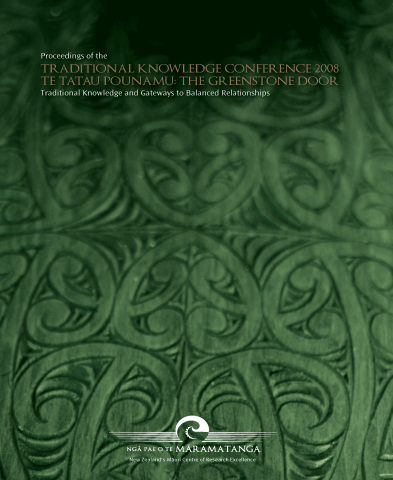
Te Tatau Pounamu: The Greenstone Door Traditional Knowledge and Gateways to Balanced Relationships
Year of publication
Publication type
Conference ProceedingsPublisher(s)
Ngā Pae o te MāramatangaPublication ISBN
0-9582610-8-3Editor(s)
Dr J. S. Te Rito Dr S. M. HealyThe Traditional Knowledge Conference 2008 focused on traditional knowledge and gateways to balanced relationships. The conference title, Te Tatau Pounamu: The Greenstone Door, referred in a figurative sense to how, in times of trouble, peace could be secured and warfare ended through a political marriage and the exchange of greenstone. The peace thus established was often likened to a greenstone door as both were seen as being durable, strong and highly valuable. In line with the title, the conference provided the occasion for discussion of indigenous strategies for sustaining relationships between collectives and over generations, for resolving conflict, for peacemaking, reconciliation and restorative justice.
While some speakers spoke directly on issues of peacemaking and restorative justice, the broader theme allowed for consideration of traditional indigenous concepts, values, ideals, models and strategies for sustaining balanced and healthy relationships within and across families, communities, nations, nation-states, local, regional and global borders, territories and environments. There was also the opportunity to share what had been learned from diverse contexts around the world about how indigenous models, values, concepts and processes have been incorporated into state or government initiatives and with what impact for indigenous peoples.
The papers in this Proceedings reflect the diversity of ways in which the theme was approached at the conference, because of the many academic disciplines represented and because community engagement and input was included. Videos of the presentations by the Invited Speakers can be viewed by going to Ngā Pae o te Māramatanga's website: www.maramatanga.co.nz.
The Proceedings are made up of two parts. Part A comprises presentations to the full conference by Invited Speakers. The Invited Speakers made oral presentations, which were videoed and later transcribed. Edited versions of these transcriptions appear here, apart from the presentation by Irene Watson who supplied a fully referenced version of her paper, "A Journey Away from Violence to a Place of Law-fullness". Part B of the Proceedings has the written papers submitted by those who gave talks in the parallel sessions.
Engaging with Māori Communities - An Exploration of Some Tensions in the Mediation of Social Sciences Research (2007) by J Kidman
Year of publication
Publication type
MonographPublisher(s)
Ngā Pae o te MāramatangaPublication ISBN
0-9582610-6-7Editor(s)
Dr Joanna Kidman Dr J. S. Te RitoThis monograph explores the ways in which collaborative research relationships with Māori communities can be developed effectively and appropriately. The focus is the institutional and epistemological environments that social researchers work within. While there is a growing body of international literature about the engagement of social sciences research with indigenous communities, there are relatively few researchers who actively theorise the institutional, political, and conceptual frameworks surrounding the research engagement process with indigenous communities.
The monograph is comprised of a series of papers that look into the epistemological and institutional tensions that emerge when academic researchers engage with Māori communities. The underlying theme is that academic disciplines and institutional frameworks are structured in ways that mediate the research relationship. Peter L. Berger’s theory of mediating structures is used as an organising principle for this analysis.
In a discussion of research engagement between Māori communities and universities, the author identifies how academic ways of thinking about community, and particularly the tendency to problematise the concept, can stand in the way of establishing effective mediating structures. The paper, entitled “Collaborative Research in the Post-9/11 Climate”, explores the effect of the current world political climate on the ability of academic researchers and indigenous peoples to construct responsive collaborative relationships. Another paper investigates how the structures of disciplinary knowledge can undermine research with Māori, while the final one looks at the work of university ethics committees in mediating the research relationship with Māori communities.
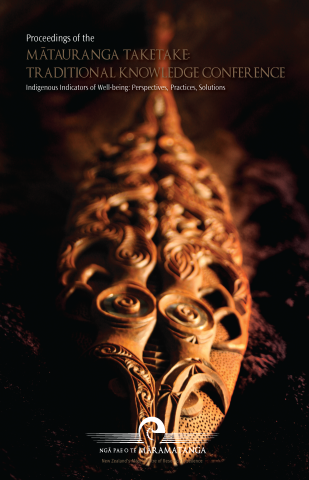
Proceedings of the Mātauranga Taketake - Traditional Knowledge Conference 2006 - Indigenous Indicators of Well-being: Perspectives, Practices,
Year of publication
Publication type
Conference ProceedingsPublisher(s)
Ngā Pae o te MāramatangaEditor(s)
Dr J. S. Te RitoThe Mātauranga Taketake: Traditional Knowledge Conference was convened in June 2006 to address issues, practices, models and perspectives for protecting, sustaining and nurturing traditional systems of knowledge. The Conference invited participants to consider the following questions:
How do we know that our knowledge, ways of knowing and associated practices are in a state of wellbeing?
What practices do we use to sustain and help the next generation look after our systems of knowledge?
How do we know that our relationships, languages, literatures, stories, environments,healing practices, spiritualities, genealogies, bodies, children, elders, women, men, and communities are flourishing?
What are the basic indicators that we use to give us confidence that all is well?
How do wemeasure our development and advancement?
Internationally generated indicators of well-being, like indicators of development, have a subtle but significant impact on Māori and other indigenous communities. An international conference with associated community workshops and satellite meetings enabled us to bring together in dialogue a wide range of participants, perspectives, voices, frameworks and models for developing indicators that best indicate well-being from indigenous points of view.