About this research
First a public servant in the Native Lands Purchase Department then later MP for Napier and Minister for Native Affairs, Sir Donald McLean (Makarini) was a major architect in the most formative period of our colonial history (c.1850–1880). His fluency in te reo Māori and his willingness to visit Māori in their own communities gained the respect of many rangatira of that time.
A great body of letters written to Makarini in te reo Māori rests in the Alexander Turnbull Library. Originally thought to number about 3000 but actually closer to 7000, these letters have been used only selectively by scholars. Because of difficulties with transcription and inability to read te reo Māori, only 200 or so letters had been translated, mainly in support of Waitangi Tribunal claims. Nonetheless, these alone indicated that, besides providing supporting evidence in various claims, they revealed what the rangatira thought and their responses to the events during this period of the colony. These letters gave new insights into the language; showing vocabulary, structure and idiom used at the time. Staff at the Turnbull Library digitised the letters and, with Ngā Pae o te Māramatanga funding, thought it most appropriate to transcribe and translate the full collection first. Later aspects of the project will include scoping and sorting the letters, a literature review of the period when Makarini was most influential to contextualise the correspondence, and analysis by subject matter, tone and relationships expressed between the writers and McLean.
Many rangatira saw Makarini as one of the few government officials who could mediate on their behalf with land-hungry settlers demanding freehold title to Māori land. They believed (or perhaps hoped) that he would convey their concerns to an otherwise distant and hostile settler government. Rangatira from some hapū were frequent correspondents, others less so, especially those who did not hold Makarini in high esteem throughout his public career. Therefore there are few letters in the archive from his detractors.
The majority of letters transcribed and translated to date relate directly to land issues and illustrate the diverse views that Māori had about sale or retention and ownership of their land; other issues included poverty, indebtedness, the inability of people to buy food or to clothe their families, or the desire to see their children educated without selling land to do so. Still others traverse mundane events in the writers’ lives, their hopes and dreams, the good and bad between Māori and government, Māori and Māori, and Māori and settlers. The letters also witness the many roles that Makarini played: mentor, friend and confessor, a hoped for source of many goods – of guns, medicines, implements, food, clothes or tobacco. The letters are full of interest linguistically. Many are plain and prosaic, while others are complex and poetic. They capture some of the traditional, oral features of the language, in the formalities of mihi to begin a letter or the quotation of whakatauakī or waiata. They are testimony to all that was new in the writers’ lives; including literature, transliterated and newly coined words, and references to the Bible and newspapers. But apart from the charm and poignancy and fascination of the letters, they are often a challenge to the translator.
The first of these relate to vocabulary. Many words, including transliterations and loan words from English, have passed out of common use as technology has changed; for example, words relating to sailing ships and navigation, horses and horse-driven transport, and warfare and weaponry. Some of these have been difficult to translate. Of course, 21st century Māori has a vastly enlarged vocabulary that reflects the social and technical realities of the time. It is hoped that the letters will generate a greater understanding of our common history.
Go to http://mp.natlib.govt.nz/?l=en to see the digitised, transcribed and translated letters uploaded to date.
Ētahi atu · Other projects
This study will explore how comparative views of “home” relate to concepts such as identity, whakapapa, and hauora and how these concepts thereby impact service utilisation and uptake in two areas (one rural and one urban). The research seeks to ask How do urban and rural Māori conceptualise “home” and do these ideas of home differ across generations? Do…
View projectPerceptions of Papakāinga: An examination of ‘home’ and how to cater services for Māori
Kairangahau · Researchers
-
 Dr Amohia Boulton
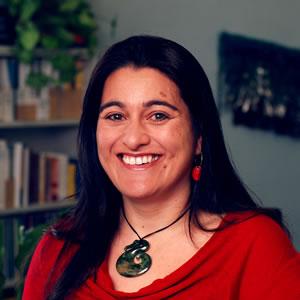
Dr Amohia Boulton
Dr Amohia Bolton is the Research Director at Whakaue Research for Māori Health & Development with a career that has spanned public policy and academia. She has previously worked as a data analyst (Ministry of Education) policy analyst, senior analyst (Te Puni Kōkiri) and Private Secretary (Māori Affairs) and was awarded an HRC Māori Health Training Fellowship to pursue doctoral study at Massey University in Palmerston North. Her post-doctoral research took her to the University of Northern British Columbia in Canada where she worked with the Lheidli T'enneh First Nations people. Her research…
The guiding research question for this project are: 1) How has Tuurangawaewae Marae fostered community mauri ora (wellbeing) within Waikato and in Te Ao Maaori more broadly? 2) What role has Tuurangawaewae Marae played as both a repository and a place of action for te Reo me ngaa Tikanga in Waikato and in Aotearoa-New Zealand? 3) What are the factors…
View projectTuurangawaewae Marae: A Place to Stand
Kairangahau · Researchers
-
 Dr Marama Muru-Lanning
Dr Marama Muru-Lanning
Marama holds a PhD in Anthropology from the University of Auckland. She is a Senior Research Fellow and Acting Director at the James Henare Māori Research Centre. Marama also advises on elderly health projects in the School of Population Health. Her research is primarily concerned with debates and critical challenges in social anthropology where she focuses on the cultural specificity of iwi-Māori and their unique sense of place and belonging in New Zealand. What distinguishes Marama nationally as a social scientist is her specialization in water, environment and indigenous rights. She… -
 Dr Dean Mahuta
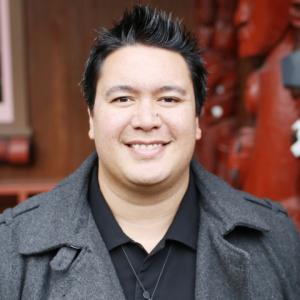
Dr Dean Mahuta
Dean conducts research into traditional Māori knowledge, revitalisation of te reo Māori (the Māori language), Māori history, the representation of Māori customs, language and lore in video games, Māori digital media and identities. He also supervises a number of Masters and PhD students at AUT. -
 Professor Tahu Kukutai FRSNZ
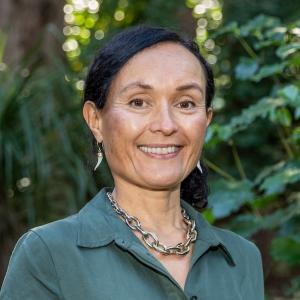
Professor Tahu Kukutai FRSNZ
Ngā Pae o te Māramatanga Co-Director Tahu Kukutai is Professor of Demography at Te Ngira: Institute for Population Research, The University of Waikato where she specialises in Māori and Indigenous demography and data sovereignty. Tahu is a founding member of the Māori Data Sovereignty Network Te Mana Raraunga and the Global Indigenous Data Alliance. She co-edited Indigenous data sovereignty: Toward an agenda (ANU Press, 2016), Indigenous data sovereignty and policy (Routledge, 2020) and The Oxford Handbook of Indigenous Sociology (Oxford) . Tahu has undertaken research with and for numerous…
We have identified a set of questions relating to Māori restorative justice in the Aotearoa Justice system and its effectiveness for Māori: What are the barriers Māori face when they participate in restorative justice as it stands? What can we learn from the traditional ways of resolving conflict that could minimise these barriers? The over-representation…
View projectWhat we were and what we could be: Restorative Justice and its impact on Māori
Kairangahau · Researchers
-
 Danny Poa

Danny Poa
Nō ngā iwi o Ngāi Tūhoe, Ngāti Kahungunu, Ngāti Porou me Ngāpuhi ia.Danny Poa has strong interests in the social issues that affect whānau including criminal justice, child welfare and whānau ora. Danny is draw to tautoko organisations that are of service to others and are connected to his values.Principal Advisor, Survivor Voice and Insights Crown Response Unit - Abuse in Care (2023 - Present)Senior Advisor, Te Tiriti Engagement Abuse in Care Royal Commission of Inquiry (2022 - 2023)Kaitiaki Kaupapa/Relationship and Engagement Manager Coastal Peoples Southern Skies National Centre of… -
 Dr Anne-Marie Jackson

Dr Anne-Marie Jackson
Anne-Marie Jackson is a lecturer in Māori physical education and health at the University of Otago, and joined the School of Physical Education as an academic staff member in 2011. After obtaining a Bachelor of Physical Education Honours degree majoring in Exercise Sport Science and a Master of Physical Education focusing on education policy at the School of Physical Education, she completed a doctorate in Māori studies and physical education examining rangatiratanga and Māori health and well-being within a customary fisheries context. Her research focuses on the examination of Māori…