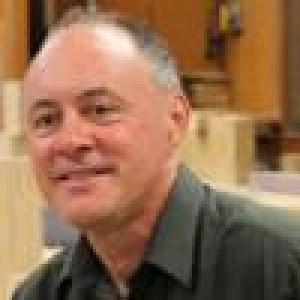
 Dr Kepa Morgan
" loading="lazy" decoding="async">
Dr Kepa Morgan
" loading="lazy" decoding="async">
General Manager
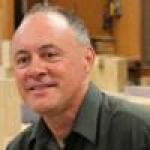
Dr Kepa Morgan's (BE, MBA, PhD, CPEng, FIPENZ ) bi-cultural background is rooted in his cultural identity as Ngāti Pikiao of Te Arawa. During his engineering career Kepa has strengthened his understanding of Pikiaoanga while also striving for excellence both professionally and academically. As an indirect result of this combination of identity, interests and expertise, Kepa has found himself at the juncture between Māori aspirations and the engineering profession on many occasions. At times these have been adversarial situations, and sometimes the results have been less than optimal, however in all cases he has benefited from the opportunities gaining an understanding decision making processes and frameworks.
Kepa's involvement with The University of Auckland allowed exploration of the interface between Māori and engineering, with research interests that can be understood broadly as Indigenous engineering and technologies. In his research, the focus is on the enhanced outcomes that are possible when the contributions of multiple knowledge systems produce designs and solutions that are unlikely to originate from any knowledge system on its own. Specifically, Kepa has developed alternative construction systems and materials (Uku fibre reinforced earth composite) and a decision framework known as the Mauri Model. He is Principal Investigator on the NPM project How do we return the mauri to its Pre-Rena state?
Rangahau · Related projects
How can New Zealand’s state legal system recalibrate to challenge the Crown’s assumption of sovereignty over lands and waters treasured by Māori? Drawing on the research findings of the other Te Tai Ao foundational projects, this project will lead to new laws, policies, plans and models for government and iwi/Māori communities, and will enable Māori to…
View projectNgā Ture o Te Tai Ao - New Laws for the Environment
Kairangahau · Researchers
-
 Professor Jacinta Ruru FRSNZ
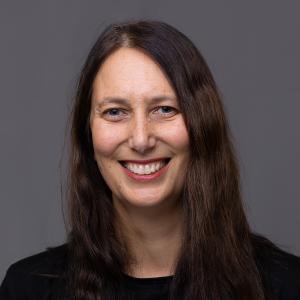
Professor Jacinta Ruru FRSNZ
Jacinta Ruru is a Professor of Law at the University of Otago. Her research has focused on exploring Indigenous peoples' legal rights to own, manage and govern land and water including national parks and minerals in Aotearoa New Zealand, Canada, United States, Australia and the Scandinavia countries. She has led, or co-led, several national and international research projects including on the Common Law Doctrine of Discovery, Indigenous peoples’ rights to freshwater and multidisciplinary understandings of landscapes and writes for several legal publishers including Adams’ Land Transfer and… -
 Dr Phil Lyver
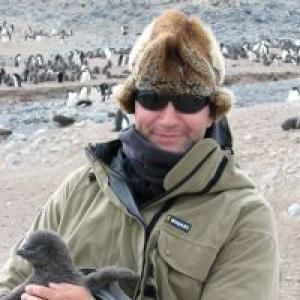
Dr Phil Lyver
Phil’s research has used ecological science and indigenous and local knowledge to interpret changes in demographic trends and abundance of wildlife populations (e.g. terrestrial and marine birds). The key focus of his research has been on climatic and anthropogenic (e.g. harvest) drivers of population change, and the development of models to forecast population trends. He has expertise in interpreting ecosystem structure and function within scientific and indigenous worldviews, in particular the ways that different cultures ‘sense’ the environment. Phil has experience interfacing both… -
 Dr Kepa Morgan
Dr Kepa Morgan
Dr Kepa Morgan's (BE, MBA, PhD, CPEng, FIPENZ ) bi-cultural background is rooted in his cultural identity as Ngāti Pikiao of Te Arawa. During his engineering career Kepa has strengthened his understanding of Pikiaoanga while also striving for excellence both professionally and academically. As an indirect result of this combination of identity, interests and expertise, Kepa has found himself at the juncture between Māori aspirations and the engineering profession on many occasions. At times these have been adversarial situations, and sometimes the results have been less than optimal, however…
The original research pilot for this project arose out of a desire to make the transition for many whānau relocating from their city/urban lives back home, as comfortable as possible. It was felt that this could be best achieved by facilitating access to innovative solutions for essential infrastructure technologies, which would enhance the quality of life…
View projectHybrid Construction Component Portable Infrastructure Solution Research
Kairangahau · Researchers
-
Dr Kepa Morgan
Dr Kepa Morgan
Dr Kepa Morgan's (BE, MBA, PhD, CPEng, FIPENZ ) bi-cultural background is rooted in his cultural identity as Ngāti Pikiao of Te Arawa. During his engineering career Kepa has strengthened his understanding of Pikiaoanga while also striving for excellence both professionally and academically. As an indirect result of this combination of identity, interests and expertise, Kepa has found himself at the juncture between Māori aspirations and the engineering profession on many occasions. At times these have been adversarial situations, and sometimes the results have been less than optimal, however…
