About this research
What are the implications of reclaiming and reviving the mātauranga associated with nga atua Māori and how does it contribute to reimagining the role of atua Māori in the modern world?
How and why are atua Māori, and associated mātauranga, being referenced in different fields today? For example: Sport, recreation, and nutrition; Health and environmental sciences.
What are recent examples of the application of mātauranga associated with atua Māori in teaching and research? For example: Te Panekiretanga o Te Reo; Dr Rangi Matamua's research in Māori Astronomy.
What are the gaps in our knowledge, particularly in the literature and archives, about atua, that is, which atua do we know the least about?
This project seeks to understand the place of ancient knowledge in modern times. It aims to understand atua Māori in a contemporary context, and is guided by the question, 'what are the implications of reclaiming and reviving mātauranga associated with atua Māori, and how does it contribute to reimagining the role of atua Māori in the modern world?' As this is a seeding project, it will rely heavily on archival research to build its foundations, with particular effort in returning to original Māori language manuscripts.
This will be supported through interviewing key experts, repositories of mātauranga Māori, and practitioners who reference atua Māori in their work. The goal for this method of research is to determine, what are the gaps in our knowledge about atua, that is, which atua do we know the least about? Furthermore, how and why are atua Māori, and associated mātauranga, being referenced or used in different fields today (for example, sport and nutrition, and the health and environmental sciences)? Finally, what are recent examples of the application of mātauranga associated with atua Māori in teaching and research?
Kairangahau · Researchers
 Dr Dean Mahuta
Ngāti Mahuta, Waikato
Auckland University of Technology (AUT)
Dean conducts research into traditional Māori knowledge, revitalisation of te reo Māori (the Māori language), Māori…
Dr Dean Mahuta
Ngāti Mahuta, Waikato
Auckland University of Technology (AUT)
Dean conducts research into traditional Māori knowledge, revitalisation of te reo Māori (the Māori language), Māori…
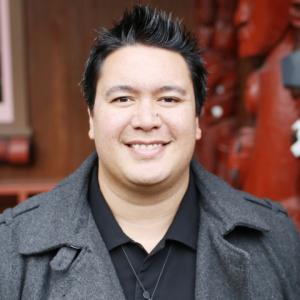
Dr Dean Mahuta
Ētahi atu · Other projects
The guiding research question for this project are: 1) How has Tuurangawaewae Marae fostered community mauri ora (wellbeing) within Waikato and in Te Ao Maaori more broadly? 2) What role has Tuurangawaewae Marae played as both a repository and a place of action for te Reo me ngaa Tikanga in Waikato and in Aotearoa-New Zealand? 3) What are the factors…
View projectTuurangawaewae Marae: A Place to Stand
Kairangahau · Researchers
-
 Dr Marama Muru-Lanning
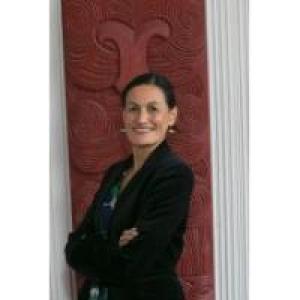
Dr Marama Muru-Lanning
Marama holds a PhD in Anthropology from the University of Auckland. She is a Senior Research Fellow and Acting Director at the James Henare Māori Research Centre. Marama also advises on elderly health projects in the School of Population Health. Her research is primarily concerned with debates and critical challenges in social anthropology where she focuses on the cultural specificity of iwi-Māori and their unique sense of place and belonging in New Zealand. What distinguishes Marama nationally as a social scientist is her specialization in water, environment and indigenous rights. She… -
Dr Dean Mahuta
Dr Dean Mahuta
Dean conducts research into traditional Māori knowledge, revitalisation of te reo Māori (the Māori language), Māori history, the representation of Māori customs, language and lore in video games, Māori digital media and identities. He also supervises a number of Masters and PhD students at AUT. -
 Professor Tahu Kukutai FRSNZ
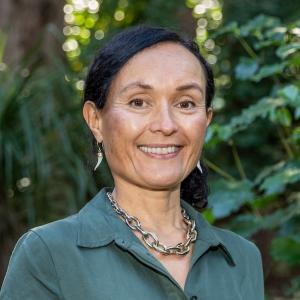
Professor Tahu Kukutai FRSNZ
Ngā Pae o te Māramatanga Co-Director Tahu Kukutai is Professor of Demography at Te Ngira: Institute for Population Research, The University of Waikato where she specialises in Māori and Indigenous demography and data sovereignty. Tahu is a founding member of the Māori Data Sovereignty Network Te Mana Raraunga and the Global Indigenous Data Alliance. She co-edited Indigenous data sovereignty: Toward an agenda (ANU Press, 2016), Indigenous data sovereignty and policy (Routledge, 2020) and The Oxford Handbook of Indigenous Sociology (Oxford) . Tahu has undertaken research with and for numerous…
This summer internship project is in support of one of Ngā Pae o te Māramatanga's large te reo research projects, led through Te Ipukarea. Te Reo o te Pā Harakeke seeks to understand the factors that contribute to successful intergenerational transmission of the Māori language in the home. The interns join the research team and support the research in a…
View projectTe Reo o te Pā Harakeke
Kairangahau · Researchers
-
Dr Dean Mahuta
Dr Dean Mahuta
Dean conducts research into traditional Māori knowledge, revitalisation of te reo Māori (the Māori language), Māori history, the representation of Māori customs, language and lore in video games, Māori digital media and identities. He also supervises a number of Masters and PhD students at AUT.
How can a mātauranga Māori based Heke Ngaru contribute to flourishing whānau? Māori continue to experience health inequalities in terms of the social determinants of health. Indeed, rangatahi Māori are a demographic who face significant challenges in life compared to non-Māori. However, the evidence suggests that a strong Māori cultural sense of…
View projectWai-Tai, Wai-Rua: A mātauranga Māori approach to Heke Ngaru
Kairangahau · Researchers
-
 Dr Jordan Waiti
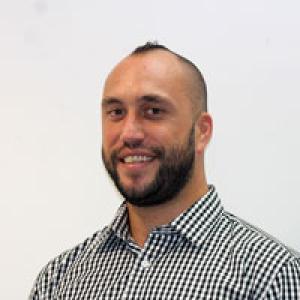
Dr Jordan Waiti
Jordan started as a lecturer within Te Hautaki Waiora Faculty of Health, Sport and Human Performance at the University of Waikato in early 2018. Previously, he was a Māori Health Consultant based out of Whaingaroa/Raglan. He completed his PhD at Massey University, which focussed on Māori notions of ‘Resilience’ and how they are utilised by whānau who had experienced adversity. He has Honours and Masters degrees from Otago University, with research expertise that is broadly based in the area of Māori Health. He has also been a volunteer facilitator for the Te Taitimu Youth Trust in Hawkes Bay.