About this research
This project asks whether there are lessons to be had found in both the Māori Covid-19 response to date and the growing body of evidence that papakāinga living has benefits beyond the physical home that could inform a wider response to prepare whānau for current and future infectious disease threats and ultimately support ongoing socio-cultural connection and thus everyday good mental health?
Sustaining physical and mental health will become all the more important given the ongoing concern around the longer term impact of the inevitable recession and the disproportionate affect this will have on Māori (Kukutai, Moewaka Barnes, McCreanor and Mcintosh, 2020).
The project explores and illuminates the ‘tikanga’ practices in and around the Covid lockdown as background to understanding how and if an app might support ongoing connection for Māori whānau. Key questions include:
- Whatchanged, what worked, what didn’t?
- How did ‘online rituals’ work as identity markers for whānau & marae? For example ‘this is the way we do zoom’.
- Did a shift to virtualtools shift power from the old to the young?
- How quick were pakeke/kaumatua/whānau able to transition?
These findings will feed into a second part of the project that focuses on the development of a virtual papakāinga on the presumption that there are benefits to doing so. We hypothesise that a virtual papakāinga app, if done appropriately would allow the scaling-up of the benefits inherent in physical papakāinga for tamariki, rangatahi and young Māori whānau in particular, irrespective of their geographical location or living situation. The focus on younger Māori and whānau responds to the large proportion of the population (76% in 2013; Ministry of Health, n.d.) aged under the age of 45.
Current Covid-19 response is rightly, for the most part, focused on the health and wellbeing of kaumātua; however, this project seeks to fill the gap in provision by focusing on younger whānau who are building communities for tomorrow.
Ultimately, our aim is to reduce inequities for Māori not living in traditional Māori settings such as papakāinga by emulating, where possible, virtual opportunities to create similar outcomes. We ground this work in connecting whānau in a way that is based on tikanga
Kairangahau · Researchers
 Dr Mike Ross
Ngāti Hauā
Te Herenga Waka Victoria University of Wellington
Mike is a lecturer at Te Kawa a Māui, where he teaches courses on Māori language and customs.
Dr Mike Ross
Ngāti Hauā
Te Herenga Waka Victoria University of Wellington
Mike is a lecturer at Te Kawa a Māui, where he teaches courses on Māori language and customs.
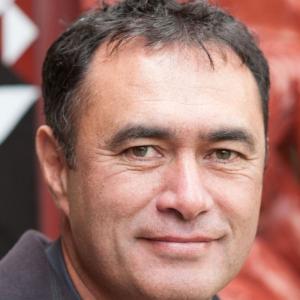
Dr Mike Ross
 Rebecca Kiddle
 began her career working for the New Zealand government. Following the completion of undergraduate…
Rebecca Kiddle
Rebecca Kiddle began her career working for the New Zealand government. Following the completion of undergraduate…
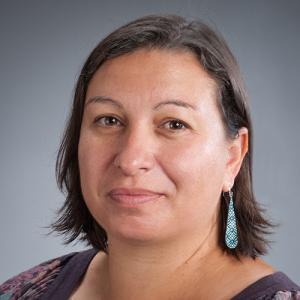
Rebecca Kiddle
 David Hakaraia
Te Herenga Waka Victoria University of Wellington
David Hakaraia is the Programme Cluster Leader for the Communication Design, Design for Social Innovation, and Fashion…
David Hakaraia
Te Herenga Waka Victoria University of Wellington
David Hakaraia is the Programme Cluster Leader for the Communication Design, Design for Social Innovation, and Fashion…

David Hakaraia
Ētahi atu · Other projects
Tangi is the ultimate form of Māori cultural and community expression. Addressing the dearth of scholarly information, this study considers tangi practice, whakapapa, changing environments, community values, sharing knowledge, ritual and what it means to be Māori. The research team has been examining the life-values, beliefs and practices related to…
View projectAituā: Death in a changing Māori World
Kairangahau · Researchers
-
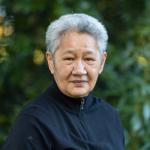 Professor Linda Waimarie Nikora FRSNZ, HFNZPS
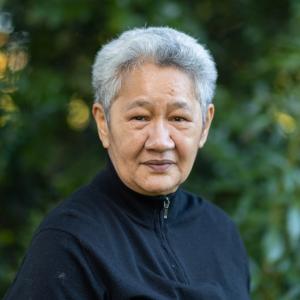
Professor Linda Waimarie Nikora FRSNZ, HFNZPS
Linda Waimarie Nikora is co-director of Ngā Pae o te Māramatanga and a Professor of Indigenous Studies at Te Wānanga o Waipapa, the University of Auckland. She was previously Professor of Psychology and Director of the Maori & Psychology Research Unit at the University of Waikato. Her specialities are in in community psychology, applied social psychology, ethnopsychology and Maori development. Professor Nikora has a celebrated research and academic career, working in community, social and indigenous psychologies, with a specific focus on Māori wellbeing and self-determination. Her research in…
A new report from Ngā Pae o te Māramatanga (NPM) and Manaaki Whenua Landcare Research provides guidance for Te Ao Māori on climate change adaptation and mitigation. He huringa āhuarangi, he huringa ao: a changing climate, a changing world was produced by a multidisciplinary Māori research team working across many research institutions. Using a novel kaupapa…
View projectHe huringa āhuarangi, he huringa ao: a changing climate, a changing world
Often Kaumātua and elders generally, are seen as vulnerable and passive recipients of services throughout the ongoing Covid 19 pandemic. However, in the village of Ohinemutu and as citizens of their iwi Ngāti Whakaue, Kaumātua have been active leaders in the response of the village, initially during the first four-week lockdown in 2020. However, that…
View project