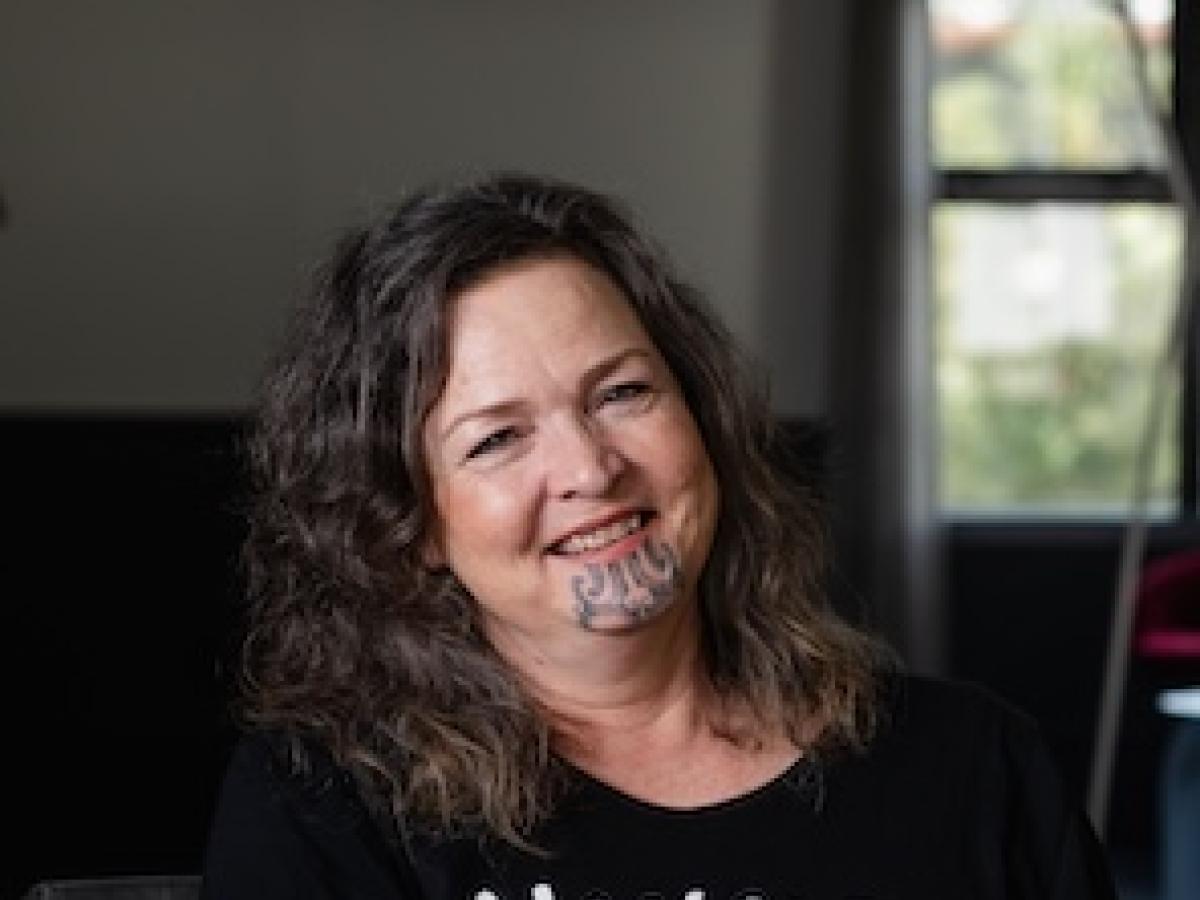
As reliable as a Waikato mist on a winter’s morning, you can always count on Dr Atakohu Middleton (Waikato, Pākehā) to unearth new stories for her readers. With a journalism career spanning three decades, Atakohu’s byline is well known to many.
She is also a MAI Te Kupenga alumni and an NPM researcher working on the NPM Te Tahatū-o-te-rangi research project. This month, however, the award-winning journalist is stepping into new territory - launching a book of fiction, written especially for speakers of te reo, from intermediate level to fluent.
Her book, Waka Aroha: He kohinga pakipoto, is a collection of 15 short stories written entirely in te reo and aimed squarely at adults who have been yearning for fiction of their own. “As I travelled further along my own reo journey, I realised there was nothing out there for people like me. We were hiakai ki te reo rangatira, but there was simply no adult fiction for us to read.”
She believes that translated stories often create obstacles for te reo learners. While there is plenty of children’s fiction in te reo, Atakohu says “there comes a time when you want to read about the adult world.” So, she started writing fiction.
While fluent te reo speakers will enjoy the book, she wants those who are still developing their skills to relish the stories also. “The language in Waka Aroha has been kept simple to reduce the cognitive load, leaving people to soak up the stories while immersing themselves in te reo. The idea was to produce stories that they would enjoy, but that they wouldn’t have to stop too often to look up the meaning of words, so they could build their confidence and consolidate their knowledge,” she says.
Since she was a child, reading and writing has always been natural for Atakohu, “it’s just my wāhi taurikura, my happy place,” she says. Learning te reo as an adult, however, has been a totally different story, and she has plenty of sympathy for those who struggle.
“I wrote the book for people like me. I’m not a quick learner, and I need to repeat the patterns endlessly to get them to stick. I want people to read the stories and go ‘oh my God, I got that! I can do this’. For so many of us, learning te reo as an adult is weighted with so much frustration and angst and this book is to help people on their journey.”
Atakohu has crafted her stories in Waka Aroha to connect with a wide range of readers, and the stories span different genres, time periods and themes so there’s something for everyone. She is continuing the path into fiction and is already deep into her next creative chapter - 20,000 words into a crime novel featuring a female detective, Raukura, as the central character.
Atakohu is grateful that Waka Aroha attracted support from both Toi Aotearoa (Creative New Zealand) and reo revitalisation agency Te Mātāwai so she was able to cut back her paid work to focus on the book and also pay for the services of her reo and fiction mentor, Dr Darryn Joseph. She has a small amount of development funding for Raukura, which pays for Darryn’s services, and is seeking funding so she can once again cut back contract work to focus on the novel. In the meantime, she keeps working on it when she can. “It’s hard to work on a novel amidst the everyday grind of full-time work. You are just too knackered,” she says.
Like the Waikato mists, Atakohu’s story telling will endure. “Stories are important. It’s the way humans have made sense of their lives for thousands and thousands of years. We tell stories to remember, to teach, to store knowledge about the world. Story telling is what makes us human. All cultures do it, all languages do it.”
NPM is proud to co-host this month’s launch of Waka Aroha: He kohinga pakipoto alongside Auckland University Press.
https://aucklanduniversitypress.co.nz/waka-aroha/
RANGAHAU | RESEARCH
Hapū-based Research Has An Enduring Legacy
As reliable as a Waikato mist on a winter’s morning, you can always count on Dr Atakohu Middleton (Waikato, Pākehā) to unearth new stories for her readers. With a journalism career spanning three decades, Atakohu’s byline is well known to many.
She is also a MAI Te Kupenga alumni and an NPM researcher working on the NPM Te Tahatū-o-te-rangi research project. This month, however, the award-winning journalist is stepping into new territory - launching a book of fiction, written especially for speakers of te reo, from intermediate level to fluent.
Her book, Waka Aroha: He kohinga pakipoto, is a collection of 15 short stories written entirely in te reo and aimed squarely at adults who have been yearning for fiction of their own. “As I travelled further along my own reo journey, I realised there was nothing out there for people like me. We were hiakai ki te reo rangatira, but there was simply no adult fiction for us to read.”
She believes that translated stories often create obstacles for te reo learners. While there is plenty of children’s fiction in te reo, Atakohu says “there comes a time when you want to read about the adult world.” So, she started writing fiction.
While fluent te reo speakers will enjoy the book, she wants those who are still developing their skills to relish the stories also. “The language in Waka Aroha has been kept simple to reduce the cognitive load, leaving people to soak up the stories while immersing themselves in te reo. The idea was to produce stories that they would enjoy, but that they wouldn’t have to stop too often to look up the meaning of words, so they could build their confidence and consolidate their knowledge,” she says.
Since she was a child, reading and writing has always been natural for Atakohu, “it’s just my wāhi taurikura, my happy place,” she says. Learning te reo as an adult, however, has been a totally different story, and she has plenty of sympathy for those who struggle.
“I wrote the book for people like me. I’m not a quick learner, and I need to repeat the patterns endlessly to get them to stick. I want people to read the stories and go ‘oh my God, I got that! I can do this’. For so many of us, learning te reo as an adult is weighted with so much frustration and angst and this book is to help people on their journey.”
Atakohu has crafted her stories in Waka Aroha to connect with a wide range of readers, and the stories span different genres, time periods and themes so there’s something for everyone. She is continuing the path into fiction and is already deep into her next creative chapter - 20,000 words into a crime novel featuring a female detective, Raukura, as the central character.
Atakohu is grateful that Waka Aroha attracted support from both Toi Aotearoa (Creative New Zealand) and reo revitalisation agency Te Mātāwai so she was able to cut back her paid work to focus on the book and also pay for the services of her reo and fiction mentor, Dr Darryn Joseph. She has a small amount of development funding for Raukura, which pays for Darryn’s services, and is seeking funding so she can once again cut back contract work to focus on the novel. In the meantime, she keeps working on it when she can. “It’s hard to work on a novel amidst the everyday grind of full-time work. You are just too knackered,” she says.
Like the Waikato mists, Atakohu’s story telling will endure. “Stories are important. It’s the way humans have made sense of their lives for thousands and thousands of years. We tell stories to remember, to teach, to store knowledge about the world. Story telling is what makes us human. All cultures do it, all languages do it.”
NPM is proud to co-host this month’s launch of Waka Aroha: He kohinga pakipoto alongside Auckland University Press.