-
 Professor Sarah-Jane Paine
Waipapa Taumata Rau, University of Auckland
Pou Pae Ora, Pou Pātai Whānau
Professor Sarah-Jane Paine (Tūhoe) is a leading Māori health researcher and internationally respected authority on…
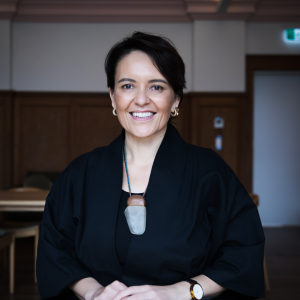
Professor Sarah-Jane Paine
Professor Sarah-Jane Paine (Tūhoe) is a leading Māori health researcher and internationally respected authority on Indigenous child wellbeing. She is Research Director and Principal Investigator of Growing Up in New Zealand, Aotearoa’s flagship longitudinal study of child development, and a Professor at Te Kupenga Hauora Māori, Waipapa Taumata Rau, University of Auckland.Her work in Kaupapa Māori epidemiology has influenced national policy in maternal and child health, racism and child wellbeing, food security, and youth wellbeing. Known for combining scientific rigour with strong community… -
 Associate Professor Deborah Heke
Ngā Puhi, Te Arawa
Te Whare Wananga o Wairaka Unitec
Rautaki MAI Te Kupenga
Associate Professor Deborah Heke (Ngā Puhi, Te Arawa) is the Director of Ngā Wai a Te Tūī Māori and Indigenous Research…
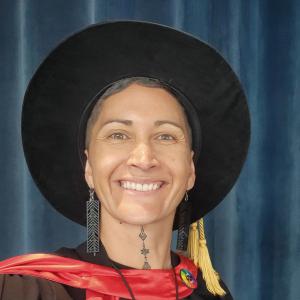
Associate Professor Deborah Heke
Associate Professor Deborah Heke (Ngā Puhi, Te Arawa) is the Director of Ngā Wai a Te Tūī Māori and Indigenous Research Centre at Unitec. With a background in Exercise Physiology, Psychology, and Public Health, her current research centres on Mana Wahine scholarship. Recent work includes an exploration of Māori and Indigenous women’s embodied practices and physical activity in te taiao as a means for connecting, communicating, and healing. Deborah is also passionate about building the capability and capacity of Māori and Indigenous (future) scholars and providing spaces for Indigenous… -
 Kiri Edge
Te Wānanga o Aotearoa
Kiri has contributed to a wide range of interdisciplinary research and evaluation projects across both academic and…
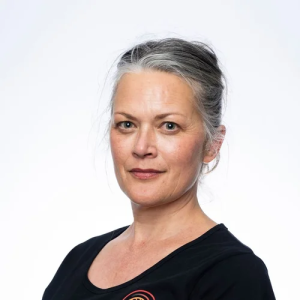
Kiri Edge
Kiri has contributed to a wide range of interdisciplinary research and evaluation projects across both academic and community contexts. Kiri is experienced working within complex and sensitive topics, and engaging with people, whānau, and communities that some consider ‘hard to reach’. Kiri’s research interests are diverse, but pivot towards endeavours that contribute towards Māori wellbeing and flourishing, equity, social justice and sustainable community-driven development. Kiri’s current rangahau interests include reclamation of indigenous pathways to wellbeing, grieving within and across… -
 Dr Awanui Te Huia
Ngāti Maniapoto
Independent Kaupapa Māori Researcher
Associate Professor Awanui Te Huia (Ngāti Maniapoto) is a recipient of Ako Aotearoa Sustained Excellence in Tertiary…

Dr Awanui Te Huia
Associate Professor Awanui Te Huia (Ngāti Maniapoto) is a recipient of Ako Aotearoa Sustained Excellence in Tertiary Teaching Award (Kaupapa Māori Category), recognising her outstanding contribution to reo Māori education and kaupapa Māori research at Te Herenga Waka; Victoria University of Wellington.Her teaching is known for creating enjoyable, creative, and safe spaces that empower learners. Her teaching approach weaves together psychology, kaupapa Māori methods, and innovative tools to make te reo Māori accessible and inspiring for current and future learners. This nationally recognised… -
 Dr Matthew Rout
University of Canterbury
Matt works on indigenous socio-economic development and environmental sustainability initiatives and projects with a…

Dr Matthew Rout
Matt works on indigenous socio-economic development and environmental sustainability initiatives and projects with a focus on applied outcomes through theoretical synthesis. He has a particular interest in how philosophical insights from ontology and epistemology can be used in practical ways to aid indigenous development. Indigenous and modernist ontology and epistemology Institutional economics Postcolonial psychology Settler colonisation Sustainable development -
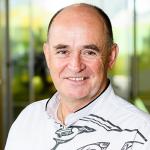 Professor Te Taka Keegan
Waikato-Maniapoto, Ngāti Porou, Ngāti Whakaue
University of Waikato
Professor Department of Software Engineering & Co-Director of AI Institute Maori Artificial Intelligence Institute
Nō Waikato-Maniapoto, nō Ngāti Porou, nō Ngāti Whakaue hoki.Kei Ngāhinapōuri e noho ana, kei te pūtake o te maunga o…
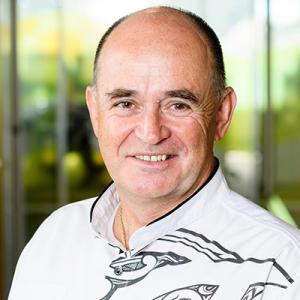
Professor Te Taka Keegan
Nō Waikato-Maniapoto, nō Ngāti Porou, nō Ngāti Whakaue hoki.Kei Ngāhinapōuri e noho ana, kei te pūtake o te maunga o Pirongia.Kua roa ia e mahi ana ki te Whare Wānanga o Waikato, me tana aro ki te whai huarahi mō te reo rangatira ki te ao hangarau.Te Taka received a Diploma in Computer Engineering from CIT (Wellington) in 1987. He spent six years working as a hardware engineer for Datacom and Digital before returning to the Waikato and Waikato University. He received a BA through the Te Tohu Paetahi stream (Māori immersion) and in 1996 was awarded an MA having completed a thesis on… -
 Professor Karyn Paringatai
Ngāti Porou
Te Tumu - University of Otago
Pou Pātai Te Ao Māori
Karyn Paringatai (Ngāti Porou) is a lecturer in Te Tumu – School of Māori, Pacific and Indigenous Studies at the…
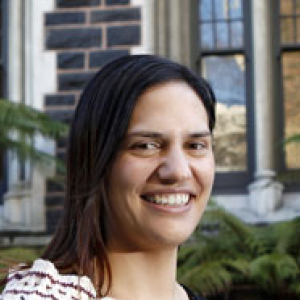
Professor Karyn Paringatai
Karyn Paringatai (Ngāti Porou) is a lecturer in Te Tumu – School of Māori, Pacific and Indigenous Studies at the University of Otago, where she obtained her BA (Hons), MA and PhD degrees. Her teaching and research interests are in a number of areas that intersect at various points that include: Sociological issues surrounding Māori urbanisation and Māori identity development and maintenance; Māori performing arts, particularly poi, the analysis of haka and waiata compositions and the role kapa haka plays in identity; Grammatical aspects of the Māori language and second language acquisition… -
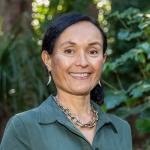 Professor Tahu Kukutai FRSNZ
Ngāti Tiipā, Ngāti Kinohaku, Te Aupouri, Ngāti Māhanga
Ngā Pae o te Māramatanga
Pou Matarua
Ngā Pae o te Māramatanga Co-Director Tahu Kukutai is Professor of Demography at Te Ngira: Institute for Population…
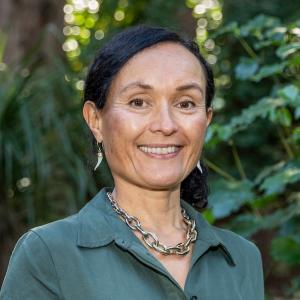
Professor Tahu Kukutai FRSNZ
Ngā Pae o te Māramatanga Co-Director Tahu Kukutai is Professor of Demography at Te Ngira: Institute for Population Research, The University of Waikato where she specialises in Māori and Indigenous demography and data sovereignty. Tahu is a founding member of the Māori Data Sovereignty Network Te Mana Raraunga and the Global Indigenous Data Alliance. She co-edited Indigenous data sovereignty: Toward an agenda (ANU Press, 2016), Indigenous data sovereignty and policy (Routledge, 2020) and The Oxford Handbook of Indigenous Sociology (Oxford) . Tahu has undertaken research with and for numerous… -
 Sacha McMeeking
Kai Tahu
University of Canterbury
Head of School, Māui Lab Co-Director
Sacha brings a serial entrepreneur’s approach to working with and for Iwi Māori. From instigating United Nations…
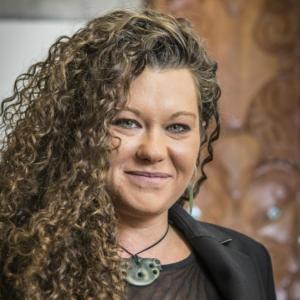
Sacha McMeeking
Sacha brings a serial entrepreneur’s approach to working with and for Iwi Māori. From instigating United Nations proceedings to architecting a Māori social enterprise fund and leading commercial negotiations, she is known for solution-building that meets Iwi Māori aspirations. Before coming to UC, Sacha was the director of a boutique consultancy working with Iwi Māori in strategy development, kaupapa Māori asset management and innovation and the General Manager Strategy and influence with Te Rūnanga o Ngāi Tahu, responsible for government relations on behalf of the Iwi. Recognised as an… -
 Dr Lynne Russell
Ngāti Kahungunu, Rangitāne, Kai Tahu, Kati Mamoe, Ngāti Porou, Ngāti Raukawa, Te Wainui ā Ru
Te Herenga Waka Victoria University of Wellington
Senior Research Fellow
Dr Lynne Russell works as a Senior Research Fellow - Maori Health with the Health Services Research Centre (HSRC) at…
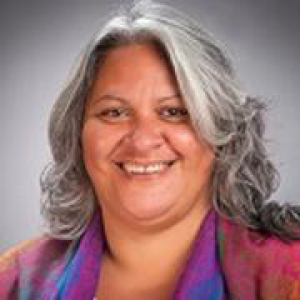
Dr Lynne Russell
Dr Lynne Russell works as a Senior Research Fellow - Maori Health with the Health Services Research Centre (HSRC) at Victoria University of Wellington. Much of her professional and academic work has centred around the Indigenous knowledge and healing practices used in recovery from trauma associated with mental distress, suicide loss and self-harm. She describes herself as an writer, activist and public speaker stirred by cultural resilience, social justice, Indigenous and LGBTI rights, and the amplification of voices more readily silenced in society.