About this research
How can the synthesis of kaitiakitanga and green polymer science enhance and protect the mauri of water in Aotearoa?
How can innovative polymer technologies protect and improve the mauri, wairua and kaitiakitanga of water in rural Māori communities?
This project will conduct research into the impacts from septic tank seepage. This problem is both out-of-sight and out-of-mind but has a major impact in rural and coastal locations where traditionally, Māori have located their mahinga kai, sourced kai moana and accessed fresh water.
Our project is a research collaboration between Patuharakeke and Te Parawhau whānau living on Takahiwai papakainga, non-Māori home owners at Takahiwai and research leaders from the University of Auckland and AUT. The team includes a social anthropologist, an ecologist, a polymer chemist, and two Māori community researchers who live in Takahiwai.
We will use cutting edge green polymer filtration science to prevent (or at least reduce) septic tank discharge at Takahiwai. This will offer solutions to human health issues associated with fresh water contamination from faecal contaminants such as cryptosporidium, and toxic algae and cyanobacteria.
It is our hypothesis that the application of new polymer technology will directly improve water quality and thereby protect and improve the mauri of local waterways. Water from inland waterways eventually ends up in and has an impact upon estuaries, harbours and marine environments. Tangata whenua at Takahiwai who take their kaitiaki obligation seriously are very concerned by the compromised state of coastal taonga (natural resources including wetlands, streams and mangroves) in their rohe.
This project offers an inexpensive and sustainable alternate method to maintain septic tank systems in rural Māori communities.
Kairangahau · Researchers
 Professor Marama Muru-Lanning
Waikato-Ngāti Maniapoto, Ngāti Whatua
Waipapa Taumata Rau, University of Auckland
I am a Professor in Anthropology. My teaching and research is dedicated to Māori communities and prioritises tikanga…
Professor Marama Muru-Lanning
Waikato-Ngāti Maniapoto, Ngāti Whatua
Waipapa Taumata Rau, University of Auckland
I am a Professor in Anthropology. My teaching and research is dedicated to Māori communities and prioritises tikanga…
Professor Marama Muru-Lanning
Ētahi atu · Other projects
The guiding research question for this project are: 1) How has Tuurangawaewae Marae fostered community mauri ora (wellbeing) within Waikato and in Te Ao Maaori more broadly? 2) What role has Tuurangawaewae Marae played as both a repository and a place of action for te Reo me ngaa Tikanga in Waikato and in Aotearoa-New Zealand? 3) What are the factors…
View projectTuurangawaewae Marae: A Place to Stand
Kairangahau · Researchers
-
Professor Marama Muru-Lanning
Professor Marama Muru-Lanning
I am a Professor in Anthropology. My teaching and research is dedicated to Māori communities and prioritises tikanga, equity and inter-dependence. As an environmental anthropologist I focus on the cultural specificity of tangata whenua groups and their unique sense of place and belonging in Aotearoa. My professional expertise includes: building research relationships with Māori communities especially with coastal and river people, ecological consciousness, food security, kai sovereignty, kaumātua gardening, kai gathering, food and peace politics. What distinguishes me internationally as a… -
 Associate Professor Dean Mahuta
Associate Professor Dean Mahuta
Ko Taupiri te maungaKo Waikato te awaKo Pōtatau te tangataHe piko, he taniwha,Waikato taniwharau.Kei aku nui, kei aku rahi, tēnā koutou katoa.Me wehi ki a Ihowa, me whakahōnore Te Arikinui Kuīni Ngā-wai-hono-i-te-pō. Ki te huinga kahurangi o te pō, okioki atu rā koutou ki tua o Paerau, ki reira tiakina atu ai. Ki ngā toronga waka o te motu whānui e kapi nei te hunga ora whānui, tēnā tātou katoa.Ko Dean Mahuta tōku ingoa, nō Waikato ahau, ko Ngāti Mahuta te hapū. I tupu mai au i Ngāruawāhia, ā, he raukura nō roto mai o te kura kaupapa Māori. I kuraina au ki Te Wharekura o Rākaumangamanga, he… -
 Professor Tahu Kukutai FRSNZ
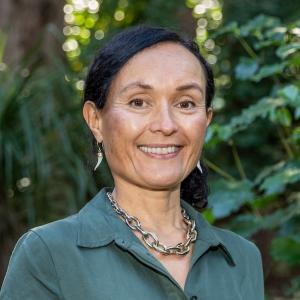
Professor Tahu Kukutai FRSNZ
Ngā Pae o te Māramatanga Co-Director Tahu Kukutai is Professor of Demography at Te Ngira: Institute for Population Research, The University of Waikato where she specialises in Māori and Indigenous demography and data sovereignty. Tahu is a founding member of the Māori Data Sovereignty Network Te Mana Raraunga and the Global Indigenous Data Alliance. She co-edited Indigenous data sovereignty: Toward an agenda (ANU Press, 2016), Indigenous data sovereignty and policy (Routledge, 2020) and The Oxford Handbook of Indigenous Sociology (Oxford) . Tahu has undertaken research with and for numerous…
Tangi is the ultimate form of Māori cultural and community expression. Addressing the dearth of scholarly information, this study considers tangi practice, whakapapa, changing environments, community values, sharing knowledge, ritual and what it means to be Māori. The research team has been examining the life-values, beliefs and practices related to…
View projectAituā: Death in a changing Māori World
Kairangahau · Researchers
-
 Professor Linda Waimarie Nikora FRSNZ, HFNZPS
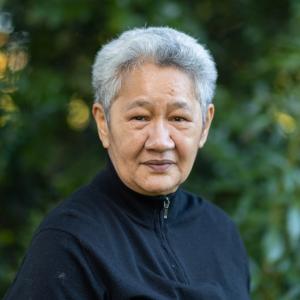
Professor Linda Waimarie Nikora FRSNZ, HFNZPS
Linda Waimarie Nikora is co-director of Ngā Pae o te Māramatanga and a Professor of Indigenous Studies at Te Wānanga o Waipapa, the University of Auckland. She was previously Professor of Psychology and Director of the Maori & Psychology Research Unit at the University of Waikato. Her specialities are in in community psychology, applied social psychology, ethnopsychology and Maori development. Professor Nikora has a celebrated research and academic career, working in community, social and indigenous psychologies, with a specific focus on Māori wellbeing and self-determination. Her research in…
A new report from Ngā Pae o te Māramatanga (NPM) and Manaaki Whenua Landcare Research provides guidance for Te Ao Māori on climate change adaptation and mitigation. He huringa āhuarangi, he huringa ao: a changing climate, a changing world was produced by a multidisciplinary Māori research team working across many research institutions. Using a novel kaupapa…
View project