About this research
PhD Researcher: Aramoana Mohi-Maxwell (Ngāti Rangiwewehi, Ngāti Tarāwhai, Ngāti Whakaue, Tapuika, Ngāi Te Rangi Ngāti Ranginui, Tūwharetoa, Ngāti Ruanui)(UoC)
Primary supervisor: Professor Carl Mika (UoC)
Project summary:
The whakatauakī - 'Ko au ko koe, ko koe ko au,' stands as a determining principle behind the legacy created by Mita Hikairo Mohi and his teachings of the discipline of mautaiaha. Many from across the motu have attended these wānanga held on Mokoia Island. The intention of Aramoana’s research is to explore this legacy and its impact on Māori Male well-being in relation to cultural reclamation, resilience and affirmation. In doing so, an indigenous model of well-being has been created from a Māori specific space that lies beyond the parameters of westernised methodology. This model of Indigenous well-being has the potential to help other Indigenous cultures frame their own journeys of well-being. This model of Indigenous well-being consists of three strands; 1) the use of whakataukī as life principles to provide an ethos that informs a blueprint for living; 2) the use of both esoteric and exoteric knowledge handed down through kōrero tuku iho through a whare tū taua (school of weaponry) that is about growth, life and sustenance; and 3) the acquisition and subsequent transmission of knowledge that emerges from the sacred lores of learning where wānanga and the pedagogy thereof occurs in a context that is unequivocally Māori yet inclusive of other cultures. The research undertaken is the culmination of traditional knowledge and peoples' stories and involves gathering kōrero from mātanga, wānanga participants, stakeholders, and composers to shape the Indigenous model of well-being.
The whakatauakī - 'Ko au ko koe, ko koe ko au,' stands as a determining principle behind the legacy created by Mita Hikairo Mohi and his teachings of the discipline of mautaiaha. Many from across the motu have attended these wānanga held on Mokoia Island. The intention of Aramoana’s research is to explore this legacy and its impact on Māori Male well-being in relation to cultural reclamation, resilience and affirmation.
Ētahi atu · Other projects
PhD Candidate: Jennifer Tokomauri McGregor (Ngati Raukawa (Waikato)) Primary Supervisor(s): Dr. Alayne Mikahere-Hall Background: Despite being a long-term government priority, the inequity of Māori nurses in the health workforce is long-standing, suggesting that that recruitment and retention of Māori into the nursing workforce is problematic. Māori nurses…
View projectKawa Whakaruruhau: Culturally-safe spaces for Māori nurse practice development
Kairangahau · Researchers
-
 Dr Alayne Mikahere-Hall
Dr Alayne Mikahere-Hall
This research programme dives beneath the surface to expose how efforts to address racism in Aotearoa can be symbolic, sidelining Māori worldviews and limiting true transformation. Led through a kaupapa Māori lens, this programme challenges narrow, imported definitions of racism and equity, and confronts how dominant systems create and maintain Māori…
View projectResearch to Interrupt Racism and (In)equity (RIRI)
This research programme dives beneath the surface to expose how efforts to address racism in Aotearoa can be symbolic, sidelining Māori worldviews and limiting true transformation.
Led through a kaupapa Māori lens, this programme challenges narrow, imported definitions of racism and equity, and confronts how dominant systems create and maintain Māori ‘vulnerability’. It aims to reframe equity on Māori terms—grounded in rangatiratanga, Indigenous knowledge, and the realities of colonisation.
Kairangahau · Researchers
-
 Associate Professor Donna Cormack
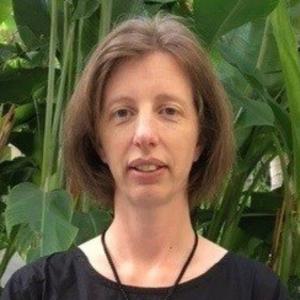
Associate Professor Donna Cormack
Dr Donna Cormack (Kai Tahu, Kāti Māmoe) is an Associate Professor at Te Kupenga Hauora Māori, University of Auckland.Donna is course director for the postgraduate papers MAORIHTH 710 Kaupapa Māori Theory, and MAORIHTH 709 Transformative Research for Māori Health, and co-convenes MAORIHTH711 Kaupapa Māori quantitative research. Donna teaches into other undergraduate and postgraduate papers in the Faculty of Medical and Health Sciences. She is also an active member of Tōmaiora Research Centre within Te Kupenga Hauora Māori. Her research focuses on racism and other forms of oppression… -
 Professor Sarah-Jane Paine
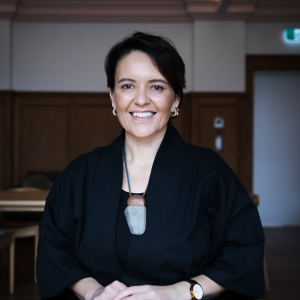
Professor Sarah-Jane Paine
Professor Sarah-Jane Paine (Tūhoe) is a leading Māori health researcher and internationally respected authority on Indigenous child wellbeing. She is Research Director and Principal Investigator of Growing Up in New Zealand, Aotearoa’s flagship longitudinal study of child development, and a Professor at Te Kupenga Hauora Māori, Waipapa Taumata Rau, University of Auckland.Her work in Kaupapa Māori epidemiology has influenced national policy in maternal and child health, racism and child wellbeing, food security, and youth wellbeing. Known for combining scientific rigour with strong community… -
 Professor Papaarangi Reid
Professor Papaarangi Reid
Papaarangi is Tumuaki and Head of Department of Maori Health at the Faculty of Medical and Health Sciences, University of Auckland, New Zealand. She holds science and medical degrees from the University of Auckland and is a specialist in public health medicine. She has tribal affiliations to Te Rarawa in the Far North of Aotearoa and her research interests include analysing disparities between indigenous and non-indigenous citizens as a means of monitoring government commitment to indigenous rights. -
 Professor Ricci Harris

Professor Ricci Harris
Professor Ricci Harris (Ngāti Kahungunu, Ngāi Tahu, Ngāti Raukawa) is a public health physician and Kaupapa Māori epidemiologist at Te Rōpū Rangahau Hauora a Eru Pōmare.Her research is primarily concerned with upholding Māori rights to health and health equity as ensured by Te Tiriti o Waitangi and in-line with International Indigenous Rights.She draws on Kaupapa Māori Research theory to undertake and develop decolonial approaches to epidemiology that centre Māori and are contextualised within systems of ongoing racism and colonialism. This has included research into the classification of… -
 Dr Arama Rata
Dr Arama Rata
Arama is of Ngāti Maniapoto, Taranaki, and Ngāruahine descent. She completed her PhD in Psychology at Victoria University of Wellington in 2012, which focused on Māori cultural engagement, identity, and psychological well-being in State secondary schools. Arama then lectured at Te Kawa a Māui (the School of Māori Studies), where she received a Research Establishment Grant to study Māori collective remembering of the New Zealand Wars. Dr Rata is currently involved with research relating to Māori health experiences, Māori in rural communities, as well as iwi consultancy. -
Hana Burgess
Hana Burgess
Hana (Ngäpuhi, Te Roroa, Te Ätihaunui a Päpärangi, Ngäti Tüwharetoa) (she/her) is doing a PhD in Mäori health, with supervision from Donna (Käi Tahu, Käti Mämoe) (she/her) and Papaarangi (Te Rarawa) (she/her)
This internship compiled a bibliography of politics research by kairangahau Māori, supporting more inclusive and responsive political studies in Aotearoa. Guided by a multidisciplinary rōpū, interns built research skills and helped shape future pathways for Māori in politics and policy.
View projectDeveloping a Bibliography of Politics Research by Kairangahau Māori
This internship compiled a bibliography of politics research by kairangahau Māori, supporting more inclusive and responsive political studies in Aotearoa.
Guided by a multidisciplinary rōpū, interns built research skills and helped shape future pathways for Māori in politics and policy.