|
|
|
|
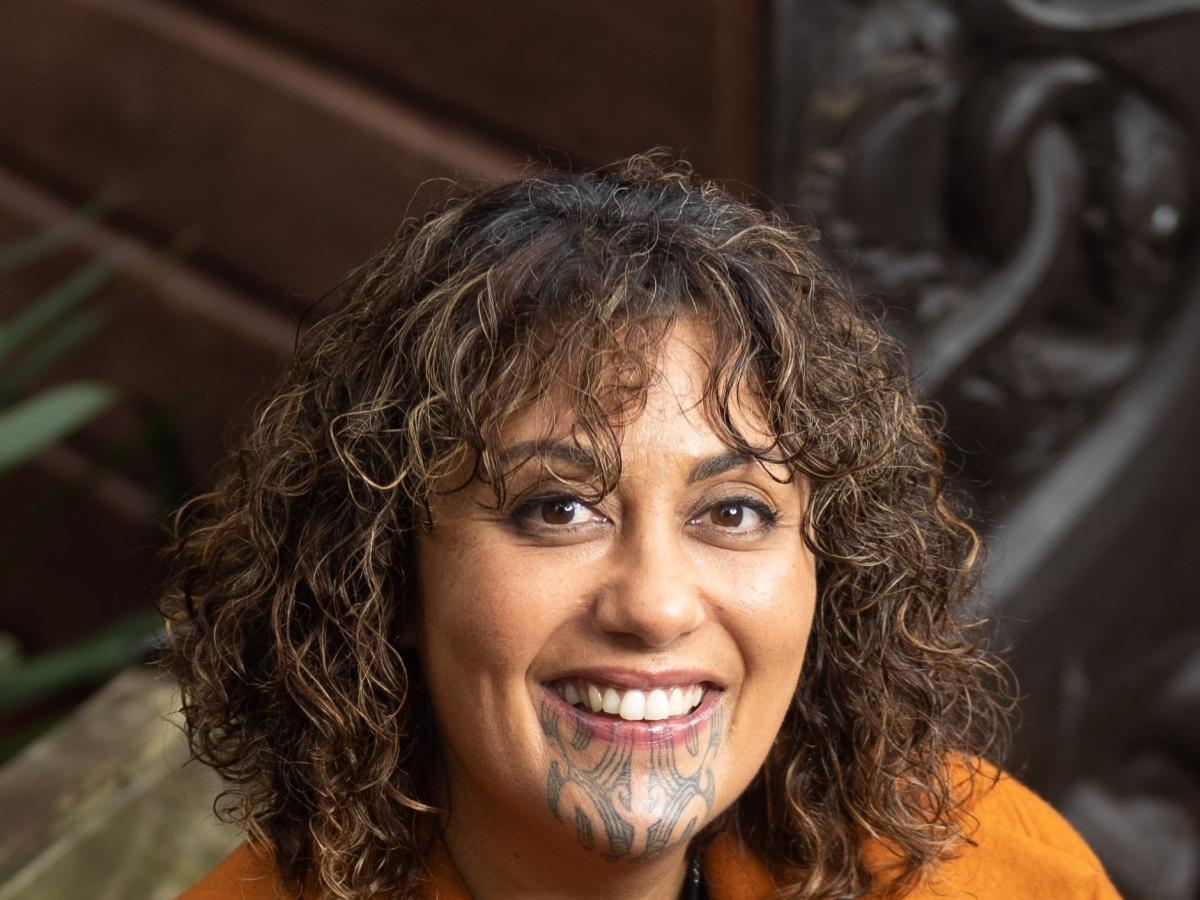
As reliable as a Waikato mist on a winter’s morning, you can always count on Dr Atakohu Middleton (Waikato, Pākehā) to unearth new stories for her readers. With a journalism career spanning three decades, Atakohu’s byline is well known to many.
She is also a MAI Te Kupenga alumni and an NPM researcher working on the NPM Te Tahatū-o-te-rangi research project. This month, however, the award-winning journalist is stepping into new territory - launching a book of fiction, written especially for speakers of te reo, from intermediate level to fluent.
Her book, Waka Aroha: He kohinga pakipoto, is a collection of 15 short stories written entirely in te reo and aimed squarely at adults who have been yearning for fiction of their own. “As I travelled further along my own reo journey, I realised there was nothing out there for people like me. We were hiakai ki te reo rangatira, but there was simply no adult fiction for us to read.”
She believes that translated stories often create obstacles for te reo learners. While there is plenty of children’s fiction in te reo, Atakohu says “there comes a time when you want to read about the adult world.” So, she started writing fiction.
While fluent te reo speakers will enjoy the book, she wants those who are still developing their skills to relish the stories also. “The language in Waka Aroha has been kept simple to reduce the cognitive load, leaving people to soak up the stories while immersing themselves in te reo. The idea was to produce stories that they would enjoy, but that they wouldn’t have to stop too often to look up the meaning of words, so they could build their confidence and consolidate their knowledge,” she says.
Since she was a child, reading and writing has always been natural for Atakohu, “it’s just my wāhi taurikura, my happy place,” she says. Learning te reo as an adult, however, has been a totally different story, and she has plenty of sympathy for those who struggle.
“I wrote the book for people like me. I’m not a quick learner, and I need to repeat the patterns endlessly to get them to stick. I want people to read the stories and go ‘oh my God, I got that! I can do this’. For so many of us, learning te reo as an adult is weighted with so much frustration and angst and this book is to help people on their journey.”
Atakohu has crafted her stories in Waka Aroha to connect with a wide range of readers, and the stories span different genres, time periods and themes so there’s something for everyone. She is continuing the path into fiction and is already deep into her next creative chapter - 20,000 words into a crime novel featuring a female detective, Raukura, as the central character.
Atakohu is grateful that Waka Aroha attracted support from both Toi Aotearoa (Creative New Zealand) and reo revitalisation agency Te Mātāwai so she was able to cut back her paid work to focus on the book and also pay for the services of her reo and fiction mentor, Dr Darryn Joseph. She has a small amount of development funding for Raukura, which pays for Darryn’s services, and is seeking funding so she can once again cut back contract work to focus on the novel. In the meantime, she keeps working on it when she can. “It’s hard to work on a novel amidst the everyday grind of full-time work. You are just too knackered,” she says.
Like the Waikato mists, Atakohu’s story telling will endure. “Stories are important. It’s the way humans have made sense of their lives for thousands and thousands of years. We tell stories to remember, to teach, to store knowledge about the world. Story telling is what makes us human. All cultures do it, all languages do it.”
NPM is proud to co-host this month’s launch of Waka Aroha: He kohinga pakipoto alongside Auckland University Press.
https://aucklanduniversitypress.co.nz/waka-aroha/
RANGAHAU | RESEARCH
Hapū-based Research Has An Enduring Legacy
As reliable as a Waikato mist on a winter’s morning, you can always count on Dr Atakohu Middleton (Waikato, Pākehā) to unearth new stories for her readers. With a journalism career spanning three decades, Atakohu’s byline is well known to many.
She is also a MAI Te Kupenga alumni and an NPM researcher working on the NPM Te Tahatū-o-te-rangi research project. This month, however, the award-winning journalist is stepping into new territory - launching a book of fiction, written especially for speakers of te reo, from intermediate level to fluent.
Her book, Waka Aroha: He kohinga pakipoto, is a collection of 15 short stories written entirely in te reo and aimed squarely at adults who have been yearning for fiction of their own. “As I travelled further along my own reo journey, I realised there was nothing out there for people like me. We were hiakai ki te reo rangatira, but there was simply no adult fiction for us to read.”
She believes that translated stories often create obstacles for te reo learners. While there is plenty of children’s fiction in te reo, Atakohu says “there comes a time when you want to read about the adult world.” So, she started writing fiction.
While fluent te reo speakers will enjoy the book, she wants those who are still developing their skills to relish the stories also. “The language in Waka Aroha has been kept simple to reduce the cognitive load, leaving people to soak up the stories while immersing themselves in te reo. The idea was to produce stories that they would enjoy, but that they wouldn’t have to stop too often to look up the meaning of words, so they could build their confidence and consolidate their knowledge,” she says.
Since she was a child, reading and writing has always been natural for Atakohu, “it’s just my wāhi taurikura, my happy place,” she says. Learning te reo as an adult, however, has been a totally different story, and she has plenty of sympathy for those who struggle.
“I wrote the book for people like me. I’m not a quick learner, and I need to repeat the patterns endlessly to get them to stick. I want people to read the stories and go ‘oh my God, I got that! I can do this’. For so many of us, learning te reo as an adult is weighted with so much frustration and angst and this book is to help people on their journey.”
Atakohu has crafted her stories in Waka Aroha to connect with a wide range of readers, and the stories span different genres, time periods and themes so there’s something for everyone. She is continuing the path into fiction and is already deep into her next creative chapter - 20,000 words into a crime novel featuring a female detective, Raukura, as the central character.
Atakohu is grateful that Waka Aroha attracted support from both Toi Aotearoa (Creative New Zealand) and reo revitalisation agency Te Mātāwai so she was able to cut back her paid work to focus on the book and also pay for the services of her reo and fiction mentor, Dr Darryn Joseph. She has a small amount of development funding for Raukura, which pays for Darryn’s services, and is seeking funding so she can once again cut back contract work to focus on the novel. In the meantime, she keeps working on it when she can. “It’s hard to work on a novel amidst the everyday grind of full-time work. You are just too knackered,” she says.
Like the Waikato mists, Atakohu’s story telling will endure. “Stories are important. It’s the way humans have made sense of their lives for thousands and thousands of years. We tell stories to remember, to teach, to store knowledge about the world. Story telling is what makes us human. All cultures do it, all languages do it.”
NPM is proud to co-host this month’s launch of Waka Aroha: He kohinga pakipoto alongside Auckland University Press.
The broader impacts of hapū-based research are not always immediate, often emerging long after final research reports have been filed. A powerful example of research with an enduring legacy is a 2018 study led by Professor Maria Bargh, whose influence is still felt today.
Maria undertook the NPM supported research in collaboration with Te Rūnanga o Ngāti Kearoa Ngāti Tuara in the Rotorua region. The main goal was to identify the impact of pests on Te Horohoroinga-o-ngā-ringa-o-Kahumatamomoe, the maunga of Ngāti Kearoa/Ngāti Tuara.
Gathering baseline data was an essential task of the project team which comprised Maria, Melanie Mark-Shadbolt and Kataraina George (all who whakapapa to Ngāti Kea/Ngāti Tuara). They were joined by Tame Malcolm (Te Arawa) and summer intern, Ellie Tapsell (Te Arawa).
The NPM grant helped fund the cost of data gathering which, in turn, helped generate solutions. “What we found was that our maunga was unwell. There was a heavy prevalence of pests including possums, rats, as well as stoats and ferrets, wild pigs and deer, and while the maunga looked lovely from a distance, it was struggling,” says Maria.
Good information was essential and the research team provided fact sheets about the manu and ngahere on the maunga, and gave presentations to the hapū and local neighbours.
Based on the data gathered, the Rūnanga responded with a variety of solutions including supporting an initial 1080 drop, years of trapping and monitoring. Maria says the maunga was re-energised by the project and the impact reverberated long after its completion.
One of the unexpected outcomes of the research was renewed attention on governance of the hapū Māori Reservations, a new focus for Maria who is now co-chair of the Reservation Trust for Horohoro Maunga. “With the predator free project, it became clearer that the governance of our hapū Māori reservations needed attention - to be ‘tidied up’ with membership needing to be updated, systematic records kept and AGMs held,” she says. The refreshment of reservation governance was positive, leading to a renewed vigour and commitment to the environment, marae and wāhi tapu.
The project was also empowering for the original research team, sparking an even bigger appetite for research and environmental leadership.
Today, Kataraina George is managing a native plant nursery for the hapū lands Trust Paiaka and has extended her pest control expertise to neighbouring blocks, including Department of Conservation land.
Tame Malcolm is now undertaking a PhD focused on mātauranga-based methods of pest control with a focus on possums (supervised by Maria) and is also Chief Executive of Te Arawa Lakes Trust.
After the project finished, summer intern, Ellie Tapsell went on to lead other whānau based environmental projects, and completed a Master of Arts in Māori Studies on ‘Transitioning Environmental Governance In Aotearoa: Tikanga Māori And A Political Ethic Of Care‘ under Maria’s supervision.
Melanie Mark-Shadbolt has remained a cornerstone of the team, providing leadership and advice when needed. Today she continues to inspire through her leadership of Vision Mātauranga for the Resilience to Natural Hazards Platform, and as Director of Te Tira Whakamātaki.
“The project really has a massive legacy both for the hapū, our maunga, and supporting researchers to engage further the research space. Like many research projects that involve hapū it has provided a little spark that lit a fire with real impact and purpose,” says Maria.
Momentum is rapidly building around global Indigenous research collaborations, with NPM researchers driving key efforts to unite knowledge systems across the Pacific and beyond. A recent milestone in this movement saw Indigenous researchers gather in the Philippines alongside members of the Association of Pacific Rim Universities–Indigenous Knowledge (APRU-IK) Network to advance shared research priorities.
Professor Linda Waimarie Nikora is always energised by such hui and this year she attended along with an Auckland University contingent including NPM board member Professor Te Kawehau Hoskins and NPM co-director, Professor Melinda Webber. The gathering was held in June on Boracay Island, and members left with plenty of mahi to do. “As a network, we are still in our formative years, so it’s about prioritising what’s possible and getting on with it,” says Waimarie.
Collaboration is one of the network’s key priorities and this can take many different forms. She says while conferences are often sold as a pathway to collaboration, they can often be lonely experiences, especially for Indigenous researchers at very large conferences. It’s important, therefore, that Indigenous researchers carve out time to really get to know each other, for authentic collaboration and problem solving to occur, says Waimarie.
A good example of this occurred during the recent APRU-IK hui when a senior researcher from Asia informed Waimarie she was experiencing big problems finding examiners for her Indigenous PhD students. Wanting to hear from others, Waimarie brought together a talking circle of senior Indigenous academics from India, Malaya, China, Mexico and Aotearoa for a series of on-line hui to kōrero specifically about their own issues and to find solutions. “It was an opportunity for people to step into the international collaborative domain, and it was an awesome process. This is the kind of practical process and outcome that being part of a wider Indigenous network can address for the benefit of all,” she says.
Of the 66 member universities, Auckland is the only New Zealand University that is an active member of APRU. One of the network’s biggest issues is getting visibility within their own institutions. So, with others at the Boracay hui, the group video-taped a statement about the important voice and visibility of Indigenous researchers within the APRU network. “The presidents meet every year, so we wanted to give them a wake-up call about the importance of Indigenous staff, Indigenous teaching and research inside their organisations. The University of Auckland is probably a long way down the line in achieving this compared to other universities who have never considered the needs of Indigenous peoples within their institutions. But we are trying to achieve real impact through this network, and it is important that presidents hear from us,” says Waimarie.
One strategy the network is committed to is establishing an international mentoring programme for both Indigenous academic and professional staff. “The benefit of this is about mentoring to be part of a global Indigenous community. It will offer Indigenous people the experience of seeing how different universities within the Pacific Rim operate. The hope is that people might learn a few tips and tricks, take them back to their own institution to benefit them,” says Waimarie.
NPM Operations Manager Marie-Chanel Berghan also attended the Boracay gathering, and she says these hui are invaluable for both researchers and the professional staff who support research behind the scenes. “Strong relationships are at the heart of successful Indigenous research collaborations. Exchange opportunities like this help because you are extending your knowledge, capability and capacity, but the greatest value comes from the relationships we make and sustaining those connections. Those relationships open doors to Indigenous researchers and communities across the Pacific Rim and create opportunities that would not otherwise exist.
She says NPM’s strength lies in these networks, enabling us to draw on international expertise, support our advisory boards and publications, and help us deliver initiatives such as the Biennial International Indigenous Research Conference. “Investing in these relationships strengthens our ability to support Indigenous research excellence both nationally and internationally,” says Marie-Chanel.
Waimarie encourages anyone who is interested in the work of APRU-IK to subscribe to its newsletter and sign up to anything they are curious about. The on-line seminar series is also an excellent way to become more knowledgeable about Indigenous research and perspectives within the Pacific Rim, and this is a simple way to get involved, she says.
“Being part of a global community is important for us in Aotearoa. It allows us to better understand the world and to delight in knowing about it, because it is so very different to our experience compared to most other countries and cultures. Yes, we have something to contribute, but we should be humbled by the efforts that are occurring internationally because they are facing some dire, dire circumstances.”