About this research
Some economists argue for diversity in the way collective resources are managed rather than an unquestioning faith in leaving things to the market. We support this thinking and looked at how ethics and Māori knowledge can be used equally alongside economics in managing collective Māori assets.
We argue that simple measures of collective well-being used alongside mainstream economics are robust enough to help us make collective decisions. Our team developed a Māori knowledge and ethics based decision-making framework for collective assets. This framework is being tested and refined using three case studies with our iwi/hapū partners.
Objectives
- Develop an interface between Māori values and financial measures that will form the basis of a new economic decision-making framework for collective assets,
- Work with the commercial arms of iwi/hapū to help integrate indigenous corporate responsibility into a new collective decision-making framework, and
- Apply Māori values in investment decisions for collective assets.
A step-by-step process was used to discuss and evaluate investment scenarios utilising NZFARM and Māori cultural values. The tikanga Māori decision framework and its components is an example of a Māori evaluation process. Unique to this framework is the integration of Māori concepts (e.g. kaitiakitanga, whakatipu rawa, and manaakitanga) within a Māori collective asset management paradigm. There is potential to refine this framework and its components and further develop it for use by other iwi/hapū throughout Aotearoa. Our tikanga Māori decision framework can help managers of collective assets make progress towards outcomes that reflect equality of distribution, and mitigate or improve the social and environmental domains that are the receptors of the externalities created by our economic activities. Successful uptake of the framework would require a paradigm shift away from a business as usual approach. The challenge for Māori resource management is to use this type of framework to assess new investment opportunities alongside traditional business analyses such as cost-benefit or return on equity.
Ētahi atu · Other projects
Tangi is the ultimate form of Māori cultural and community expression. Addressing the dearth of scholarly information, this study considers tangi practice, whakapapa, changing environments, community values, sharing knowledge, ritual and what it means to be Māori. The research team has been examining the life-values, beliefs and practices related to…
View projectAituā: Death in a changing Māori World
Kairangahau · Researchers
-
 Professor Linda Waimarie Nikora FRSNZ, HFNZPS
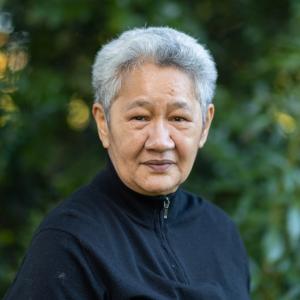
Professor Linda Waimarie Nikora FRSNZ, HFNZPS
Linda Waimarie Nikora is co-director of Ngā Pae o te Māramatanga and a Professor of Indigenous Studies at Te Wānanga o Waipapa, the University of Auckland. She was previously Professor of Psychology and Director of the Maori & Psychology Research Unit at the University of Waikato. Her specialities are in in community psychology, applied social psychology, ethnopsychology and Maori development. Professor Nikora has a celebrated research and academic career, working in community, social and indigenous psychologies, with a specific focus on Māori wellbeing and self-determination. Her research in…
A new report from Ngā Pae o te Māramatanga (NPM) and Manaaki Whenua Landcare Research provides guidance for Te Ao Māori on climate change adaptation and mitigation. He huringa āhuarangi, he huringa ao: a changing climate, a changing world was produced by a multidisciplinary Māori research team working across many research institutions. Using a novel kaupapa…
View projectHe huringa āhuarangi, he huringa ao: a changing climate, a changing world
Often Kaumātua and elders generally, are seen as vulnerable and passive recipients of services throughout the ongoing Covid 19 pandemic. However, in the village of Ohinemutu and as citizens of their iwi Ngāti Whakaue, Kaumātua have been active leaders in the response of the village, initially during the first four-week lockdown in 2020. However, that…
View project