About this research
This research project looks at what the basic conditions are that would need to be in place in order for whanau/hapu and iwi communities to be ready to engage with Extractive Industry (EI); enter joint ventures with EI; or undertake their own EI projects?
It will also investigate what the extractive industries perceptions are of international indigenous rights and business and human rights, as well as how recent developments in international law relating to indigenous rights and corporate accountability could promote Māori economic development through EI? Finally, it will look at how recent developments in legal aboriginal rights and best practice relating to co-ownership and co-management models might promote Maori economic development through extractive industry projects.
This research project’s aim is to use international legal developments and best practice to promote effective Maori engagement with EI through: robust consultation and impact assessment processes; benefit sharing agreements with EI; partnership agreements with EI; and iwi-led EI projects. It will use best practice to indicate the potential of co-ownership and co-management models drawing on local innovations (in treaty settlements) but with greater attention directed to models adopted in other countries (eg, Canada).
The term 'extractive industries' refers to the NZ mining and petroleum industry. The National government has made mining a top economic priority, recently committing $9M to encourage investment. The Exclusive Economic Zone and Continental Shelf (Environmental Effects) Act 2012 (EEZ Act) (called the Resource Management Act 1991 of the seas) was enacted two years ago to establish a consent process for mining in the EEZ. However, many Māori communities struggle with effective engagement with EI. In particular, iwi point to inadequate EI consultation processes.
There has been a sharp increase in EI projects in recent years, including projects proposed by Petrobras, Annadarko, and Trans-Tasman Resources. There are few instances of partnership agreements and Māori-led business initiatives and the current EI regulatory scheme contains significant shortcomings. The EEZ, for example, requires only that local Maori be “notified” (not consulted) about proposals to exploit minerals in their rohe.
There are no provisions in the EEZ Act for Māori engagement in the preparation of Impact Assessments or provisions relating to the negotiation of benefit sharing agreements. In terms of both EI policy and practice and government regulation, the current EI is not geared towards promoting Māori economic development. Based on experience of Māori with EI to date, this research project will determine how new legal tools can promote more effective engagement by whanau/hapu and iwi communities in EI.
Key to unlocking the potential of Māori economic development through EI is the question of the role of Māori in the ownership and regulation of minerals in NZ.
The research will explore the potential for Māori property rights in minerals – including nationalised minerals – in light of recent developments in Aboriginal rights law in common law countries including in Canada and Australia, UN human rights treaty bodies, and the Inter-American Human Rights System.
Kairangahau · Researchers
 Dr Andrew Erueti
Ngā Ruahinerangi, Ngāti Ruanui (Taranaki), Ati Hau (Wanganui).
Waipapa Taumata Rau, University of Auckland
Andrew is currently a senior lecturer at Auckland University School of Law. Previously he has taught at the Law Schools…
Dr Andrew Erueti
Ngā Ruahinerangi, Ngāti Ruanui (Taranaki), Ati Hau (Wanganui).
Waipapa Taumata Rau, University of Auckland
Andrew is currently a senior lecturer at Auckland University School of Law. Previously he has taught at the Law Schools…
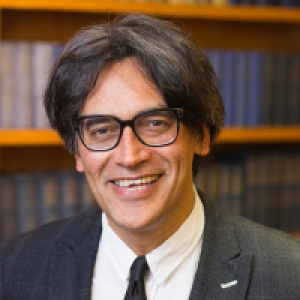
Dr Andrew Erueti
Ētahi atu · Other projects
Tangi is the ultimate form of Māori cultural and community expression. Addressing the dearth of scholarly information, this study considers tangi practice, whakapapa, changing environments, community values, sharing knowledge, ritual and what it means to be Māori. The research team has been examining the life-values, beliefs and practices related to…
View projectAituā: Death in a changing Māori World
Kairangahau · Researchers
-
 Professor Linda Waimarie Nikora FRSNZ, HFNZPS

Professor Linda Waimarie Nikora FRSNZ, HFNZPS
Linda Waimarie Nikora is co-director of Ngā Pae o te Māramatanga and a Professor of Indigenous Studies at Te Wānanga o Waipapa, the University of Auckland. She was previously Professor of Psychology and Director of the Maori & Psychology Research Unit at the University of Waikato. Her specialities are in in community psychology, applied social psychology, ethnopsychology and Maori development. Professor Nikora has a celebrated research and academic career, working in community, social and indigenous psychologies, with a specific focus on Māori wellbeing and self-determination. Her research in…
A new report from Ngā Pae o te Māramatanga (NPM) and Manaaki Whenua Landcare Research provides guidance for Te Ao Māori on climate change adaptation and mitigation. He huringa āhuarangi, he huringa ao: a changing climate, a changing world was produced by a multidisciplinary Māori research team working across many research institutions. Using a novel kaupapa…
View projectHe huringa āhuarangi, he huringa ao: a changing climate, a changing world
Often Kaumātua and elders generally, are seen as vulnerable and passive recipients of services throughout the ongoing Covid 19 pandemic. However, in the village of Ohinemutu and as citizens of their iwi Ngāti Whakaue, Kaumātua have been active leaders in the response of the village, initially during the first four-week lockdown in 2020. However, that…
View project