About this research
What can be learnt and applied now from traditional knowledge and adaptation to future environmental and resource issues?
This project seeks to understand how quickly early Māori society changed from its initial wasteful use of environmental resources soon after the Polynesian migrations, to then live within its ecological means in the face of resource decline pressures. These pressures were largely caused by ongoing extinctions and depletion, compounded by adverse climate change during the period 1350-1900.
These conditions led to the undermining of the existing tribal economies, environmental and economic decline, malnutrition and starvation, internal migration and warfare. Despite these pressures, however, with the exception of warfare, Māori society appeared to have largely recovered by the time Captain James Cook reached New Zealand.
Traces of information about how Māori responded to their circumstances exist in oral histories that record both the challenges faced and changes made and an important element in Māori management of the environment and its resources lies in the placement of humans within whakapapa (genealogy).
Sustainable environmental management is achieved through people appointed as kaitiaki (guardians of particular resources) who can control resources through allocating, limiting or prohibiting use and the economies of pre-European Māori were sourced from the lands and resources held by the hapū or tangata whenua of an area.
By analysing content contained in existing manuscripts on the early colonisation of New Zealand by Māori, the project team will test the ideas and address the question of application of traditional knowledge to modern issues we are facing.
Mai i te Mahana ki te Apakura Makariri will review records of existing oral histories to identify Indigenous solutions to global problems and provide outcomes that broaden the scope of theory and practice available to work on current climate change and resource depletion concerns. There is an opportunity for our society to incorporate kaitiakitanga as a stepping stone to bringing all elements of the environment and its resources into our economy.
Objectives of the Research:
- Document the transition of Māori societies resource use from excess to careful management
- Provide exemplars for how to manage our environments to optimise their productivity.
- Explore and articulate the potential of societal uptake of kaitiakitanga.
- Identify Indigenous solutions to global problems providing outcomes that broaden the scope of theory and practice available to work on this ‘wicked’ problem.
Whakaahua & Ataata · Images & Videos
Kairangahau · Researchers
 Dr Joseph Te Rito
Rongomaiwahine, Ngāti Kahungunu
AKO AOTEAROA
Dr Joe Te Rito is of Ngāti Hinemanu descent from Ōmāhu out of Hastings. The community was devastated by Cyclone…
Dr Joseph Te Rito
Rongomaiwahine, Ngāti Kahungunu
AKO AOTEAROA
Dr Joe Te Rito is of Ngāti Hinemanu descent from Ōmāhu out of Hastings. The community was devastated by Cyclone…
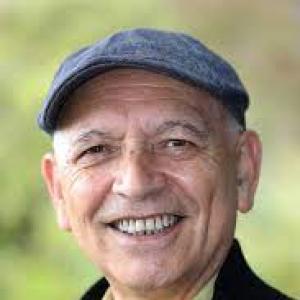
Dr Joseph Te Rito
Dr Joe Te Rito is of Ngāti Hinemanu descent from Ōmāhu out of Hastings. The community was devastated by Cyclone Gabrielle which flooded the whole community including over 100 houses, the marae, cemetery, school, and kohanga reo. Joe has actively assisted in the recovery efforts by his community since then to provide shelter for displaced families; water, food and stores to local whānau, the rural farming community and other marae; plan for future housing; gather up kōiwi from the cemetery and an ancient burial site unearthed by the flood; recover old carvings from an old pātaka; and revive local Māori history that had been forgotten. He was former head of Māori Studies at EIT (17 years), worked at Ngā Pae o te Māramatanga (11 years), currently works for Ako Aotearoa (7 years); and is the original and current head of Radio Kahungunu (35 years).
 Dr James Ataria
Rongomaiwahine, Ngāti Kahungunu, Ngāti Tūwharetoa
Ngā Pae o te Māramatanga / Cawthron Institute, Lincoln University
Dr James Ataria was a Deputy Director of Ngā Pae o te Māramatanga for a fixed term 2016 to 2018. He is Senior Lecturer…
Dr James Ataria
Rongomaiwahine, Ngāti Kahungunu, Ngāti Tūwharetoa
Ngā Pae o te Māramatanga / Cawthron Institute, Lincoln University
Dr James Ataria was a Deputy Director of Ngā Pae o te Māramatanga for a fixed term 2016 to 2018. He is Senior Lecturer…
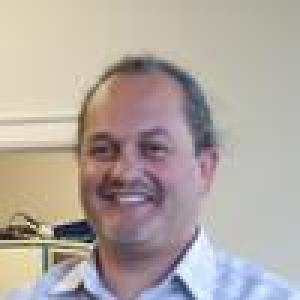
Dr James Ataria
Ētahi atu · Other projects
This research project’s origins date back 27 years when Dr Joe Te Rito helped establish local Māori radio station Radio Kahungunu at the Hawke’s Bay Polytechnic, Taradale. Joe saw how the dialect of his iwi Rongomaiwahine-Ngāti Kahungunu was diminishing in quality, in terms of grammatical and spoken fluency, with each generation. The station was to fill the…
- PIXEL conf 2010.pdf
- Pukapuka Kōrero Tahi; He Taonga Nō Te Pātaka Kōrero o Te Reo Irirangi o Kahungunu - download the resource book here
Kia areare ki ngā Reo o ngā Tīpuna
This research project’s origins date back 27 years when Dr Joe Te Rito helped establish local Māori radio station Radio Kahungunu at the Hawke’s Bay Polytechnic, Taradale. Joe saw how the dialect of his iwi Rongomaiwahine-Ngāti Kahungunu was diminishing in quality, in terms of grammatical and spoken fluency, with each generation. The station was to fill the gap for children who did not have Māori spoken in the home or role models to learn te reo from. While schools looked after education, the station wanted to bring the voices into the home.
- PIXEL conf 2010.pdf
- Pukapuka Kōrero Tahi; He Taonga Nō Te Pātaka Kōrero o Te Reo Irirangi o Kahungunu - download the resource book here
Kairangahau · Researchers
-
Dr Joseph Te Rito
Dr Joseph Te Rito
Dr Joe Te Rito is of Ngāti Hinemanu descent from Ōmāhu out of Hastings. The community was devastated by Cyclone Gabrielle which flooded the whole community including over 100 houses, the marae, cemetery, school, and kohanga reo. Joe has actively assisted in the recovery efforts by his community since then to provide shelter for displaced families; water, food and stores to local whānau, the rural farming community and other marae; plan for future housing; gather up kōiwi from the cemetery and an ancient burial site unearthed by the flood; recover old carvings from an old pātaka; and revive local Māori history that had been forgotten. He was former head of Māori Studies at EIT (17 years), worked at Ngā Pae o te Māramatanga (11 years), currently works for Ako Aotearoa (7 years); and is the original and current head of Radio Kahungunu (35 years).
Tangi is the ultimate form of Māori cultural and community expression. Addressing the dearth of scholarly information, this study considers tangi practice, whakapapa, changing environments, community values, sharing knowledge, ritual and what it means to be Māori. The research team has been examining the life-values, beliefs and practices related to…
View projectAituā: Death in a changing Māori World
Kairangahau · Researchers
-
 Professor Linda Waimarie Nikora FRSNZ, HFNZPS
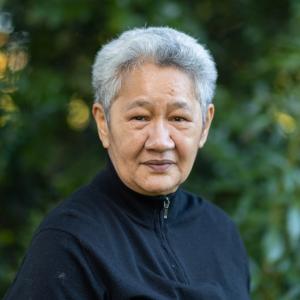
Professor Linda Waimarie Nikora FRSNZ, HFNZPS
Linda Waimarie Nikora is co-director of Ngā Pae o te Māramatanga and a Professor of Indigenous Studies at Te Wānanga o Waipapa, the University of Auckland. She was previously Professor of Psychology and Director of the Maori & Psychology Research Unit at the University of Waikato. Her specialities are in in community psychology, applied social psychology, ethnopsychology and Maori development. Professor Nikora has a celebrated research and academic career, working in community, social and indigenous psychologies, with a specific focus on Māori wellbeing and self-determination. Her research in…
A new report from Ngā Pae o te Māramatanga (NPM) and Manaaki Whenua Landcare Research provides guidance for Te Ao Māori on climate change adaptation and mitigation. He huringa āhuarangi, he huringa ao: a changing climate, a changing world was produced by a multidisciplinary Māori research team working across many research institutions. Using a novel kaupapa…
View project