About this research
The guiding research question for this project are:
1) How has Tuurangawaewae Marae fostered community mauri ora (wellbeing) within Waikato and in Te Ao Maaori more broadly?
2) What role has Tuurangawaewae Marae played as both a repository and a place of action for te Reo me ngaa Tikanga in Waikato and in Aotearoa-New Zealand?
3) What are the factors underpinning Tuurangawaewae Marae’s endurance as a centre for Maaori political action and manaakitanga (caring for community) both nationally and for Waikato whaanau
This is a community-led project where the entire research team whakapapa to Tuurangawaewae Marae. The key researchers: Professor Tahu Kukutai, Dr Dean Mahuta, Dr Marama Muru-Lanning and Mr Shane Solomon.
The research will produce a book celebrating one hundred years of Tuurangawaewae Marae (also known as Tuurangawaewae Paa), and telling the story of Tuurangawaewae – the headquarters of the Maaori King Movement and the world’s largest marae. Born from the ravages of the New Zealand wars and the massive land confiscation and poverty that followed, Tuurangawaewae stands as a potent symbol of Maaori independence, tenacity and resilience. Combining narrative, archival research, interviews with whaanau and illustrations, this book will trace the ebbs and flows of Tuurangawaewae from its difficult early years to its present-day position as a prominent centre of Maaori culture and politics. It will open up a part of Aotearoa’s history with which few New Zealanders are familiar.
Intimately associated with the Kiingitanga, the marae’s history is resplendent with great leaders, some of whom have been written about in other texts such as Michael King’s Te Puea (King 1977, Belgrave 2018, Jones and Biggs 1995). Against that backdrop, this book will also focus on documenting the histories of the everyday, making visible the hitherto untold stories of the whaanau who worked together to build the enduring legacy that is Tuurangawaewae. In so doing this book is a social history of how a community’s commitment to a vision of mana motuhake and self-sufficiency enabled it to survive a World War, economic crises, pandemics, Paakehaa opposition and whaanau dispersion, to build a marae for the Kiingitanga, its people and the people of Aotearoa more broadly (Durie 1998, 2005, Walker 2004).
Kairangahau · Researchers
 Professor Marama Muru-Lanning
Waikato-Ngāti Maniapoto, Ngāti Whatua
Waipapa Taumata Rau, University of Auckland
I am a Professor in Anthropology. My teaching and research is dedicated to Māori communities and prioritises tikanga…
Professor Marama Muru-Lanning
Waikato-Ngāti Maniapoto, Ngāti Whatua
Waipapa Taumata Rau, University of Auckland
I am a Professor in Anthropology. My teaching and research is dedicated to Māori communities and prioritises tikanga…
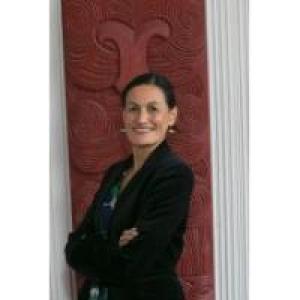
Professor Marama Muru-Lanning
 Associate Professor Dean Mahuta
Ngāti Mahuta, Waikato
Auckland University of Technology (AUT)
Ko Taupiri te maungaKo Waikato te awaKo Pōtatau te tangataHe piko, he taniwha,Waikato taniwharau.Kei aku nui, kei aku…
Associate Professor Dean Mahuta
Ngāti Mahuta, Waikato
Auckland University of Technology (AUT)
Ko Taupiri te maungaKo Waikato te awaKo Pōtatau te tangataHe piko, he taniwha,Waikato taniwharau.Kei aku nui, kei aku…
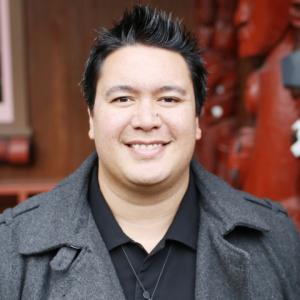
Associate Professor Dean Mahuta
 Professor Tahu Kukutai FRSNZ
Ngāti Tiipā, Ngāti Kinohaku, Te Aupouri, Ngāti Māhanga
Ngā Pae o te Māramatanga
Ngā Pae o te Māramatanga Co-Director Tahu Kukutai is Professor of Demography at Te Ngira: Institute for Population…
Professor Tahu Kukutai FRSNZ
Ngāti Tiipā, Ngāti Kinohaku, Te Aupouri, Ngāti Māhanga
Ngā Pae o te Māramatanga
Ngā Pae o te Māramatanga Co-Director Tahu Kukutai is Professor of Demography at Te Ngira: Institute for Population…
Professor Tahu Kukutai FRSNZ
Ētahi atu · Other projects
What are the implications of reclaiming and reviving the mātauranga associated with nga atua Māori and how does it contribute to reimagining the role of atua Māori in the modern world? How and why are atua Māori, and associated mātauranga, being referenced in different fields today? For example: Sport, recreation, and nutrition; Health and environmental…
View projectTe rangiwhāwhā o ngā Atua Māori: The widespread influence of atua Māori in a modern world
Kairangahau · Researchers
-
Associate Professor Dean Mahuta
Associate Professor Dean Mahuta
Ko Taupiri te maungaKo Waikato te awaKo Pōtatau te tangataHe piko, he taniwha,Waikato taniwharau.Kei aku nui, kei aku rahi, tēnā koutou katoa.Me wehi ki a Ihowa, me whakahōnore Te Arikinui Kuīni Ngā-wai-hono-i-te-pō. Ki te huinga kahurangi o te pō, okioki atu rā koutou ki tua o Paerau, ki reira tiakina atu ai. Ki ngā toronga waka o te motu whānui e kapi nei te hunga ora whānui, tēnā tātou katoa.Ko Dean Mahuta tōku ingoa, nō Waikato ahau, ko Ngāti Mahuta te hapū. I tupu mai au i Ngāruawāhia, ā, he raukura nō roto mai o te kura kaupapa Māori. I kuraina au ki Te Wharekura o Rākaumangamanga, he…
How can the synthesis of kaitiakitanga and green polymer science enhance and protect the mauri of water in Aotearoa? How can innovative polymer technologies protect and improve the mauri, wairua and kaitiakitanga of water in rural Māori communities? This project will conduct research into the impacts from septic tank seepage. This problem is both…
View projectWaiora ō Tātou Taonga – Healthy Water our Treasure
Kairangahau · Researchers
-
Professor Marama Muru-Lanning
Professor Marama Muru-Lanning
I am a Professor in Anthropology. My teaching and research is dedicated to Māori communities and prioritises tikanga, equity and inter-dependence. As an environmental anthropologist I focus on the cultural specificity of tangata whenua groups and their unique sense of place and belonging in Aotearoa. My professional expertise includes: building research relationships with Māori communities especially with coastal and river people, ecological consciousness, food security, kai sovereignty, kaumātua gardening, kai gathering, food and peace politics. What distinguishes me internationally as a…
This summer internship project is in support of one of Ngā Pae o te Māramatanga's large te reo research projects, led through Te Ipukarea. Te Reo o te Pā Harakeke seeks to understand the factors that contribute to successful intergenerational transmission of the Māori language in the home. The interns join the research team and support the research in a…
View projectTe Reo o te Pā Harakeke
Kairangahau · Researchers
-
Associate Professor Dean Mahuta
Associate Professor Dean Mahuta
Ko Taupiri te maungaKo Waikato te awaKo Pōtatau te tangataHe piko, he taniwha,Waikato taniwharau.Kei aku nui, kei aku rahi, tēnā koutou katoa.Me wehi ki a Ihowa, me whakahōnore Te Arikinui Kuīni Ngā-wai-hono-i-te-pō. Ki te huinga kahurangi o te pō, okioki atu rā koutou ki tua o Paerau, ki reira tiakina atu ai. Ki ngā toronga waka o te motu whānui e kapi nei te hunga ora whānui, tēnā tātou katoa.Ko Dean Mahuta tōku ingoa, nō Waikato ahau, ko Ngāti Mahuta te hapū. I tupu mai au i Ngāruawāhia, ā, he raukura nō roto mai o te kura kaupapa Māori. I kuraina au ki Te Wharekura o Rākaumangamanga, he…