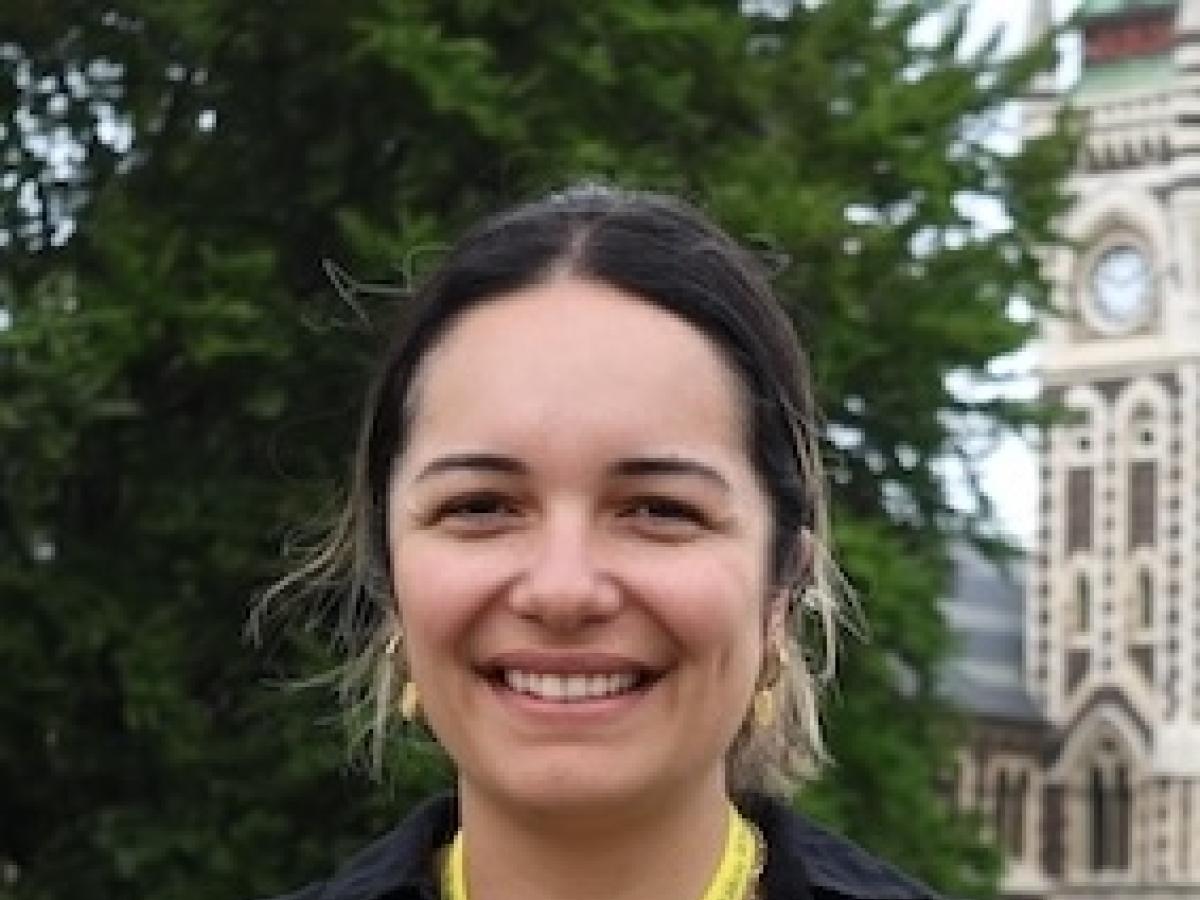
Manukura has been punching above its weight for over 20 years and now one of its own is digging into the reasons for its success. Keita Durie (Ngāti Kauwhata, Ngāti Raukawa, Rangitāne, Ngāi Te Rangi) has been undertaking research on the kura as part of doctoral study, supported by a NPM PhD scholarship.
Keita was in the second cohort of MANUKURA, beginning her secondary school journey in 2007. During this time, she saw first-hand how committed the school’s founders were to keeping the doors open and offering a different model of education for ākonga Māori.
Her whānau connections to the kura include her great-uncle, Tā Mason Durie, Uncle Nathan Durie, his wife Yvette Durie, and Uncle Rawiri Durie. All were visionaries who could see that a commitment to excellence was the way forward for Māori students in their high school years, she says.
With a role of only 12 students on the first day, the school opened its doors in 2005 under the mana of Aorangi Marae. Self-funded in the beginning, Keita remembers years of the school whānau delivering phone books and selling hāngī to keep the school operating.
“They were offered money from the Ministry of Education from a ‘Māori at risk’ fund, but this was rejected because the school did not want students to be framed in this way,” says Keita.
However, the lack of funding also had an upside and teachers had the freedom to deliver their curriculum in the way they knew worked, says Keita. Tā Mason's influential Māori health model Whare Tapa Whā was foundational to their approach to learning and ākonga well-being. Like many Māori education settings of the time, reo, tikanga and mātauranga Māori were embedded into learning, alongside two other important pou: elite sport and academic excellence.
“Aunty Yvette was an elite athlete herself, and she knew sport could be a catalyst to motivate ākonga. Uncle Nathan was devoted to teaching, and he was determined that students, particularly boys, would attain the educational excellence he knew they were capable of.”
Keita has interviewed former ākonga, whānau, staff, and school board trustees about those early years to better understand how the kura’s founding principles, teaching practices, and aspirations for ākonga contributed to long-term success.
Now raising their own families, former ākonga described the school’s focus on health and fitness, not only for themselves but also for their wider whānau as important to success. “Parents of former students told me their children’s healthy eating and commitment to fitness rubbed off on the wider whānau, who could see the value and began making changes themselves. One whānau entered a half marathon together as part of that commitment,” says Keita.
Keita heard a clear theme - that goal-setting support, elite sporting coaches, and specialist teachers all played a vital role in helping students reach their potential. They were treated as elite athletes with high-performance coaches and nutritionists to help attain goals." These insights resonated with Keita's own experience at MANUKURA. "From a young age, we had teachers who believed in us, cared for us, and walked alongside us the whole way,” she says.
While individual goals often changed over time, the process of goal setting helped develop habits that carried into adulthood, including how to organise themselves, develop strategies, think critically, and stay focused on what mattered to them.
While sport and academic excellence were important, Keita says her research found that one of the most significant things for former ākonga was the way the school affirmed who they were as Māori. At MANUKURA, gaining NCEA credits was seen as the baseline, not the ultimate and students were expected to go beyond that. “While there was a big focus on careers after high school, the bigger aim was growing successful adults who were proud to be Māori, who understood how to take care of their wellbeing, and who were engaged in their communities,” says Keita.
“Being proud to be Māori was huge. Many of those first ākonga now have their own children and many have chosen Māori educational pathways for them. The impact of the school has rippled out to the next generation. Parents of former students said the school was also transformational for them. Some were inspired to take te reo classes at wānanga. So the impact has not just been on one generation, but on three. There was also a strong theme of former ākonga wanting to give back to their communities,” she says.
Ultimately, Keita says, what stood out most was the gratitude former ākonga had for their teachers and for the way MANUKURA walked alongside them. “The kura’s holistic approach, with its focus on long-term wellbeing, excellence and being secure as Māori, helped set them up for lifelong success.