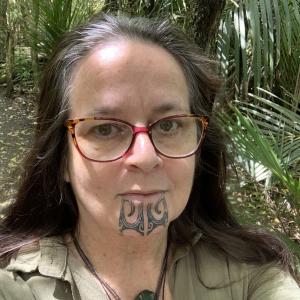
 Meretini Bennett-Huxtable
" loading="lazy" decoding="async">
Rautaki Māori
I was born in Whanganui and raised in Taihape, where I now live as a mum to three young mana wahine on our ancestral lands in Mōkai Pātea. I'm raising our girls in the lessons of sustainability and survival with the whenua whether as a gardener, hunter, gatherer or diver immersed in our taiao. We live flanked by the landmarks and sites of significance as told through our whakapapa.
An eagerness from a young age to learn the intricate art of whakapapa, under my mother's watchful eye, has helped to acquire transferable skills in building relationships, networking and collaborating. I have always been passionate about the wisdom of our tupuna, and I believe that this wisdom can help us as Māori to live vibrant and healthy lives.
I have been actively part of the movement of Maramataka in the Whanganui, Rangitīkei and Ruapehu region since 2017, however I have been a practitioner of it from birth. This passion for Maramataka has led me into dynamic and innovative mahi that is oriented around increasing community and whānau wellbeing through the active application of mātauranga Māori. I am currently employed as a Lead Systems Innovator at Healthy Families Whanganui Rangitīkei Ruapehu where I get to mobilise with our communities to explore and think innovatively, developing opportunities to tell and measure our own narrative as indigenous people.
Rangahau · Related projects
Māori (and Indigenous) women engage in embodied relationship with the natural environment in a range of ways, such as raranga, rongoā, or physical activity. This research explored what these embodied relationships can teach us about the potential for reciprocal healing between wahine and whenua, person and place, by developing a network of Māori and…
View projectWhakarongo, titiro, korikori kōrero ki ngā wāhine – exploring embodied and reciprocal healing relationship with our natural environments
Māori (and Indigenous) women engage in embodied relationship with the natural environment in a range of ways, such as raranga, rongoā, or physical activity. This research explored what these embodied relationships can teach us about the potential for reciprocal healing between wahine and whenua, person and place, by developing a network of Māori and Indigenous women and prioritising mātauranga wāhine.
Kairangahau · Researchers
-
 Professor Helen Moewaka Barnes
Professor Helen Moewaka Barnes
Professor Helen Moewaka Barnes is based out of Massey University and is currently Director of Whāriki and Co-director of the SHORE and Whariki Research Centre. She has worked on research in many areas; more recently relationships between the health of people and the health of environments, sexual coercion, alcohol and youth well-being and identity.Her work is both qualitative and quantitative and she is also involved in developing research within Māori paradigms. Helen is a long time NPM researcher and is now a NPM Theme Leader (Te Tai Ao - Natural Environment ) and member of our Research… -
Meretini Bennett-Huxtable
Meretini Bennett-Huxtable
I was born in Whanganui and raised in Taihape, where I now live as a mum to three young mana wahine on our ancestral lands in Mōkai Pātea. I'm raising our girls in the lessons of sustainability and survival with the whenua whether as a gardener, hunter, gatherer or diver immersed in our taiao. We live flanked by the landmarks and sites of significance as told through our whakapapa.An eagerness from a young age to learn the intricate art of whakapapa, under my mother's watchful eye, has helped to acquire transferable skills in building relationships, networking and collaborating. I have always… -
Assistant Professor Melissa Vera
Assistant Professor Melissa Vera
Dr. Vera is an Assistant Professor in the College of Nursing and The Institute for Research and Education to Advance Community Health (IREACH).As a citizen of the Tsm’syen and Yaqui First Nations, her research focuses on Indigenous health and climate change and is heavily grounded in Indigenous research methods and Indigenous knowledges. She focuses on social determinants of health, anti-racist praxis, and amplifying marginalized voices in health literature and policy.EducationBachelor of Arts (BA), Creative Writing, Seattle University, Seattle, WABachelor of Science (BSN), Nursing, Boise… -
Dr. Lillian Bartlett
Dr. Lillian Bartlett
Ētahi atu · Other people
Associate Professor Esther Willing
Ngāti Toarangatira, Ngāti Koata , Ngā Ruahine
University of Otago
Dr Esther Willing (Ngāti Toarangatira, Ngāti Koata, Ngā Ruahine) is an Associate Professor in Hauora Māori and the…