The re-cloaking of a former sheep farm on Te Pātaka o Rākaihautū (Banks Peninsula) is giving researchers an opportunity to support the Wairewa Rūnanga in its plans to create a thriving ngahere and mahika kai on the whenua.
Rūnaka chair and former NPM post-doctoral fellow Dr Matiu Prebble and Professor Shaun Ogilvie are leading the research and hope it will also benefit other communities around the motu.
Wairewa is one of the 18 papatipu rūnaka of Ngāi Tahu. It was able to reassert its mana over the whenua after sheep farmer Jim Wright bequeathed the farm to them in the early 2000’s. Much of the 280ha land is steep and highly eroded pastoral farming country, stretching down to the coastline, meaning there are multiple terrains and ecosystems for the Rūnaka to consider and care for.
Initially unsure how to manage the farm in the best interest of whānau, the Rūnaka underwent a lengthy process of consultation and trials before making the decision to recloak. Kaumātua Theo Bunker was key in getting the decision over the line. “Uncle said ‘look the whenua has been so badly treated for generations now, all I want is to have a really beautiful ngahere back here for my mokopuna,’ and that was how we came to make the final decision,” says Matiu.
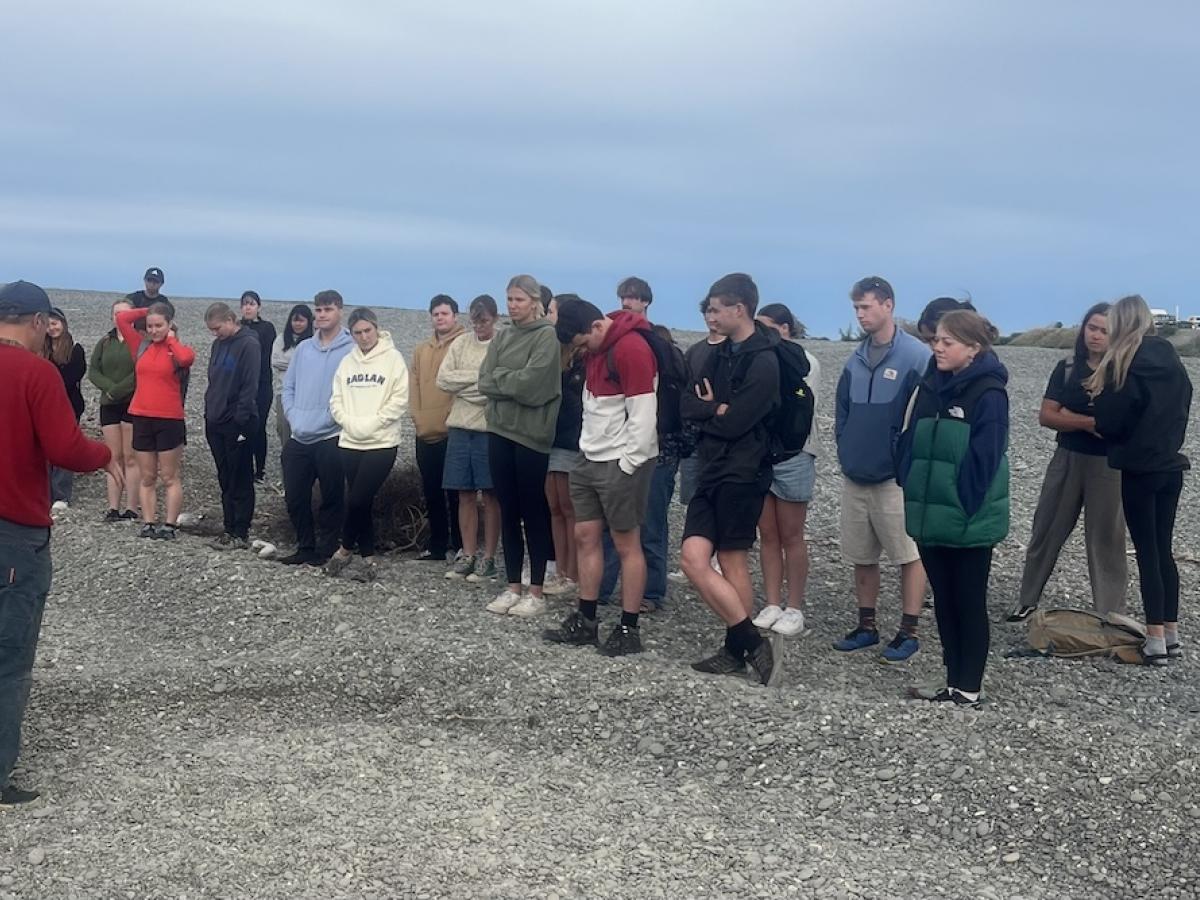
Matiu (Kāti Irakehu, Ngāi Tahu Whānui) and Shaun (Ngāti Awa, Te Arawa) have enlisted the help of their third year University of Canterbury students to understand the consequences that re-cloaking might have on the emerging ecosystem.
Now in its fifth year of recloaking, many of the 300,000 trees planted are now at head height and the whenua appears to be flourishing. However, with the transition from grass to forest habitat, pest monitoring and management have become a priority. Without grazing sheep, and a temporary abundance of grass seed, there is a risk of increased pests such as mice, rats and stoats, says Shaun. To monitor this, Shaun’s students are recording the pest species populations and trying to understand how they impact the two native gecko and two native skink populations on the whenua.
While re-planting comes with its own challenges, the benefits of re-cloaking are endless. Not all the benefits are visible - some may be occurring beneath the surface. Soil erosion is a massive problem on the steep slopes and one of the possible benefits of re-cloaking is greater soil stability. “Our researchers are looking at whether the plants are slowing down erosion and if the new plants are capturing moisture in the upper catchments. Many of our streams are eroding away especially in big rain events, and we’ve lost a lot of whenua in the lower catchment here, so it’s important to ascertain whether re-cloaking can help prevent this, says Matiu.
The research findings will be transferable to other regions grappling with erosion and extreme weather events, he says. “The other benefit of this research is that it keeps our Rūnaka informed about what is occurring on their whenua. This project is a great way for young researchers to contribute to Māori communities as well as to the environment – it shows the mahi they are doing is working to help solve real issues,” he says.
Because the land block is not far from Christchurch, the Rūnaka aspires for it to be a place to explore solutions for land regeneration and to show what is possible when Māori are kaitiaki of our own whenua.
“In thirty years’, we have a vision of seeing the kererū living in the ngahere instead of deer. We want this whenua to be a place to sustain our mahika kai, like it was before the 1800’s. Our Rūnaka-led research will help the ngahere as well as our rivers, streams and coast. It will continue to be a place for tuna and pūtakitaki (paradise duck) to be harvested in sustainable ways, based on mātauranga-guided science. We aim for this to be a place for people to connect with their whenua, to connect with each other and one day hopefully to connect with more of our traditional ways of gathering kai,” says Matiu.