About this research
This research seeks to investigate Māori jurisprudence. Māori jurisprudence, broadly speaking, comprises a set of tikanga and how those tikanga are used in everyday life to make decisions that affect Māori communities. For this research we wish to focus specifically on the most important institution of Māori decision-making: the hui. This pilot project will investigate a limited set of hui, specifically examining decision-making and the role of tikanga in such decision-making, within urban contexts. The research hypothesis upon which this project is designed is that modern everyday Maori jurisprudence is observable and distinct, despite the impact of Western legal frameworks.
The research will record and analyse 4 hui. To that end, the following research questions have been identified that will be asked in regards to each hui.
Primary research question: How do Maori in today's urban and modern environment use tikanga in hui to make decisions that affect significant numbers of other Maori?
The material required for this analysis comprise recordings of selected hui where decisions are made that affect the lives of significant numbers of Maori. These recordings will form the basis of transcripts, both of which will be analysed, using principles of discourse analysis, to determine the kinds of practices and language used. Human ethics approval will, of course, be sought.
When Māori hui in urban contexts to make important decisions that affect others outside that hui (of ‘civic impact’, or impacting on a significant number of Māori beyond that hui), do participants expect a basic set of practices and values (tikanga) to be demonstrated in making decisions in these hui?
What comprises the set of expected practices and values (tikanga) that underpinned decision-making for each hui?
What kinds of values and practices are observed to underpin such decision-making within these hui?
How does what actually occurs in decision-making hui match the stated expectations?
In evaluating different kinds of hui, do decision-making practices and values change used according to the environments or social contexts within which each hui takes place?
What kinds of reasons may explain any significant differences in the employment of values and practices?
How do participants in these hui explain how decision-making practices and values may differ depending on environment and context?
Where the hui is held in Māori, or bilingually, is there one particular language that is chosen to enact decision-making?
What reasons are articulated by hui participants for the selection of language?
He Pounga: the Māori Jurisprudence Project asks a question that has not yet been asked: how do Māori in today's modern, urban environments use tikanga Māori to make decisions that affect significant numbers of other Māori? To answer that question we must examine what Māori actually do in hui where such decisions are made. What values and practices do we use? How do we use them in decision-making? What do we believe we are doing in our use of tikanga to make decisions on the behalf of other Māori, and how does what we actually do align with these
The research hypothesis upon which this project is designed is that every day modern Māori jurisprudence is observable, and that those who utilise it are able to adapt the practices of Maori jurisprudence to meet the pressures imposed upon it by Western law, but in such a way that maintains and upholds Maori values and cultural integrity.
To pursue these questions the Pilot Project will identify appropriate hui where decisions are made that affect the lives of significant numbers of Maori. Such hui could include (but are not limited to) the tikanga wānanga of a community law centre, a restorative justice hui, a school-based tikanga wānanga; a rangatahi court hearing, a settlement negotiations hui or mediation where tikanga principles are used; a Māori affairs select committee meeting.
Kairangahau · Researchers
 Dr. Māmari Stephens
Te Rarawa
Te Herenga Waka Victoria University of Wellington
Ko Pukenamu te maunga, ko Wainui te awa, Ko Tinana te waka, ko Tumoana te tangata. He uri tēnei nō Te Rarawa; ko Ngāti…
Dr. Māmari Stephens
Te Rarawa
Te Herenga Waka Victoria University of Wellington
Ko Pukenamu te maunga, ko Wainui te awa, Ko Tinana te waka, ko Tumoana te tangata. He uri tēnei nō Te Rarawa; ko Ngāti…
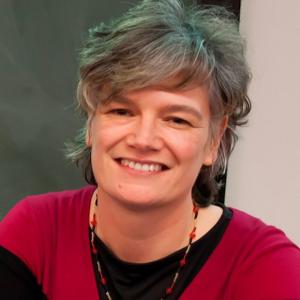
Dr. Māmari Stephens
Ētahi atu · Other projects
What is the current state of knowledge on wairua, pregnancy and birthing, what are the key initia-tives and opportunities for collaborative research pro-jects, and who are the key stakeholders in this area? Pregnancy and birth are key times in the lives of mothers, babies and their whānau. Some whānau have the re-sources and life contexts that enable them…
View projectAro ki te Wairua o te Hā – Wairua Approach to Birthing and Pregnancy
What are the mental health needs for rangatahi, what services are available to them, what are the gaps in rangatahi primary mental health care, and what are the potential innovations/strategies that would fill these gaps? The overall aim of this project has been to improve primary mental healthcare for rangatahi and to achieve this the researchers are…
View projectScoping Rangatahi Primary Mental Health Issues, Care and Services – A Kaupapa Māori Approach to Identifying the Gaps and Need
What are the bases for Māori enterprise collaboration? How do Māori activate Indigenous entrepreneurial capabilities for collaboration and what forms do Māori enterprise collaborations take? By exploring Māori enterprise collaboration as a fundamental but challenging strategy for Māori economic development, this project identifies principles and models…
View projectTe Hononga: Modelling Indigenous Collaborative Enterprise
Kairangahau · Researchers
-
 Dr Matthew Roskruge
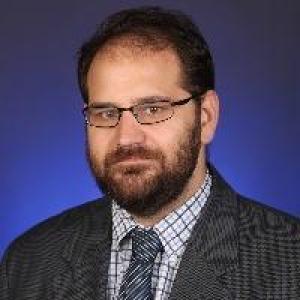
Dr Matthew Roskruge
Matthew Roskruge (Te Atiawa, Ngāti Tama) is codirector of Te Au Rangahau and a Senior Lecturer in the School of Economics and Finance. He has an academic background in health and population economics, and researchers broadly as an applied economist and social scientist. His current research projects include: Māori economics & mixed-methods Social capital and wellbeing research Effective health systems and service delivery; Health Economics Population, labour and regional economics