About this research
What are the threshold concepts for undergraduate study in the field of Māori studies?
How can the identification of Māori studies’ threshold concepts be used to support teaching and student achievement in Māori studies programmes?
According to Māori oral tradition, Te Ihonga was a demi-god who could tie intricate knots. The resulting entanglements became known as ‘te ruru a Te Ihonga’ (the ties of Te Ihonga) (Mead and Grove 2001:206). They were regarded as so complicated and secure that only people who knew Te Ihonga’s secret were thought to be able to untie them.
Threshold concepts (Meyer and Land 2006) work in a similar kind of way within academic disciplines. When students’ first start learning about a new discipline or field of study, they can feel like their knowledge is disjointed and missing the ‘secret formula’. Often, what they are struggling to understand are the threshold concepts, the troublesome or transformational ideas that students have to figure out first in order to move on to more complex or advanced levels of learning. These conceptual gateways or thresholds are distinctive because they are transformative, irreversible and integrative, and mark a cognitive and ontological shift for students (Meyer and Land 2006). Like the knots of Te Ihonga, once students (and their teachers) understand the ‘secret’ of the threshold concept, the next stage of learning can be ‘untangled’.
Many different disciplines around the world have already identified their various threshold concepts – for example, in biology, photosynthesis is considered a threshold concept because of its complicated process and abstract nature (Taylor 2006: 91), whereas abstraction has been identified as a threshold concept necessary for higher learning in computer science (Eckerdal et al. 2006), and, in economics, researchers found that opportunity cost was a threshold concept that helped students to understand the more complex ideas of comparative advantage and competitive equilibrium (Davies & Mangan 2008: 723). While this and similar research has enabled a progressive understanding of how students learn in other disciplines, comparable work has not yet been undertaken for the discipline of Māori studies. By identifying the threshold concepts in Māori studies, this project can assist students (and their teachers) in Māori studies throughout New Zealand to untangle their ‘ruru’ and achieve academic success.
This project seeks to identify the threshold concepts for Māori studies by way of a mixed methods research design that is grounded in kaupapa Māori methodology and involves five distinct but connected research phases:
- An integrative literature review to further explore the concept of threshold concepts, and create an overview of the development of the field of Māori studies.
- A detailed synthesis matrix analysis of the reading materials currently used to teach Māori studies in New Zealand universities, in order to identify a set of potential threshold concepts.
- A set of interviews with experienced academic staff in Māori studies units around New Zealand to identify what they believe to be the threshold concepts of the Māori studies discipline. An initial pilot set of interviews will be undertaken with staff in two Māori studies units, at Victoria University of Wellington and the University of Canterbury (Part A). A second set of interviews, to test/confirm the results of the first set, will be undertaken later with staff in additional Māori studies units (Part B).
- The establishment of an online Māori studies network group to further identify and discuss threshold concepts. This phase may include the use of the Delphi method, a qualitative research process that involves posing ‘problem’ questions to subject experts and uses their anonymous answers and follow-up discussion to generate consensus. The Delphi method has been used successfully in other disciplinary contexts to identify and validate threshold concepts.
- An online survey of current Māori studies students throughout New Zealand to corroborate and/or refine the findings of Phases 2-4.
Kairangahau · Researchers
 Associate Professor Meegan Hall
Ngāti Ranginui, Ngāti Tūwharetoa, Ngāi Te Rangi, Ngāti Apakura
Te Herenga Waka Victoria University of Wellington
Meegan Hall (Ngāti Ranginui, Ngāi Te Rangi, Ngāti Tūwharetoa and Ngāti Apakura) is Assistant Vice-Chancellor…
Associate Professor Meegan Hall
Ngāti Ranginui, Ngāti Tūwharetoa, Ngāi Te Rangi, Ngāti Apakura
Te Herenga Waka Victoria University of Wellington
Meegan Hall (Ngāti Ranginui, Ngāi Te Rangi, Ngāti Tūwharetoa and Ngāti Apakura) is Assistant Vice-Chancellor…
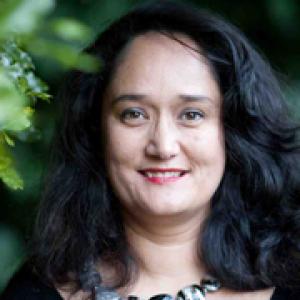
Associate Professor Meegan Hall
Ētahi atu · Other projects
What is the current state of knowledge on wairua, pregnancy and birthing, what are the key initia-tives and opportunities for collaborative research pro-jects, and who are the key stakeholders in this area? Pregnancy and birth are key times in the lives of mothers, babies and their whānau. Some whānau have the re-sources and life contexts that enable them…
View projectAro ki te Wairua o te Hā – Wairua Approach to Birthing and Pregnancy
What are the mental health needs for rangatahi, what services are available to them, what are the gaps in rangatahi primary mental health care, and what are the potential innovations/strategies that would fill these gaps? The overall aim of this project has been to improve primary mental healthcare for rangatahi and to achieve this the researchers are…
View projectScoping Rangatahi Primary Mental Health Issues, Care and Services – A Kaupapa Māori Approach to Identifying the Gaps and Need
What are the bases for Māori enterprise collaboration? How do Māori activate Indigenous entrepreneurial capabilities for collaboration and what forms do Māori enterprise collaborations take? By exploring Māori enterprise collaboration as a fundamental but challenging strategy for Māori economic development, this project identifies principles and models…
View projectTe Hononga: Modelling Indigenous Collaborative Enterprise
Kairangahau · Researchers
-
 Professor Matthew Roskruge
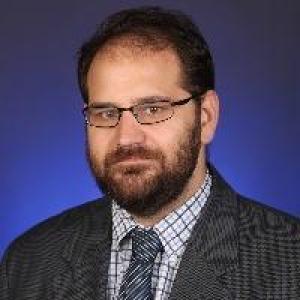
Professor Matthew Roskruge
Professor Matt Roskruge (Te Ātiawa, Ngāti Tama) is a Māori economist specialising in population and development economics. He is a Rutherford Discovery Fellow, Director of Te Au Rangahau, Associate Dean Māori, and Professor of Economics at Massey University. His research spans Māori economic development, social capital and wellbeing, health economics and health-system performance, and population, labour, regional and urban economics. His work draws on applied econometrics, mixed methods and Māori research approaches to examine how people, place, relationships and institutions shape economic…