About this research
What is the pedagogy of pūrākau, and how does it operate as an Indigenous story work approach to advance kaupapa Māori research and innovative contributions to broader research and pedagogical processes within Aotearoa?
Given this is a scoping proposal, the following questions are pertinent to the investigation of the above research question:
What is the theory, methodology, and pedagogy of pūrākau? How was it used in traditional Māori society, and how is it utilised today?
How do pūrākau connect to the pedagogy of Indigenous story work and storytelling (including non-Indigenous) approaches?
How can the pedagogy of Indigenous story work be utilised for social transformation, in particular, in a digital context?
‘Te Pū o te Rākau: Pūrākau as pedagogy’ is a one-year scoping project that investigatespūrākau (storytelling) processes, practices and production of Māori knowledge systems. Coupled with this is the place and potential of contemporary pūrākau as an Indigenous innovation to support social transformation and human flourishing. More than an ‘incredible story’ (Williams, 1985), pūrākau generated knowledge, understanding and inspiration about our natural, social and spiritual worlds. Just as pūrākau of the past were crucial to our sustainability as whānau, hapū and iwi, pūrākau continue to offer ways to express our diverse identities, articulate our stories of struggle and inspiration, and strengthen and liberate our communities.
This project investigates the pedagogical dimension of pūrākau, with the aim of progressing the theoretical and analytical development of pūrākau to ensure a strong methodological foundation from which to develop pūrākau as an interdisciplinary story work practice and analysis. This kaupapa Māori qualitative study uses a comprehensive review of relevant literature, pūrākau approach to narrative inquiry (Lee, 2008) as well a wānanga process (Pihama & McRoberts, 2009) to engage with pūrākau experts (8-10) as well as Indigenous story work scholars (2).
A feature of this research project is the collaborative nature of this project that is cross-institutional and includes senior Māori academics and leading international scholars. Led by Assoc Prof Jenny Lee (University of Waikato), the research team includes Prof Wiremu Doherty (Te Whare Wānanga o Awanuiārangi), Assoc Prof Leonie Pihama (University of Waikato), and Dr Sarah-Jane Tiakiwai (Waikato-Tainui Endowed College), as well as international Indigenous story work scholar Prof Joann Archibald (University of British Columbia) and Prof Karina Walters (University of Washington).
Kairangahau · Researchers
 Professor Jenny Bol Jun Lee-Morgan
Waikato, Ngāti Mahuta, Ngāti Te Ahiwaru
Te Whare Wananga o Wairaka Unitec
Dr Lee-Morgan is Professor of Māori Research and was a founding Director of Ngā Wai a te Tui Māori Research Centre, Te…
Professor Jenny Bol Jun Lee-Morgan
Waikato, Ngāti Mahuta, Ngāti Te Ahiwaru
Te Whare Wananga o Wairaka Unitec
Dr Lee-Morgan is Professor of Māori Research and was a founding Director of Ngā Wai a te Tui Māori Research Centre, Te…
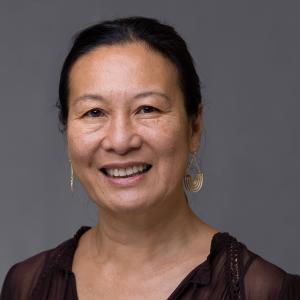
Professor Jenny Bol Jun Lee-Morgan
Ētahi atu · Other projects
What is the current state of knowledge on wairua, pregnancy and birthing, what are the key initia-tives and opportunities for collaborative research pro-jects, and who are the key stakeholders in this area? Pregnancy and birth are key times in the lives of mothers, babies and their whānau. Some whānau have the re-sources and life contexts that enable them…
View projectAro ki te Wairua o te Hā – Wairua Approach to Birthing and Pregnancy
What are the mental health needs for rangatahi, what services are available to them, what are the gaps in rangatahi primary mental health care, and what are the potential innovations/strategies that would fill these gaps? The overall aim of this project has been to improve primary mental healthcare for rangatahi and to achieve this the researchers are…
View projectScoping Rangatahi Primary Mental Health Issues, Care and Services – A Kaupapa Māori Approach to Identifying the Gaps and Need
What are the bases for Māori enterprise collaboration? How do Māori activate Indigenous entrepreneurial capabilities for collaboration and what forms do Māori enterprise collaborations take? By exploring Māori enterprise collaboration as a fundamental but challenging strategy for Māori economic development, this project identifies principles and models…
View projectTe Hononga: Modelling Indigenous Collaborative Enterprise
Kairangahau · Researchers
-
 Dr Matthew Roskruge
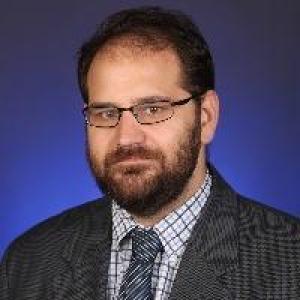
Dr Matthew Roskruge
Matthew Roskruge (Te Atiawa, Ngāti Tama) is codirector of Te Au Rangahau and a Senior Lecturer in the School of Economics and Finance. He has an academic background in health and population economics, and researchers broadly as an applied economist and social scientist. His current research projects include: Māori economics & mixed-methods Social capital and wellbeing research Effective health systems and service delivery; Health Economics Population, labour and regional economics