About this research
How can New Zealand’s state legal system recalibrate to challenge the Crown’s assumption of sovereignty over lands and waters treasured by Māori?
Drawing on the research findings of the other Te Tai Ao foundational projects, this project will lead to new laws, policies, plans and models for government and iwi/Māori communities, and will enable Māori to reassert traditional knowledge in governing land, water and resources to better enable flourishing Māori health, wellbeing and prosperity.
Legal systems have the capacity to recalibrate and reflect the dreams and nations of the modern country. Indigenous law academics agree and argue that “different principles” are required “to judge Indigenous contributions because contemporary legal rules were developed within a cultural logic that erased prior Indigenous presence and ecological relationships”.
There are now contemporary examples of considerable legal imagination evident in Aotearoa New Zealand. However, new understandings and challenges are paramount around substantive issues such as whether water is common or private property; how should Māori communities tackle climate change, resource extraction, carbon credits and emission trading; and how can we address related issues such as increasing demands for economic and employment security?
This project accepts these challenges by specifically seeking to explore the transformation of existing law, policy, plans and governance models and working towards creative and innovative methods for enabling economic growth, fostering social and cultural wellbeing and vitality, and achieving environmental sustainability.
Objectives of the Research:
- Consider how Māori knowledge and laws can best be utilised to govern Māori owned land and resources, and how law, policy, plans and models can be reformed to embrace these opportunities.
- Understand how Māori knowledge guides Māori decision-making for balancing sustainable use of land and resources and how law can be reformed to embrace these opportunities.
- Explore how law, policy and plans ought to be recalibrated to support continuing Māori desires to own and/or govern currently assumed or asserted Crown or publicly owned lands and natural resources (e.g. lands within national parks, minerals and freshwater).
Whakaahua & Ataata · Images & Videos
Kairangahau · Researchers
 Professor Jacinta Ruru FRSNZ
Raukawa, Ngāti Ranginui, Ngāti Maniapoto
Ngā Pae o te Māramatanga, University of Otago
Jacinta Ruru is a Professor of Law at the University of Otago. Her research has focused on exploring Indigenous…
Professor Jacinta Ruru FRSNZ
Raukawa, Ngāti Ranginui, Ngāti Maniapoto
Ngā Pae o te Māramatanga, University of Otago
Jacinta Ruru is a Professor of Law at the University of Otago. Her research has focused on exploring Indigenous…

Professor Jacinta Ruru FRSNZ
 Dr Phil Lyver
Landcare Research Manaaki Whenua
Phil’s research has used ecological science and indigenous and local knowledge to interpret changes in demographic…
Dr Phil Lyver
Landcare Research Manaaki Whenua
Phil’s research has used ecological science and indigenous and local knowledge to interpret changes in demographic…
Dr Phil Lyver
 Dr Kepa Morgan
Ngāti Pikiao of Te Arawa
Ngati Makino Iwi Authority
Dr Kepa Morgan's (BE, MBA, PhD, CPEng, FIPENZ ) bi-cultural background is rooted in his cultural identity as Ngāti…
Dr Kepa Morgan
Ngāti Pikiao of Te Arawa
Ngati Makino Iwi Authority
Dr Kepa Morgan's (BE, MBA, PhD, CPEng, FIPENZ ) bi-cultural background is rooted in his cultural identity as Ngāti…
Dr Kepa Morgan
Ētahi atu · Other projects
How will tikanga Māori empower the evaluation of the experience of Māori whānau in crisis to measure the performance of the Government’s new obligations in law to Te Tiriti o Waitangi? Our longterm objective is to bring new evaluative knowledge to empower the mana of whānau in crisis. Māori have clearly and consistently stressed that a Māori child’s…
View projectOranga Tamariki: new knowledge for evaluating and empowering whānau well-being
Kairangahau · Researchers
-
 Khylee Quince
Khylee Quince
Khylee is from the iwi of Te Roroa/Ngapuhi and Ngati Porou. She teaches Criminal Law, Advanced Criminal Law and Youth Justice. Her research interests lie within those fields; in particular Māori and the criminal justice system, tikanga Māori and the law, restorative justice and alternative dispute resolution, Māori women and the law, indigenous peoples and the law. Prior to joining the University of Auckland's Law Faculty in 1998, Khylee practiced in criminal and family law for three years. Khylee is now Associate Head of School and Director of Maori and Pacific Advancement at the AUT School… -
 Dr Amohia Boulton
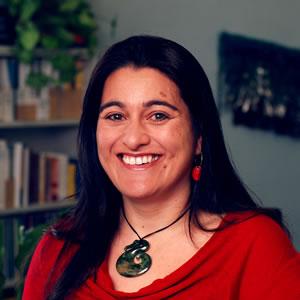
Dr Amohia Boulton
Dr Amohia Bolton is the Research Director at Whakaue Research for Māori Health & Development with a career that has spanned public policy and academia. She has previously worked as a data analyst (Ministry of Education) policy analyst, senior analyst (Te Puni Kōkiri) and Private Secretary (Māori Affairs) and was awarded an HRC Māori Health Training Fellowship to pursue doctoral study at Massey University in Palmerston North. Her post-doctoral research took her to the University of Northern British Columbia in Canada where she worked with the Lheidli T'enneh First Nations people.Her research… -
Professor Jacinta Ruru FRSNZ
Professor Jacinta Ruru FRSNZ
Jacinta Ruru is a Professor of Law at the University of Otago. Her research has focused on exploring Indigenous peoples' legal rights to own, manage and govern land and water including national parks and minerals in Aotearoa New Zealand, Canada, United States, Australia and the Scandinavia countries. She has led, or co-led, several national and international research projects including on the Common Law Doctrine of Discovery, Indigenous peoples’ rights to freshwater and multidisciplinary understandings of landscapes and writes for several legal publishers including Adams’ Land Transfer and… -
 Ms Tania Williams
Ms Tania Williams
The original research pilot for this project arose out of a desire to make the transition for many whānau relocating from their city/urban lives back home, as comfortable as possible. It was felt that this could be best achieved by facilitating access to innovative solutions for essential infrastructure technologies, which would enhance the quality of life…
View projectHybrid Construction Component Portable Infrastructure Solution Research
Kairangahau · Researchers
-
Dr Kepa Morgan
Dr Kepa Morgan
Dr Kepa Morgan's (BE, MBA, PhD, CPEng, FIPENZ ) bi-cultural background is rooted in his cultural identity as Ngāti Pikiao of Te Arawa. During his engineering career Kepa has strengthened his understanding of Pikiaoanga while also striving for excellence both professionally and academically. As an indirect result of this combination of identity, interests and expertise, Kepa has found himself at the juncture between Māori aspirations and the engineering profession on many occasions. At times these have been adversarial situations, and sometimes the results have been less than optimal, however…
Tangi is the ultimate form of Māori cultural and community expression. Addressing the dearth of scholarly information, this study considers tangi practice, whakapapa, changing environments, community values, sharing knowledge, ritual and what it means to be Māori. The research team has been examining the life-values, beliefs and practices related to…
View projectAituā: Death in a changing Māori World
Kairangahau · Researchers
-
 Professor Linda Waimarie Nikora FRSNZ, HFNZPS
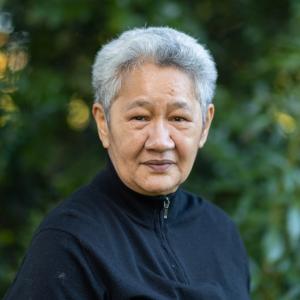
Professor Linda Waimarie Nikora FRSNZ, HFNZPS
Linda Waimarie Nikora is co-director of Ngā Pae o te Māramatanga and a Professor of Indigenous Studies at Te Wānanga o Waipapa, the University of Auckland. She was previously Professor of Psychology and Director of the Maori & Psychology Research Unit at the University of Waikato. Her specialities are in in community psychology, applied social psychology, ethnopsychology and Maori development. Professor Nikora has a celebrated research and academic career, working in community, social and indigenous psychologies, with a specific focus on Māori wellbeing and self-determination. Her research in…