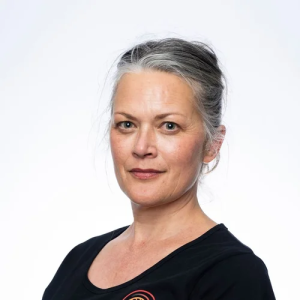
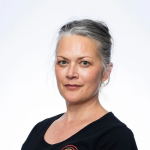
 Professor Chellie Spiller
" loading="lazy" decoding="async">
Professor of Management and Leadership Waikato Management School
Ko Ngāti Kahungunu ki Wairoa tōku iwi.
Ko Ngāi Tahu Matawhaiti Iwitea tōku hapū.
I am Professor of Leadership and Management at Waikato Management School, University of Waikato. My research explores how people, organisations and communities cultivate the capacities needed to act wisely within relationships, responsibilities and conditions of uncertainty. Across my work, I bring together Indigenous leadership, Māori economies of wellbeing, wayfinding, stewardship, relational wealth, cultural intelligence, wisdom and systems change.
My doctoral research developed the idea of relational wellbeing and wealth across spiritual, environmental, social, cultural and economic dimensions of work and enterprise. Since then, my scholarship has continued to investigate Māori and Indigenous approaches to leadership, governance, business, decision-making and collective flourishing. I have led and contributed to major kaupapa Māori research programmes through Ngā Pae o te Māramatanga, including work on whānau livelihoods, Māori economies of wellbeing, Māori leadership and Indigenous decision-making. This work is grounded in relationships with Māori researchers, whānau, iwi, Māori economy practitioners, policy communities and end-users.
My current research is gathering around Oceanic Intelligence: an emerging body of work concerned with how people learn to perceive, orient and participate within a living world of relationships, movement, uncertainty and reciprocal influence. This work grows from earlier scholarship on wayfinding leadership and asks how oceanic, Māori and Indigenous knowledge traditions can help us navigate conditions of social, ecological, technological and political disruption.
I am co-author of Wayfinding Leadership: Groundbreaking Wisdom for Developing Leaders with Hoturoa Barclay-Kerr and John Panoho. The book draws on traditional Polynesian navigation to support more ethical, relational and intergenerational approaches to leadership. It was shortlisted for the Māori Book of the Year Awards and included in Te Takarangi, the Royal Society Te Apārangi list of 150 significant Māori non-fiction works. I have also co-edited and authored books and resources on practical wisdom, Indigenous leadership, authenticity, culture and systems change, including Practical Wisdom, Leadership and Culture and The Catalyst’s Way.
My research and public scholarship travel across academic, organisational, Indigenous, policy and international settings. I was Leader-in-Residence with the Atlantic Institute at the Rhodes Trust, Oxford, where I developed The Catalyst’s Way and its Companion Guide as open-source leadership resources for global change agents. I have also contributed to international systems-change and wellbeing economy conversations through The Beyond Lab at the United Nations Office at Geneva, the Indigenous Igniters Circle, the Wellbeing Economy Alliance, Earth4All, Dilin Duwa and the University of Melbourne.
Alongside my research, I bring extensive professional experience in tourism, management and marketing in Aotearoa New Zealand and internationally. I have held senior executive roles and continue to work with leaders and organisations across government, business, health, education, iwi, community and international settings. My wider professional contributions include service on the Marsden Fund Council, editorial and advisory roles, Fellowship of the International Leadership Association, and major awards including a Fulbright Senior Scholar Award, Dame Mira Szászy Māori Alumni Award, Te Amorangi National Māori Academic Excellence Award and university research excellence recognition.
My work is ultimately concerned with leadership in service of people, place and future generations: how we listen well, make good decisions, honour relationships, and create conditions for collective flourishing.
Ētahi atu · Other people
 Professor Sarah-Jane Paine
Waipapa Taumata Rau, University of Auckland
Professor Sarah-Jane Paine (Tūhoe) is a leading Māori health researcher and internationally respected authority on…
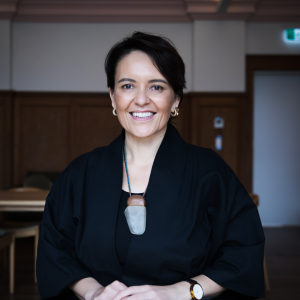
Professor Sarah-Jane Paine
 Associate Professor Deborah Heke
Ngā Puhi, Te Arawa
Te Whare Wananga o Wairaka Unitec
Associate Professor Deborah Heke (Ngā Puhi, Te Arawa) is the Director of Ngā Wai a Te Tūī Māori and Indigenous Research…
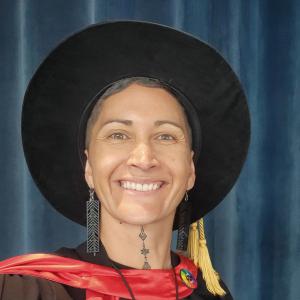
Associate Professor Deborah Heke
 Kiri Edge
Te Wānanga o Aotearoa
Kiri has contributed to a wide range of interdisciplinary research and evaluation projects across both academic and…