About this research
What are some of the psychological, emotional and spiritual influences that learners have experienced when learning te reo Māori?
How are these influences related to past trauma or negative experiences of theirs (or others) and in what ways have these influences impacted their engagement with and learning of te reo Māori?
What kinds of intergenerational trauma are having an impact on the ability to engage with and learn/speak te reo Māori?
In what ways do learners overcome these barriers to being motivated to learn te reo Māori?
How can teaching and learning pedagogies be adapted to accommodate psychological, emotional and spiritual barriers to learning te reo Māori that enhances and empowers learner experiences?
There are a range of factors that inhibit learners from engaging and participating in te reo Māori and these include whakamā (shame or embarrassment), hopo (fear, anxiety) and perhaps psychological, emotional or spiritual occurrences that have impacted on their confidence or their desire to learn. This project will investigate the psychological, emotional and spiritual barriers and struggles that can be experienced when learning te reo Māori and how these experiences shape and impact an individual’s learning pathway and trajectory. From these insights, new approaches to learning te reo Māori will be developed, along with new tools and resources that support the idea of te reo Māori as a form of healing and a language of empowerment.
The aims of this project are to a) Explore and understand the psychological, emotional and spiritual influences and impacts on a learner of te reo; b) Examine how intergenerational trauma and impacts of colonisation have contributed to individuals learning journeys of te reo Māori; c) Examine the motivators and barriers around the desire for learning te reo Māori; and d) Investigate new teaching and learning strategies and pedagogical approaches to learning te reo Māori (including new resources) that consider the psychological, emotional and spiritual contexts in which individuals are learning te reo Māori.
This rangahau project will employ predominantly qualitative methods to allow in-depth investigation of psychological, emotional and spiritual impacts on learner experiences. Methods will include thematic analysis and will be guided by the overarching values and principles of TWoA’s rangahau strategy and Kaupapa Māori theory.
Kairangahau · Researchers
 Dr Acushla Dee Sciasia
Ngaruahine Rangi, Ngāti Ruanui, Te Ati Awa
Massey University
Dr Acushla Sciascia is of Ngāruahine Rangi, Ngāti Ruanui and Te Āti Awa descent. She completed her doctoral studies in…
Dr Acushla Dee Sciasia
Ngaruahine Rangi, Ngāti Ruanui, Te Ati Awa
Massey University
Dr Acushla Sciascia is of Ngāruahine Rangi, Ngāti Ruanui and Te Āti Awa descent. She completed her doctoral studies in…
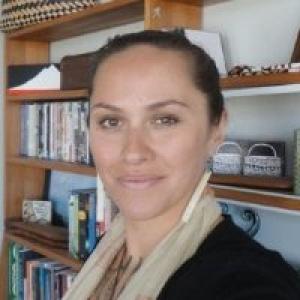
Dr Acushla Dee Sciasia
Ētahi atu · Other projects
This project explored how Māori and Indigenous communities used digital platforms to protect and share mātauranga, with a focus on te taiao. It investigated tikanga-based digital protocols and iwi/hapū needs, informing the development of Indigenous-led digital solutions.
View projectDigital Solutions to Support Knowledge and Connections
This project explored how Māori and Indigenous communities used digital platforms to protect and share mātauranga, with a focus on te taiao. It investigated tikanga-based digital protocols and iwi/hapū needs, informing the development of Indigenous-led digital solutions.
Kairangahau · Researchers
-
 Dr Hauiti Hākopa
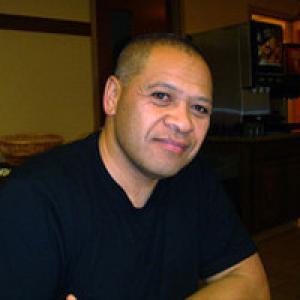
Dr Hauiti Hākopa
Dr Hauiti Hakopa’s deep understanding of the liberating power of education and the critical need for equitable access to learning and teaching has been an intrinsic part of his own life’s journey.He has a deep interest in land and whakapapa, cartography and the mapping of Māori connection and relationship to their ancestral landscapes and specialises in collecting information about waahi tapu, waahi tipuna (sacred|cultural/heritage|ancestral sites), oral narratives (moteatea - traditional songs/chants, korereo purakau - stories) and whakapapa (genealogies) embedded in ancestral landscapes. He… -
Dr Acushla Dee Sciasia
Dr Acushla Dee Sciasia
Dr Acushla Sciascia is of Ngāruahine Rangi, Ngāti Ruanui and Te Āti Awa descent. She completed her doctoral studies in 2013 with Massey University and since then has been working in the public sector as a research, evaluator and strategist. Dee’s research background has largely emerged from kaupapa Māori research, specifically Māori negotiating and navigating new technologies and online environments. Dee’s research interests have transitioned into the climate change space and she was a part of the National Risk Assessment Framework for Climate Change panel and is co-leading the Mātauranga ā…
This research explores how mātauranga Māori enriches natural hazard resilience in Aotearoa by integrating Indigenous knowledge with science. It highlights Māori-led solutions that strengthen cultural identity, wellbeing, and community response to disasters. The resulting publication will be accessible and visually engaging, showcasing collaborative research…
View projectWhanake te kura i Tawhitinui – Building resilience within Māori communities
This research explores how mātauranga Māori enriches natural hazard resilience in Aotearoa by integrating Indigenous knowledge with science. It highlights Māori-led solutions that strengthen cultural identity, wellbeing, and community response to disasters. The resulting publication will be accessible and visually engaging, showcasing collaborative research to support thriving Māori communities facing environmental challenges.
Kairangahau · Researchers
-
 Kristie-Lee Thomas
Kristie-Lee Thomas
-
 Professor Taiarahia Black
Professor Taiarahia Black
-
Dr Darren Ngaru King
Dr Darren Ngaru King
Darren Ngaru King is an interdisciplinary research scientist with experience spanning the earth and human-systems sciences. His research focus is climate variability, tsunamis and impacts on Māori communities. He investigates factors that influence the risk, vulnerability and endurance of climate-sensitive sectors, systems and groups, using approaches grounded in applied geology, Māori oral history and Mātauranga Māori. Darren is also a member of the Kāhui Māori of the Deep South National Science Challenge. -
Dr Peter Meihana
Dr Peter Meihana
-
Israel Birch
Israel Birch
-
Professor Regan Potangaroa
Professor Regan Potangaroa
-
Dr Ruakere Hond
Dr Ruakere Hond
-
Lara Taylor
Lara Taylor
-
Tonga Karena
Tonga Karena
What is the current state of knowledge on wairua, pregnancy and birthing, what are the key initia-tives and opportunities for collaborative research pro-jects, and who are the key stakeholders in this area? Pregnancy and birth are key times in the lives of mothers, babies and their whānau. Some whānau have the re-sources and life contexts that enable them…
View project