About this research
This project explores the role that enterprise plays in indigenous self-determination. In New Zealand, we have chosen to examine Māori business networks (MBNs), which we argue are a manifestation of this struggle, but suffer from the absence of a sustainable business model. Our research question is, 'what is the role of Māori business networks in Māori self-determination and sustainable economic development'?
The project is about enhancing regional Māori economies and the capability of Māori entrepreneurs and the performance of Māori enterprises. This is to be achieved by studying Māori business networks (MBNs) as 'contextually specific' and understudied intermediaries in regional Māori economies. The project is part of an international indigenous research project entitled 'Mahi Tahi mo Te Hinonga: Indigenous Collaboration for Enterprise' (or 'ICE'). ICE explores the role that enterprise plays in indigenous self-determination in the United States, Canada, Australia and New Zealand.
These countries were chosen because of their common British colonial history and its ongoing impact on indigenous peoples, and as signatories to the United Nations Declaration on the Rights of Indigenous Peoples. Research partners in each country are responsible for securing local funding for their part in the project and defining the scope of their country-cases.
In New Zealand, we have chosen to examine Māori business networks, which we argue, epitomise the Māori struggle for self-determination, but suffer from the absence of a sustainable business model. Our primary research question is, 'what is the role of Māori business networks in Māori self-determination and sustainable economic development'? Our contention is that Māori business networks do contribute, but how this is understood and enacted is tacit knowledge of those involved. We intend, through this research, to uncover the 'thinking,' 'being' and 'doing' associated with regional Māori business networks for their own purposes and as insights for indigenous business networks in our partner countries.
Subsidiary questions are:
- why do Māori business networks exist?
- how do Māori business networks exist?
- what are the enablers and barriers to their existence?
Kairangahau · Researchers
 Dr Ella Henry
Ngāti Kahu ki Whangaroa, Ngāti Kuri, Te Rarawa
Auckland University of Technology (AUT)
Ella Henry has a background in Sociology, Māori Studies, Management Studies and Māori Development. Her PhD focused on…
Dr Ella Henry
Ngāti Kahu ki Whangaroa, Ngāti Kuri, Te Rarawa
Auckland University of Technology (AUT)
Ella Henry has a background in Sociology, Māori Studies, Management Studies and Māori Development. Her PhD focused on…
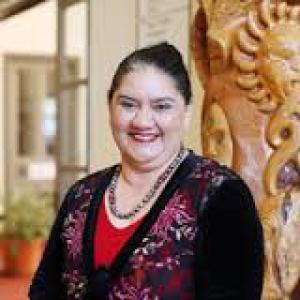
Dr Ella Henry
Ētahi atu · Other projects
Tangi is the ultimate form of Māori cultural and community expression. Addressing the dearth of scholarly information, this study considers tangi practice, whakapapa, changing environments, community values, sharing knowledge, ritual and what it means to be Māori. The research team has been examining the life-values, beliefs and practices related to…
View projectAituā: Death in a changing Māori World
Kairangahau · Researchers
-
 Professor Linda Waimarie Nikora FRSNZ, HFNZPS
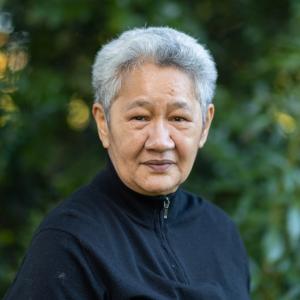
Professor Linda Waimarie Nikora FRSNZ, HFNZPS
Linda Waimarie Nikora is co-director of Ngā Pae o te Māramatanga and a Professor of Indigenous Studies at Te Wānanga o Waipapa, the University of Auckland. She was previously Professor of Psychology and Director of the Maori & Psychology Research Unit at the University of Waikato. Her specialities are in in community psychology, applied social psychology, ethnopsychology and Maori development. Professor Nikora has a celebrated research and academic career, working in community, social and indigenous psychologies, with a specific focus on Māori wellbeing and self-determination. Her research in…
A new report from Ngā Pae o te Māramatanga (NPM) and Manaaki Whenua Landcare Research provides guidance for Te Ao Māori on climate change adaptation and mitigation. He huringa āhuarangi, he huringa ao: a changing climate, a changing world was produced by a multidisciplinary Māori research team working across many research institutions. Using a novel kaupapa…
View projectHe huringa āhuarangi, he huringa ao: a changing climate, a changing world
Often Kaumātua and elders generally, are seen as vulnerable and passive recipients of services throughout the ongoing Covid 19 pandemic. However, in the village of Ohinemutu and as citizens of their iwi Ngāti Whakaue, Kaumātua have been active leaders in the response of the village, initially during the first four-week lockdown in 2020. However, that…
View project