About this research
The overarching research questions for this NPM Platform Project are:
- What are taonga tuku iho in rugby contexts and how are these incorporated for education, commercial and cultural purposes?
- What is the impact of the commodification of taonga tuku iho in rugby on the mana and mauri of Māori, including rugby stakeholders?
- What are the implications for innovative technologies, cultural rights, cultural transformation, business and mauri ora?
- How are taonga in rugby contexts reinforcing or challenging hegemonic ideologies regarding race, gender, class, and identity in rugby culture and New Zealand society?
Since rugby was adopted in Aotearoa, taonga tuku iho have been integrated into NZ rugby contexts and culture. The first pre-game haka for instance, was performed in 1888-89 by the touring Natives Team and Māori players were pioneers in establishing the black jersey and silver fern as symbols of national identity.
Today tangible taonga like mere and toki are given as ‘gifts’ to acknowledge long service by players, volunteers and staff, and taonga like taiaha and intricately carved trophies are given to winning teams.
People (rangatahi, wāhine, tāne) and their mana, mauri ora and identities are also considered taonga in rugby contexts to be treasured, respected and sustained. In the not too distant future, commercial and promotional rugby initiatives will include digital and augmented expressions of taonga, and the ethical and cultural consequences of this development should involve critical and robust discussion.
The aim of this platform project - Resilient legacies: Mānawa te taonga tuku iho: The application and influence of taonga tuku iho in rugby - is to explore how the mana and mauri ora of taonga tuku iho are considered, applied and commodified in rugby. This study brings together researchers and practitioners from different disciplines (e.g. business, health, psychology, art and design) and areas of expertise (rugby, toi Māori, mātauranga Māori, technology) to share diverse knowledge systems, experiences and expertise.
This will create more nuanced and robust considerations of how the incorporation of taonga tuku iho in rugby may impact on the mauri ora of Māori people and knowledge, as well as on rugby stakeholders, and New Zealand society generally. The outcomes will contribute to understanding how mātauranga and tikanga Māori could be applied in sporting contexts through policies and practices.
Learnings with regards to intellectual property rights, Indigenous branding, and Indigenous wellbeing and prosperity may also be discussed, and how taonga tuku iho are considered and treated may also reveal hegemonic and post-settlement attitudes and beliefs that are contested in New Zealand society within the high profile and privileged setting of rugby.
Resilient Legacies: Mānawa te Taonga Tuku Iho explored how Māori cultural treasures—taonga tuku iho—are used, valued, and commodified in Aotearoa’s rugby world. From haka to carved trophies, and digital taonga on the horizon, the project examines the impact on mana, mauri ora, and identity, and the cultural and commercial implications for Māori and rugby alike.
Kairangahau · Researchers
 Dr Farah Palmer
Ngāti Maniapoto, Ngāti Waiora, Waikato, Ngāti Mahuta
Massey University
I have a particular research interest in race, gender and leadership issues in sport management, and my most recent…
Dr Farah Palmer
Ngāti Maniapoto, Ngāti Waiora, Waikato, Ngāti Mahuta
Massey University
I have a particular research interest in race, gender and leadership issues in sport management, and my most recent…

Dr Farah Palmer
 Dr Carwyn Jones
Ngāti Kahungunu, Te Aitanga-a-Māhaki
Te Wānanga o Raukawa
Dr Carwyn Jones (Ngāti Kahungunu) is Pūkenga Matua (Lead Academic) in the Ahunga Tikanga (Māori Laws and Philosophy)…
Dr Carwyn Jones
Ngāti Kahungunu, Te Aitanga-a-Māhaki
Te Wānanga o Raukawa
Dr Carwyn Jones (Ngāti Kahungunu) is Pūkenga Matua (Lead Academic) in the Ahunga Tikanga (Māori Laws and Philosophy)…

Dr Carwyn Jones
 Professor Te Kani Kingi
Ngāti Pukeko, Ngāti Awa
Massey University
Te Kani Kingi is Director of Te Mata o te Tau, The Academy for Māori Research and Scholarship at Massey University in…
Professor Te Kani Kingi
Ngāti Pukeko, Ngāti Awa
Massey University
Te Kani Kingi is Director of Te Mata o te Tau, The Academy for Māori Research and Scholarship at Massey University in…

Professor Te Kani Kingi
Ētahi atu · Other projects
Tangi is the ultimate form of Māori cultural and community expression. Addressing the dearth of scholarly information, this study considers tangi practice, whakapapa, changing environments, community values, sharing knowledge, ritual and what it means to be Māori. The research team has been examining the life-values, beliefs and practices related to…
View projectAituā: Death in a changing Māori World
Kairangahau · Researchers
-
 Professor Linda Waimarie Nikora FRSNZ, HFNZPS
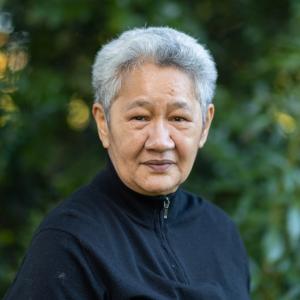
Professor Linda Waimarie Nikora FRSNZ, HFNZPS
Linda Waimarie Nikora is co-director of Ngā Pae o te Māramatanga and a Professor of Indigenous Studies at Te Wānanga o Waipapa, the University of Auckland. She was previously Professor of Psychology and Director of the Maori & Psychology Research Unit at the University of Waikato. Her specialities are in in community psychology, applied social psychology, ethnopsychology and Maori development. Professor Nikora has a celebrated research and academic career, working in community, social and indigenous psychologies, with a specific focus on Māori wellbeing and self-determination. Her research in…
A new report from Ngā Pae o te Māramatanga (NPM) and Manaaki Whenua Landcare Research provides guidance for Te Ao Māori on climate change adaptation and mitigation. He huringa āhuarangi, he huringa ao: a changing climate, a changing world was produced by a multidisciplinary Māori research team working across many research institutions. Using a novel kaupapa…
View projectHe huringa āhuarangi, he huringa ao: a changing climate, a changing world
Often Kaumātua and elders generally, are seen as vulnerable and passive recipients of services throughout the ongoing Covid 19 pandemic. However, in the village of Ohinemutu and as citizens of their iwi Ngāti Whakaue, Kaumātua have been active leaders in the response of the village, initially during the first four-week lockdown in 2020. However, that…
View project