About this research
Taunakitia Te Marae aims to research the key contributors of success that will enable marae to be centres of excellence for hapū development. It will explore with whānau, hapū and iwi the characteristics that enable or inhibit the success of marae as centres of excellence; and undertake case studies of successful models for marae that enhance hapū development. Through the research, Taunakitia Te Marae will identify critical determinants of marae wellbeing and construct a marae wellbeing framework to be available for use by marae, hapū and iwi within Te Arawa. The research will also explore three themes identified and tested in earlier scoping work: mana tangata, mana taunga and mana taiao. These themes are directly linked to future aspirations for marae, hapū and iwi within Te Arawa. Earlier scoping work indicated three key areas of focused enquiry: • What is needed to support and enhance future planning for marae, in particular succession processes? • How can hapū and marae enhance and develop opportunities for te reo Māori? • What is needed to create a context and environment within hapū and marae activities that are enabling of rangatahi participation? Taunakitia Te Marae also provides opportunities to generate new knowledge that has the potential to be transferable and therefore other marae, hapū and iwi can utilise elements of the research outcomes as leverage for their own development strategies.
Ētahi atu · Other projects
This study will explore how comparative views of “home” relate to concepts such as identity, whakapapa, and hauora and how these concepts thereby impact service utilisation and uptake in two areas (one rural and one urban). The research seeks to ask How do urban and rural Māori conceptualise “home” and do these ideas of home differ across generations? Do…
View projectPerceptions of Papakāinga: An examination of ‘home’ and how to cater services for Māori
Kairangahau · Researchers
-
 Dr Amohia Boulton
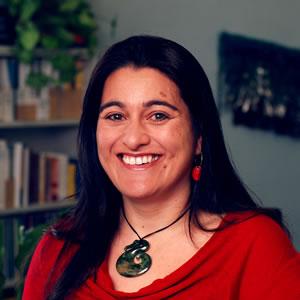
Dr Amohia Boulton
Dr Amohia Bolton is the Research Director at Whakaue Research for Māori Health & Development with a career that has spanned public policy and academia. She has previously worked as a data analyst (Ministry of Education) policy analyst, senior analyst (Te Puni Kōkiri) and Private Secretary (Māori Affairs) and was awarded an HRC Māori Health Training Fellowship to pursue doctoral study at Massey University in Palmerston North. Her post-doctoral research took her to the University of Northern British Columbia in Canada where she worked with the Lheidli T'enneh First Nations people.Her research…
The guiding research question for this project are: 1) How has Tuurangawaewae Marae fostered community mauri ora (wellbeing) within Waikato and in Te Ao Maaori more broadly? 2) What role has Tuurangawaewae Marae played as both a repository and a place of action for te Reo me ngaa Tikanga in Waikato and in Aotearoa-New Zealand? 3) What are the factors…
View projectTuurangawaewae Marae: A Place to Stand
Kairangahau · Researchers
-
 Professor Marama Muru-Lanning
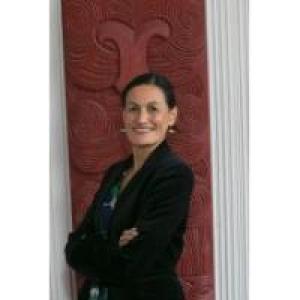
Professor Marama Muru-Lanning
I am a Professor in Anthropology. My teaching and research is dedicated to Māori communities and prioritises tikanga, equity and inter-dependence. As an environmental anthropologist I focus on the cultural specificity of tangata whenua groups and their unique sense of place and belonging in Aotearoa. My professional expertise includes: building research relationships with Māori communities especially with coastal and river people, ecological consciousness, food security, kai sovereignty, kaumātua gardening, kai gathering, food and peace politics. What distinguishes me internationally as a… -
 Associate Professor Dean Mahuta
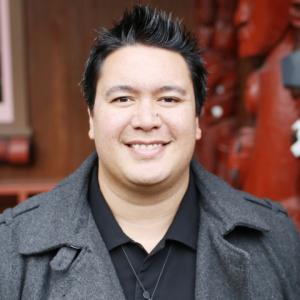
Associate Professor Dean Mahuta
Ko Taupiri te maungaKo Waikato te awaKo Pōtatau te tangataHe piko, he taniwha,Waikato taniwharau.Kei aku nui, kei aku rahi, tēnā koutou katoa.Me wehi ki a Ihowa, me whakahōnore Te Arikinui Kuīni Ngā-wai-hono-i-te-pō. Ki te huinga kahurangi o te pō, okioki atu rā koutou ki tua o Paerau, ki reira tiakina atu ai. Ki ngā toronga waka o te motu whānui e kapi nei te hunga ora whānui, tēnā tātou katoa.Ko Dean Mahuta tōku ingoa, nō Waikato ahau, ko Ngāti Mahuta te hapū. I tupu mai au i Ngāruawāhia, ā, he raukura nō roto mai o te kura kaupapa Māori. I kuraina au ki Te Wharekura o Rākaumangamanga, he… -
 Professor Tahu Kukutai FRSNZ
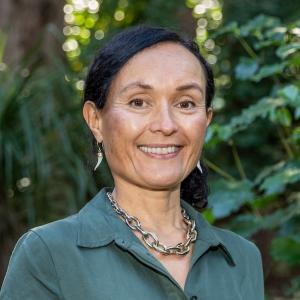
Professor Tahu Kukutai FRSNZ
Ngā Pae o te Māramatanga Co-Director Tahu Kukutai is Professor of Demography at Te Ngira: Institute for Population Research, The University of Waikato where she specialises in Māori and Indigenous demography and data sovereignty. Tahu is a founding member of the Māori Data Sovereignty Network Te Mana Raraunga and the Global Indigenous Data Alliance. She co-edited Indigenous data sovereignty: Toward an agenda (ANU Press, 2016), Indigenous data sovereignty and policy (Routledge, 2020) and The Oxford Handbook of Indigenous Sociology (Oxford) . Tahu has undertaken research with and for numerous…
We have identified a set of questions relating to Māori restorative justice in the Aotearoa Justice system and its effectiveness for Māori: What are the barriers Māori face when they participate in restorative justice as it stands? What can we learn from the traditional ways of resolving conflict that could minimise these barriers? The over-representation…
View projectWhat we were and what we could be: Restorative Justice and its impact on Māori
Kairangahau · Researchers
-
 Danny Poa
Danny Poa
Nō ngā iwi o Ngāi Tūhoe, Ngāti Kahungunu, Ngāti Porou me Ngāpuhi ia.Danny Poa has strong interests in the social issues that affect whānau including criminal justice, child welfare and whānau ora. Danny is draw to tautoko organisations that are of service to others and are connected to his values.Principal Advisor, Survivor Voice and Insights Crown Response Unit - Abuse in Care (2023 - Present)Senior Advisor, Te Tiriti Engagement Abuse in Care Royal Commission of Inquiry (2022 - 2023)Kaitiaki Kaupapa/Relationship and Engagement Manager Coastal Peoples Southern Skies National Centre of… -
 Associate Professor Anne-Marie Jackson
Associate Professor Anne-Marie Jackson
Tēnā koutou, Nō Ngāpuhi, Ngāti Whātua, Ngāti Kahu o Whangaroa me Ngāti Wai a Anne-Marie. He kairangahau Māori ia ki Te Koronga, ki Te Kura Parawhakawai.Dr Anne-Marie Jackson's research into Māori health and well-being focuses on supporting the hopes and aspirations of Māori communities.“Otago is a wonderful place to do this mahi. We are a well-connected campus with strong linkages to our communities; a place where whānau and whanaungatanga can flourish,” she says.Anne-Marie, who is an Associate Professor in the School of Physical Education, Sport and Exercise Sciences, is passionate about…