About this research
This study will explore how comparative views of “home” relate to concepts such as identity, whakapapa, and hauora and how these concepts thereby impact service utilisation and uptake in two areas (one rural and one urban). The research seeks to ask
How do urban and rural Māori conceptualise “home” and do these ideas of home differ across generations?
Do perceptions of home affect decisions to access services (education, health, financial, etc.?). If so, how?
How can services be improved to incorporate these views / perceptions of home?
The importance of the attachment to place for Māori has been well-established in the research and has been the focus of research such as: Jahnke 2002; and Butcher & Brehney 2016. Such importance is also ubiquitously referenced in the practice of pepēha, or sharing of whakapapa, in relation to aspects of whenua such as awa, and maunga. While it has been established that home is a “multidimensional concept” (Mallet 2004), there is still a dearth of research with reference to the diverse and possibly contradictory meanings of “home” for urban and rural Māori across generations.
Not only is there a lack of research on the meanings of “home”, but a lack of research on the implication of how Māori from different backgrounds and generations, think of, and consider their homes and what that means for their identities and accessing specific services. Te Haerenga – Journeying towards an Urban Māori identity, an article authored by the project team, explains the characteristics of Māori across 3 categories of migration: Manawa Roa (first generation who travelled from their hau kāinga); Manawa Tītī (half of whānau migrated); and Manawa Ora (all born in Auckland and raised in urban marae). Allport, White & Te Whiu’s Catalysts of Health report (2017) showed, for example, that kaumātua experience “home” in various ways. Absent from the literature are the varied views of “home” from other generational groupings. Furthermore, we do not know how or whether perceptions of “home” impact health and well-being and the services employed to cater for Māori in urban and rural areas.
If, for instance, someone living in the city who has ancestral ties to a rural environment considers their ancestral home to be inaccessible, or even considers their urban residence their true home, what services might they access in the city, that are offered in their ancestral home, to maintain their hauora, or as discussed in the literature, their identity? For instance, does the individual enrol at a course in the city to learn te reo Māori, rather than return to the rural area they whakapapa to, and learn from their whānau? This logic may yield a nuanced look at reasons for different levels of uptake, participation, and preference in service provision for Māori.
Kairangahau · Researchers
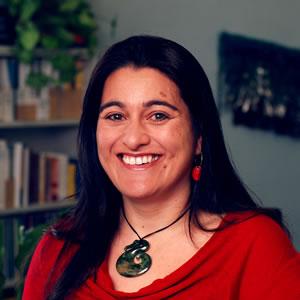
 Dr Amohia Boulton
Ngāti Ranginui, Ngāi te Rangi, Ngāti Pukenga
Whakauae Research for Māori Health & Development
Dr Amohia Bolton is the Research Director at Whakaue Research for Māori Health & Development with a career that has…
Dr Amohia Boulton
Ngāti Ranginui, Ngāi te Rangi, Ngāti Pukenga
Whakauae Research for Māori Health & Development
Dr Amohia Bolton is the Research Director at Whakaue Research for Māori Health & Development with a career that has…
Dr Amohia Boulton
Ētahi atu · Other projects
How will tikanga Māori empower the evaluation of the experience of Māori whānau in crisis to measure the performance of the Government’s new obligations in law to Te Tiriti o Waitangi? Our longterm objective is to bring new evaluative knowledge to empower the mana of whānau in crisis. Māori have clearly and consistently stressed that a Māori child’s…
View projectOranga Tamariki: new knowledge for evaluating and empowering whānau well-being
Kairangahau · Researchers
-
 Khylee Quince
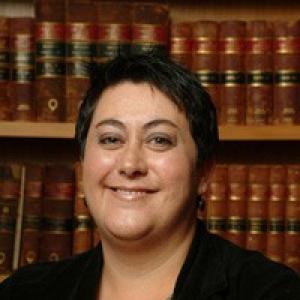
Khylee Quince
Khylee is from the iwi of Te Roroa/Ngapuhi and Ngati Porou. She teaches Criminal Law, Advanced Criminal Law and Youth Justice. Her research interests lie within those fields; in particular Māori and the criminal justice system, tikanga Māori and the law, restorative justice and alternative dispute resolution, Māori women and the law, indigenous peoples and the law. Prior to joining the University of Auckland's Law Faculty in 1998, Khylee practiced in criminal and family law for three years. Khylee is now Associate Head of School and Director of Maori and Pacific Advancement at the AUT School… -
Dr Amohia Boulton
Dr Amohia Boulton
Dr Amohia Bolton is the Research Director at Whakaue Research for Māori Health & Development with a career that has spanned public policy and academia. She has previously worked as a data analyst (Ministry of Education) policy analyst, senior analyst (Te Puni Kōkiri) and Private Secretary (Māori Affairs) and was awarded an HRC Māori Health Training Fellowship to pursue doctoral study at Massey University in Palmerston North. Her post-doctoral research took her to the University of Northern British Columbia in Canada where she worked with the Lheidli T'enneh First Nations people.Her research… -
 Professor Jacinta Ruru FRSNZ
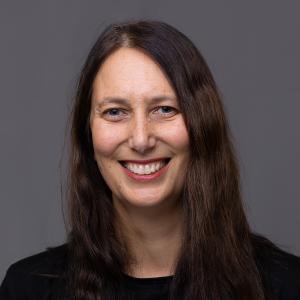
Professor Jacinta Ruru FRSNZ
Jacinta Ruru is a Professor of Law at the University of Otago. Her research has focused on exploring Indigenous peoples' legal rights to own, manage and govern land and water including national parks and minerals in Aotearoa New Zealand, Canada, United States, Australia and the Scandinavia countries. She has led, or co-led, several national and international research projects including on the Common Law Doctrine of Discovery, Indigenous peoples’ rights to freshwater and multidisciplinary understandings of landscapes and writes for several legal publishers including Adams’ Land Transfer and… -
 Ms Tania Williams
Ms Tania Williams
What are the cultural, ethical, research, legal and scientific (CERLS) issues that are inherent in research on rongoā Māori plants and healing? Debate about the misappropriation of information and knowledge in research means that greater care and attention is needed regarding Māori input and participation into research. This is even more important in the…
View projectAnalysis of the Cultural, Ethical, Research, Legal and Scientific (CERLS) Issues Inherent in Rongoā Māori Research
Kairangahau · Researchers
-
Dr Amohia Boulton
Dr Amohia Boulton
Dr Amohia Bolton is the Research Director at Whakaue Research for Māori Health & Development with a career that has spanned public policy and academia. She has previously worked as a data analyst (Ministry of Education) policy analyst, senior analyst (Te Puni Kōkiri) and Private Secretary (Māori Affairs) and was awarded an HRC Māori Health Training Fellowship to pursue doctoral study at Massey University in Palmerston North. Her post-doctoral research took her to the University of Northern British Columbia in Canada where she worked with the Lheidli T'enneh First Nations people.Her research…
The guiding research question for this project are: 1) How has Tuurangawaewae Marae fostered community mauri ora (wellbeing) within Waikato and in Te Ao Maaori more broadly? 2) What role has Tuurangawaewae Marae played as both a repository and a place of action for te Reo me ngaa Tikanga in Waikato and in Aotearoa-New Zealand? 3) What are the factors…
View projectTuurangawaewae Marae: A Place to Stand
Kairangahau · Researchers
-
 Dr Marama Muru-Lanning
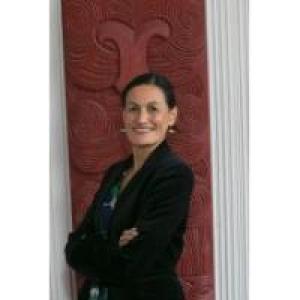
Dr Marama Muru-Lanning
Marama holds a PhD in Anthropology from the University of Auckland. She is a Senior Research Fellow and Acting Director at the James Henare Māori Research Centre. Marama also advises on elderly health projects in the School of Population Health. Her research is primarily concerned with debates and critical challenges in social anthropology where she focuses on the cultural specificity of iwi-Māori and their unique sense of place and belonging in New Zealand. What distinguishes Marama nationally as a social scientist is her specialization in water, environment and indigenous rights. She… -
 Associate Professor Dean Mahuta
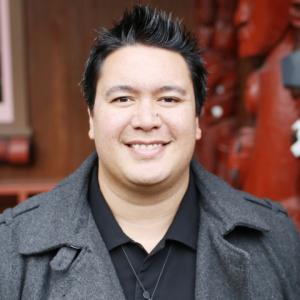
Associate Professor Dean Mahuta
Ko Taupiri te maungaKo Waikato te awaKo Pōtatau te tangataHe piko, he taniwha,Waikato taniwharau.Kei aku nui, kei aku rahi, tēnā koutou katoa.Me wehi ki a Ihowa, me whakahōnore Te Arikinui Kuīni Ngā-wai-hono-i-te-pō. Ki te huinga kahurangi o te pō, okioki atu rā koutou ki tua o Paerau, ki reira tiakina atu ai. Ki ngā toronga waka o te motu whānui e kapi nei te hunga ora whānui, tēnā tātou katoa.Ko Dean Mahuta tōku ingoa, nō Waikato ahau, ko Ngāti Mahuta te hapū. I tupu mai au i Ngāruawāhia, ā, he raukura nō roto mai o te kura kaupapa Māori. I kuraina au ki Te Wharekura o Rākaumangamanga, he… -
 Professor Tahu Kukutai FRSNZ
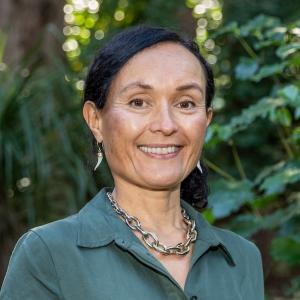
Professor Tahu Kukutai FRSNZ
Ngā Pae o te Māramatanga Co-Director Tahu Kukutai is Professor of Demography at Te Ngira: Institute for Population Research, The University of Waikato where she specialises in Māori and Indigenous demography and data sovereignty. Tahu is a founding member of the Māori Data Sovereignty Network Te Mana Raraunga and the Global Indigenous Data Alliance. She co-edited Indigenous data sovereignty: Toward an agenda (ANU Press, 2016), Indigenous data sovereignty and policy (Routledge, 2020) and The Oxford Handbook of Indigenous Sociology (Oxford) . Tahu has undertaken research with and for numerous…