Search our Resources
People, publications, projects, videos, stories, and more
Tāngata · People 466

Associate Professor David Newhouse
David Newhouse is Onondaga from the Six Nations of the Grand River community near Brantford, Ontario. He was the first Principal of the new Peter Gzowski College at Trent University and Chair of the Department of Indigenous Studies. He is also an Associate Professor in the Business Administration Program. Professor Newhouse is Co-Chair of the Trent Aboriginal Education Council. He was the IMC/U of S Aboriginal Scholar in Residence at the University of Saskatchewan in Saskatoon in 1998/99. He also teaches in the Graduate CED Program at Concordia University.He served as founding editor of the…
Dominic O'Sullivan
Professor Dominic O'Sullivan is a political scientist in the School of Social Work and Arts and Yindymarra Nguluway. He is interested in comparative indigenous politics and public policy and is an Honorary Fellow of the Royal Society of New Zealand. He has authored eight books and co-edited one. Dominic has published more than 60 journal articles and book chapters and more than 120 articles for public audiences, including in the Conversation, Open Forum and the New Zealand Herald.Dominic is also an Adjunct Professor at the Stout Research Centre for New Zealand Studies at Victoria University…
Associate Professor Ánde Somby
Ánde Somby is a Sami scholar, musician, and writer renowned for his lifelong work in bridging indigenous culture and legal academia. As an associate professor specializing in Indigenous Rights Law at the University of Tromsø and a celebrated traditional joik artist, Somby embodies a unique synthesis of intellectual rigor and deep cultural practice. His career is characterized by a profound commitment to articulating and defending Sami worldview and rights through both scholarly discourse and artistic expression.Ánde Somby was born and raised in Buolbmat, Norway, within a culturally rich Sami…

Professor Peter Adds
Peter Adds is an Associate Professor at Te Kawa a Maui - the School of Māori Studies at Victoria University of Wellington. He is from the Otaraua Hapu of Te Ātiawa in Taranaki. His academic training is in archaeology but he has extensive experience in Treaty Settlements and is also an accomplished Treaty trainer. He was the claimant researcher for the Taranaki Land Claim and subsequently the claim negotiator for Te Ātiawa. He is also the inaugural and current Chairperson of the Māori Association of Social Science.
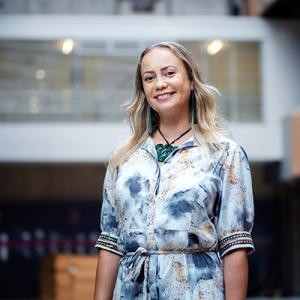
Dr Jade Le Grice
Jade Le Grice (Te Rarawa, Ngāpuhi) is a Senior Lecturer in the School of Psychology at the University of Auckland. Her research focuses on Indigenous sexuality and reproduction. She engages decolonising praxis - deconstructing dominant sociocultural norms and legitimating mātauranga Māori as they shape and inform lived realities, and across knowledge, health and education systems.
Associate Professor Hiria McRae
Hiria Mcrae (Te Arawa,Tūhoe,Ngāti Kahungunu) is an Associate Professor in the School of Education and Associate Dean Māori for the Faculty of Education, Health & Psychological Sciences. She has extensive experience in working with practicing teachers and teaching postgraduate students and teacher trainees in the areas of mātauranga Māori, te reo Māori, science and technology, critical pedagogies, education for sustainability. Her research focuses broadly on Māori education in areas ranging from iwi Māori student success models, kaiako Māori leadership and computational thinking.
Dr Annie Te One
Annie Te One (Te Ātiawa, Ngāti Mutunga) is the current tumuaki of Te Kawa a Māui. Annie’s PhD is from the Australian National University and focussed on iwi and local government relationships in Wellington and the Hutt Valley. She worked on the Mana Wāhine Inquiry (WAI2700) for the Waitangi Tribunal, is a key researcher on 'Generation Kainga' a rangatahi-centred MBIE funded research project focussing on rangatahi experiences and aspirations for kainga in Aotearoa, and was awarded a Fulbright Scholar award in 2023 to teach and research at the University of Hawaii and the Univerersity of…
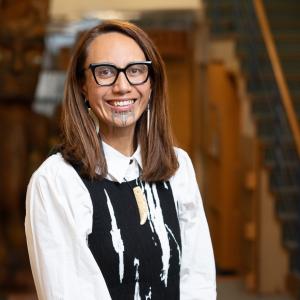
Dr. Chelsea Grootveld
Chelsea is a respected wāhine Māori leader in education, kaupapa Māori research and governance. She holds a PhD in Education from Te Herenga Waka – Victoria University of Wellington and is the founder of an indigenous research and evaluation company dedicated to advancing Māori aspirations.Chelsea brings deep governance expertise, currently serving on the boards of High Performance Sport NZ, Taumata - Ihi Aotearoa Sport NZ, Tātai Aho Rau - CORE Education, International Funders For Indigenous Peoples; as Chair of the JR McKenzie Trust, Deputy Chair of Ngāitai Iwi Authority and Iti Kōpara…
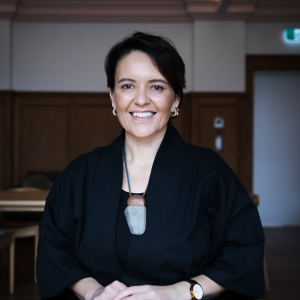
Professor Sarah-Jane Paine
Professor Sarah-Jane Paine (Tūhoe) is a leading Māori health researcher and internationally respected authority on Indigenous child wellbeing. She is Research Director and Principal Investigator of Growing Up in New Zealand, Aotearoa’s flagship longitudinal study of child development, and a Professor at Te Kupenga Hauora Māori, Waipapa Taumata Rau, University of Auckland.Her work in Kaupapa Māori epidemiology has influenced national policy in maternal and child health, racism and child wellbeing, food security, and youth wellbeing. Known for combining scientific rigour with strong community…
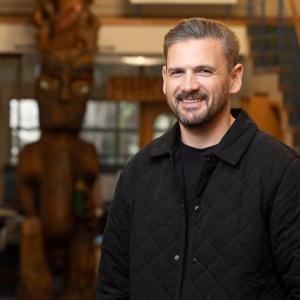
Professor Hona Black
Hona Black (Tūhoe, Te Whānau a Apanui, Te Whakatōhea, Ngāti Tūwharetoa) works in te reo Māori revitalisation and has a particular interest in language acquisition and the restoration and expansion of te reo Māori domains within everyday life. Hona is the author of several te reo Māori publications, including He Iti Te Kupu, Ngā Hapa Reo, and Te Reo Kapekape. His work frequently bridges academic research and community practice, reflecting a commitment to strengthening Māori language futures and supporting the normalisation of te reo Māori across homes, communities, and institutions.
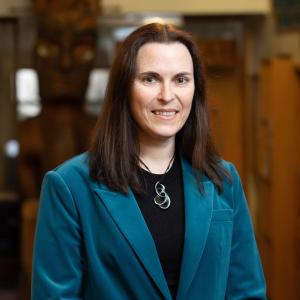
Dr Meika Foster
Dr Meika Foster has a background in Law, Biochemistry and Nutrition Science, with particular interests in the development of plant-based, functional foods and ingredients of benefit to human and animal wellbeing and the environment; indigenous organisms research and conservation; and the protection of cultural and intellectual property. She is the Founding Director of Edible Research Ltd., a values-driven organisation that provides translational research services to the science sector, government organisations, and food and beverage businesses (including multi-national and small- and…
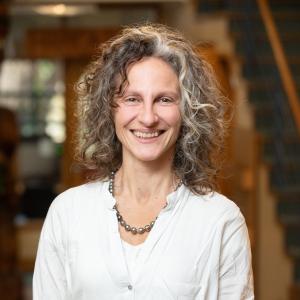
Dr Sonia Garcia Garcia
Sonia Garcia grew up in Spain with Catalan, Galician and Spanish as her family languages. Her career has largely focused on policy and programme management.In the Catalan public service, Sonia designed and managed grants and programmes to support the internationalisation of Catalan literature. She later pursued her interest in fisheries, earning a PhD from the University of Technology Sydney for research on Australian fisheries policy.Sonia moved to Aotearoa in 2020 and worked as a Senior Policy Analyst and Programme Manager in the international fisheries team at the Ministry for Primary…
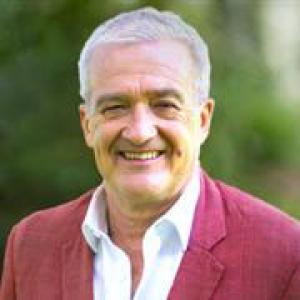
Professor Simon Holdaway
I research how to interpret the past using the material remains found by archaeologists. This has involved field work in a number of regions of the world including southwest France, semi-arid and tropical regions of Australia, the north of Egypt, and northern parts of Aotearoa | New Zealand. I have an interest in stone artefacts particularly their interpretation as surface deposits at a landscape scale. I continue to have active fieldwork programmes as well as laboratory-based studies of material remains.After receiving a BA(Hons) and MA degree in Anthropology from the University of Otago I…
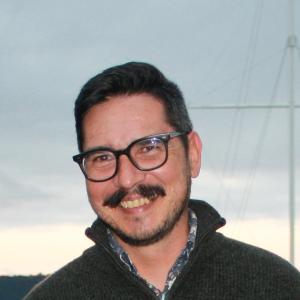
Dr Daniel Wilson
Daniel Wilson is a lecturer in Computer Science at Waipapa Taumata Rau | University of Auckland. His teaching and research are in the areas of AI, Māori Data Sovereignty, Māori Algorithmic Sovereignty, and AI ethics. Daniel is a member of Te Pokapū in The Māori Data Sovereignty Network Te Mana Raraunga, Co-Director of the Centre of Machine Learning for Social Good, member of the Kāhui Māori for the AI Forum, treasurer of the AI Researchers Association, and an establishment member of the AI in Health Research Network. Daniel has a PhD in Philosophy and a Master of Professional Studies in Data…