About this research
Despite the proliferation of equity and diversity plans and policies that have been established in universities across New Zealand over the past 25 years, Māori academic staff make up only a very small proportion of the nation’s academic workforce (6%) and the proportion of Pacific academic staff is even smaller (2%).
This study explored the ways that Māori and Pacific senior scholars became academics; how they shape their interactions and relationships with their institutions of higher learning; how they engage with their disciplines; and, how they transform academic knowledge in ways that support and sustain their cultural and tribal communities as well as contribute to national development. The project also investigates the institutional challenges experienced by Māori and Pacific faculty who work within universities and Wānanga.
Over a two-year period, the investigators conducted a qualitative, ethnographic study that included 43 participants (comprising 29 Māori participants and 14 Pacific participants) who were senior academics (i.e. senior lecturer, Associate Professor, Professor) based in a range of disciplines in the sciences, humanities, social sciences and professional and applied disciplines. The participants were located in nine PhD-granting tertiary institutions in New Zealand; a small amount of comparative data were collected from senior scholars in two universities in the Pacific region.
The project's full research report can be downloaded (see below). The discussion and analysis sections of the report are framed around the question: Ko wai, no hea tātou? – Who are Māori academics? In the report the authors (study investigators) are able to make a number of observations about the senior scholars who were involved in this study.
About the researchers and authors:
Joanna Kidman has affiliations with Ngāti Raukawa, Ngāti Maniapoto, Ngāti Toa. She is a principal investigator for this study and conducted fieldwork with the Māori participants. Joanna is a Māori sociologist working in the field of indigenous education at Te Kura Māori in the Faculty of Education, Victoria University of Wellington. Her research centres on the politics of education, particularly as it affects Māori and other indigenous youth. Over the past twenty years, she has worked with Māori research partners and community-based tribal groups in different parts of New Zealand. She has also partnered with indigenous communities in Taiwan and the USA to establish indigenous knowledge systems in schools with large numbers of native students.
Cherie Chu is a principal investigator for this study and conducted fieldwork with the Pacific participants. Cherie is of Tahitian and Chinese descent and is based in the School of Education at Victoria University of Wellington. Her research in the domain of Pacific education focuses on mentoring and leadership for Pacific students and scholars in the tertiary education sector. She has partnered with Pacific communities in educational contexts in New Zealand and the Pacific and is a founding member of the Rethinking Pacific Education Initiative for and by Pacific Peoples (RPEIPP), an organization committed to establishing educational initiatives that are conceived, developed and run by the Pacific communities that host them.
Sean Fernandez is affiliated with Ngāpuhi. He is based in Te Kura Māori in the Faculty of Education at Victoria University of Wellington. He has recently submitted his PhD in the area of development education and leadership in the Pacific.
Ivy Abella is from the Philippines and is based in the School of Education at Victoria University of Wellington. She is currently completing her PhD on the pedagogical innovations of indigenous teachers in the Philippines and the Pacific.
Kairangahau · Researchers
 Professor Joanna Kidman
Ngāti Maniapoto, Ngati Whakatere
Te Herenga Waka Victoria University of Wellington
Joanna is a sociologist with affiliations to Ngāti Maniapoto and Ngāti Raukawa. Her work spans indigenous sociology…
Professor Joanna Kidman
Ngāti Maniapoto, Ngati Whakatere
Te Herenga Waka Victoria University of Wellington
Joanna is a sociologist with affiliations to Ngāti Maniapoto and Ngāti Raukawa. Her work spans indigenous sociology…
Professor Joanna Kidman
Ētahi atu · Other projects
This research explores how rangatahi Māori are navigating a world of deep uncertainty. Amidst climate change, poverty, injustice and cultural upheaval, this project centres Māori youth as powerful future-makers. Led by Professor Joanna Kidman, the study invites rangatahi to imagine, design, and plan thriving futures for their whānau, hapū and iwi—grounded…
View projectNgā Moemoea ō Ᾱpōpō: Empowering Taiohi Māori Leaders for the Future
This research explores how rangatahi Māori are navigating a world of deep uncertainty. Amidst climate change, poverty, injustice and cultural upheaval, this project centres Māori youth as powerful future-makers. Led by Professor Joanna Kidman, the study invites rangatahi to imagine, design, and plan thriving futures for their whānau, hapū and iwi—grounded in ancestral strength and collective vision.
Kairangahau · Researchers
-
Professor Joanna Kidman
Professor Joanna Kidman
Joanna is a sociologist with affiliations to Ngāti Maniapoto and Ngāti Raukawa. Her work spans indigenous sociology, Māori youth, higher education, decolonization studies and comparative education. She is especially interested in the interplay of power relations between different groups of people. Joanna is working on two Marsden projects: He Taonga te Wareware: Remembering and Forgetting New Zealand’s Colonial Past investigates how New Zealanders selectively remember and forget difficult and violent events from our colonial past; and What Inspires and Sustains Young People's Engagement in… -
 Professor Huia Tomlins-Jahnke
Professor Huia Tomlins-Jahnke
Associate Professor Huia Tomlins Jahnke has been involved as a researcher and research coordinator of the D Company Māori Battalion Oral History Project since 1997 when the Ngāti Kahungunu veterans of D Company established the project. She is Principal Investigator on the NPM project Au e ihu! Nga Morehu TauaThose that are left must endeavour to complete the work. Huia is currently an Professor of Māori Education, and Head of School in the College of Education at Massey University.
This nationwide research programme set out to deepen our understanding of the experiences, challenges, and contributions of Māori PhD graduates across Aotearoa. By tracing the post-graduation journeys of nearly 800 Māori doctoral scholars, the study aimed to highlight their intellectual, cultural, social and economic impact—within whānau, hapū, iwi and…
View projectPromising Futures Te Kawau Mārō: The Lifeworlds of highly qualified Māori - a cohort study of Māori PhD students and graduates
This nationwide research programme set out to deepen our understanding of the experiences, challenges, and contributions of Māori PhD graduates across Aotearoa. By tracing the post-graduation journeys of nearly 800 Māori doctoral scholars, the study aimed to highlight their intellectual, cultural, social and economic impact—within whānau, hapū, iwi and beyond.
Although the programme has since been disestablished, its kaupapa remains vital: to inform new models of Māori leadership and participation across academia, government, iwi development, and civil society.
Kairangahau · Researchers
-
Professor Joanna Kidman
Professor Joanna Kidman
Joanna is a sociologist with affiliations to Ngāti Maniapoto and Ngāti Raukawa. Her work spans indigenous sociology, Māori youth, higher education, decolonization studies and comparative education. She is especially interested in the interplay of power relations between different groups of people. Joanna is working on two Marsden projects: He Taonga te Wareware: Remembering and Forgetting New Zealand’s Colonial Past investigates how New Zealanders selectively remember and forget difficult and violent events from our colonial past; and What Inspires and Sustains Young People's Engagement in… -
 Research Professor Reremoana Theodore
Research Professor Reremoana Theodore
Research Professor Reremoana (Moana) Theodore (Ngāpuhi) joined the Dunedin Study team in 1998 as an interviewer on the age-26 assessment phase (1998-99). She returned to the Study in 2007 and undertook post-doctoral research examining the early life predictors of cardiovascular outcomes including blood pressure, using longitudinal modelling techniques. Moana then worked on aligned longitudinal projects including the Graduate Longitudinal Study New Zealand and Te Kura Mai i Tawhiti (a programme of lifecourse research examining the long-term benefits of kaupapa Māori early childhood education… -
 Associate Professor Hinekura Smith
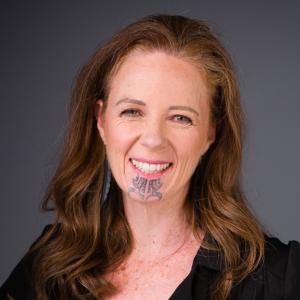
Associate Professor Hinekura Smith
Dr Hinekura Smith (Te Rarawa, Ngāpuhi) is NPM's Emerging Researchers’ Leader, providing further national leadership and coordination of MAI Te Kupenga and developing and nurturing initiatives that contribute to the outcomes and objectives of NPM’s Capability and Capacity Strategy.Hinekura was initially a secondary school te reo Māori teacher then moved into teacher education research almost 10 years ago, when she commenced her postgraduate studies. She has worked as a professional development facilitator in Māori medium schools, te reo Māori facilitator in English-medium schools and a… -
 Dr Tara McAllister
Dr Tara McAllister
-
Dr Sereana Naepi
Dr Sereana Naepi
Tangi is the ultimate form of Māori cultural and community expression. Addressing the dearth of scholarly information, this study considers tangi practice, whakapapa, changing environments, community values, sharing knowledge, ritual and what it means to be Māori. The research team has been examining the life-values, beliefs and practices related to…
View projectAituā: Death in a changing Māori World
Kairangahau · Researchers
-
 Professor Linda Waimarie Nikora FRSNZ, HFNZPS
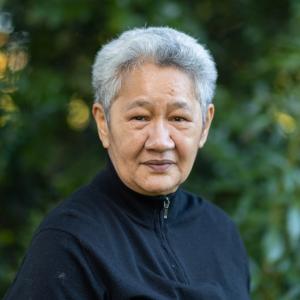
Professor Linda Waimarie Nikora FRSNZ, HFNZPS
Linda Waimarie Nikora is co-director of Ngā Pae o te Māramatanga and a Professor of Indigenous Studies at Te Wānanga o Waipapa, the University of Auckland. She was previously Professor of Psychology and Director of the Maori & Psychology Research Unit at the University of Waikato. Her specialities are in in community psychology, applied social psychology, ethnopsychology and Maori development. Professor Nikora has a celebrated research and academic career, working in community, social and indigenous psychologies, with a specific focus on Māori wellbeing and self-determination. Her research in…