About this research
In addition to public and scholarly deliberations regarding increased inequalities in society, this project responds to the continued socio-economic exclusion of many Māori households. We draw on recent scholarship on the precariat as an emerging social class comprised of people experiencing unstable employment, unliveable incomes, inadequate state supports, marginalisation and stigma. Our focus is on the Māori precariat, whose rights are being eroded through punitive labour and welfare reforms. While we document issues of employment, food, housing and cultural insecurities shaping precarious lives, we also develop a focus on household connections, practices and strengths. This focus is important because connections, practices and strengths can buffer whānau against adversity for a time, render aspects of their lives more liveable, and enable human flourishing.
This project is comprised of three key elements designed to:
- Produce a demographic silhouette of Māori precariat households, and their composition and dispersal
- Foster collaboration and mutual learning with our community partner Waikato Women’s Refuge (Te Whakaruruhau Inc)
- Engage eight Māori precariat households using participative qualitative methods that enable the co-construction of insights into their everyday lives, insecurities and opportunities for human flourishing.
We will work with Waikato Women’s Refuge to explore how insights from this research can promote the human flourishing of whānau facing adversity by enhancing connections, practices and strengths.
The project addresses a number of interrelated questions.
- What do available statistics tell us about the composition, connections, challenges and resources of Māori precariat households?
- What does socio-economic marginalisation look like in the everyday lives of Māori precariat households?
- What are the everyday restraints on human flourishing faced by these households?
- How do households deploy cultural connections and practices to cope and push against the boundaries of their socio-economically restrained lifeworlds in ways that promote human flourishing?
- What are the practical implications of a deeper understanding of precariousness for the promotion of human flourishing by community service providers?
Whakaahua & Ataata · Images & Videos
Kairangahau · Researchers
 Associate Professor Mohi Rua
Tūhoe, Ngāti Awa, Ngāti Whakaue
University of Auckland
Mohi is NPM's Pou Pātai Whānau and is based at the University of Auckland | Waipapa Taumata Rau. He has research and…
Associate Professor Mohi Rua
Tūhoe, Ngāti Awa, Ngāti Whakaue
University of Auckland
Mohi is NPM's Pou Pātai Whānau and is based at the University of Auckland | Waipapa Taumata Rau. He has research and…
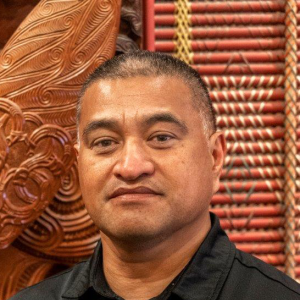
Associate Professor Mohi Rua
Mohi is NPM's Pou Pātai Whānau and is based at the University of Auckland | Waipapa Taumata Rau. He has research and teaching interests in: Māori health and inequities; Social determinants of health; Māori culture, heritage and identity; Poverty, the precariat and homelessness; Kaupapa Māori research, theory and methodologies; Decolonial practices; indigenous psychological perspectives of the interconnected self; Sport and rangatahi (Māori youth).
 Professor Darrin Hodgetts
Ngāi Tahu
Darrin Hodgetts is a Professor in Social Psychology at the University of Waikato. Previously he was a teaching fellow…
Professor Darrin Hodgetts
Ngāi Tahu
Darrin Hodgetts is a Professor in Social Psychology at the University of Waikato. Previously he was a teaching fellow…

Professor Darrin Hodgetts
Ētahi atu · Other projects
Since the arrival of visitors to Aotearoa, Māori have always been quick to assess and adapt language, technology and information. Contemporary society brings new languages, technology and information instantly to our fingertips. New pressures and demands can be a consequence of readily accessible knowledge. For all its advances, there are also…
View projectNgā whenu haumaru hei raranga: Social Wellbeing
Since the arrival of visitors to Aotearoa, Māori have always been quick to assess and adapt language, technology and information. Contemporary society brings new languages, technology and information instantly to our fingertips. New pressures and demands can be a consequence of readily accessible knowledge. For all its advances, there are also disadvantages. For rangatahi, those with addictions and Māori whānau connections and wellbeing can be negatively affected.
This programme of research investigates examples of Māori approaches to social wellbeing. Through a series of research activities undertaken by the research team, a case study will emerge reflective of collaborative interactions with key stakeholder organisations. Utilising qualitative methods such as key informant, wānanga, hui, photo elicitation and go along interviews, the research is primed to capitalise on the collaborative relationships to affect national policy and regional service delivery.
Kairangahau · Researchers
-
 Dr Pita King
Dr Pita King
-
Moana Rarere
Moana Rarere
-
Dr Rewi Nankivell
Dr Rewi Nankivell
-
Dr Eleanor Britain
Dr Eleanor Britain
-
Hans Tiakiwai
Hans Tiakiwai
-
Megan Fitzpatrick
Megan Fitzpatrick
-
Professor Darrin Hodgetts
Professor Darrin Hodgetts
Darrin Hodgetts is a Professor in Social Psychology at the University of Waikato. Previously he was a teaching fellow at Massey University, and then held a post-doctoral fellowship in Community Health at Memorial University, Canada, followed by a lectureship at the London School of Economics and Political Sciences. Darrin has published more than 70 peer-reviewed articles and three books relating to health, poverty, community and inequalities. He is an expert in the use of participative, action-orientated ethnographic research methods. Darrin is Co-Principal Investigator on the Ngā Pae o te… -
Tiana Watkins
Tiana Watkins
Tangi is the ultimate form of Māori cultural and community expression. Addressing the dearth of scholarly information, this study considers tangi practice, whakapapa, changing environments, community values, sharing knowledge, ritual and what it means to be Māori. The research team has been examining the life-values, beliefs and practices related to…
View projectAituā: Death in a changing Māori World
Kairangahau · Researchers
-
 Professor Linda Waimarie Nikora FRSNZ, HFNZPS
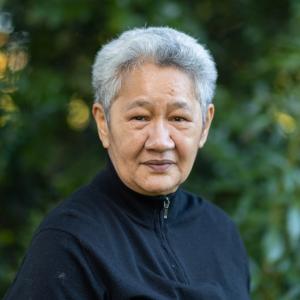
Professor Linda Waimarie Nikora FRSNZ, HFNZPS
Linda Waimarie Nikora is co-director of Ngā Pae o te Māramatanga and a Professor of Indigenous Studies at Te Wānanga o Waipapa, the University of Auckland. She was previously Professor of Psychology and Director of the Maori & Psychology Research Unit at the University of Waikato. Her specialities are in in community psychology, applied social psychology, ethnopsychology and Maori development. Professor Nikora has a celebrated research and academic career, working in community, social and indigenous psychologies, with a specific focus on Māori wellbeing and self-determination. Her research in…
A new report from Ngā Pae o te Māramatanga (NPM) and Manaaki Whenua Landcare Research provides guidance for Te Ao Māori on climate change adaptation and mitigation. He huringa āhuarangi, he huringa ao: a changing climate, a changing world was produced by a multidisciplinary Māori research team working across many research institutions. Using a novel kaupapa…
View project