About this research
The significance of this research project lies in its contribution to deeper understand what role Māori SMEs have as critical constituents of the Māori Economy. Recent years have seen attention paid to the merit of the Māori economy, based on the potential of an economy worth an estimated $42.6bn in 2013 (Nana, Khan, & Schulze, 2015).
However, this type of reporting presents an abstract notion of ‘the Māori economy’ that contradicts the heterogeneity of how Māori think about themselves, their modes of social organisation, the resources available to them, how they see themselves connected to those resources, and therefore how they use those resources. In addition, questions arise regarding the ‘silent majority’ of small and micro-businesses that are often overlooked, intentionally or unintentionally, in New Zealand business research (Samuja, 2011).
The aim of this research is to consider the intergenerational reality of Māori SMEs to understand the economic, social and environmental development aspirations embodied within the transhistorical framework of Te Ao Māori. This understanding is crucial for development that is sustainable and accommodating of both Māori values and commercial endeavours, locally and globally, today and in the future. The scope of this research extends the narrow Western definition of an SME as a commercial only endeavour to include hybrid forms of enterprise that trades, not solely for private gain, but also to generate positive social and environmental externalities (Doherty, Haugh, & Lyn, 2014). Thus, highlighting there are many organisational forms and activities, which continue outside of dominant capitalist structures, forming the basis of the diverse economy.
The research includes multi-method analysis through a research programme designed around two inter-weaving themes aimed at building resilience for Māori SMEs to progress with confidence into the future:
1) building innovation capability and
2) exploring the diverse economies.
To build resilience for the future it is important to ensure that traditional understandings of how Māori forms of economy, society and relationship with the environment have changed over time. Therefore, we ask what we can learn from the past, to better understand Māori forms of enterprise today to ensure the enduring relevance of Māori business, specifically SMEs, in the future.
Kairangahau · Researchers
 Professor Diane Ruwhiu
Ngāpuhi
University of Otago
Diane Ruwhiu (Ngāpuhi) teaches strategic operations and supply chain management at under and post-graduate levels. In…
Professor Diane Ruwhiu
Ngāpuhi
University of Otago
Diane Ruwhiu (Ngāpuhi) teaches strategic operations and supply chain management at under and post-graduate levels. In…
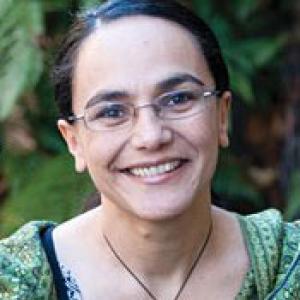
Professor Diane Ruwhiu
 Dr Shaun Awatere
Ngāti Porou
Manaaki Whenua
Shaun Awatere (Ngāti Porou) is a resource economist for Landcare Research in Hamilton. He has been working to improve…
Dr Shaun Awatere
Ngāti Porou
Manaaki Whenua
Shaun Awatere (Ngāti Porou) is a resource economist for Landcare Research in Hamilton. He has been working to improve…
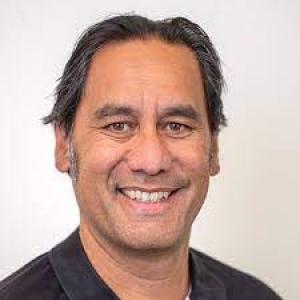
Dr Shaun Awatere
Ētahi atu · Other projects
This project brought together a multidisciplinary Māori research team to identify tikanga-based strategies for climate change adaptation and mitigation. It consolidated Indigenous knowledge, promoted Māori-led solutions, and developed pathways for enhanced community wellbeing in the face of climate challenges.
View projectFuture Proofing Māori Development Opportunities: Huringa Rangi Huringa Oranga
This project brought together a multidisciplinary Māori research team to identify tikanga-based strategies for climate change adaptation and mitigation.
It consolidated Indigenous knowledge, promoted Māori-led solutions, and developed pathways for enhanced community wellbeing in the face of climate challenges.
Kairangahau · Researchers
-
Dr Shaun Awatere
Dr Shaun Awatere
Shaun Awatere (Ngāti Porou) is a resource economist for Landcare Research in Hamilton. He has been working to improve the incorporation of Mātauranga Māori (Māori knowledge and values) into local government planning by developing the systems and processes that will enable Māori values to be integrated into urban design and development. -
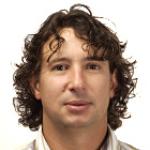 Dr John Pirker
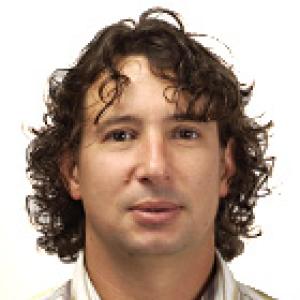
Dr John Pirker
John's fields of research include marine ecology, aquaculture and marine algae and his research interests centre around aquaculture. His disciplines include ecology, evolution and behaviour within marine ecological systems and he belongs to the Māori Research Advisory Group (MRAG) and Marine Ecology Research Group (MERG)
Exploring horticultural futures in Wairoa, this project identified saffron, feijoa, and gevuina as promising crops to protect whenua from erosion and support sustainable Māori land use.
View projectNgā Kōwhiringa Whenua Māori – Māori land-use opportunities
Exploring horticultural futures in Wairoa, this project identified saffron, feijoa, and gevuina as promising crops to protect whenua from erosion and support sustainable Māori land use.
Kairangahau · Researchers
-
Dr Shaun Awatere
Dr Shaun Awatere
Shaun Awatere (Ngāti Porou) is a resource economist for Landcare Research in Hamilton. He has been working to improve the incorporation of Mātauranga Māori (Māori knowledge and values) into local government planning by developing the systems and processes that will enable Māori values to be integrated into urban design and development.
The challenge for Māori carrying out development is to determine how to balance the drivers of a neo-liberal economic approach with the very ideals and principles that define us as Māori to ensure quality social and environmental outcomes for future generations. Through a previous NPM research project "Whakatipu rawa mā ngā uri whakatipu" the team has…
View projectEconomic and Spatial Modelling for informed Māori Land Development
The challenge for Māori carrying out development is to determine how to balance the drivers of a neo-liberal economic approach with the very ideals and principles that define us as Māori to ensure quality social and environmental outcomes for future generations. Through a previous NPM research project "Whakatipu rawa mā ngā uri whakatipu" the team has developed a prototype decision-making framework for collective assets, which takes into account well-being indices, tikanga Māori and financial measures.
Kairangahau · Researchers
-
Dr Shaun Awatere
Dr Shaun Awatere
Shaun Awatere (Ngāti Porou) is a resource economist for Landcare Research in Hamilton. He has been working to improve the incorporation of Mātauranga Māori (Māori knowledge and values) into local government planning by developing the systems and processes that will enable Māori values to be integrated into urban design and development.