About this research
The challenge for Māori carrying out development is to determine how to balance the drivers of a neo-liberal economic approach with the very ideals and principles that define us as Māori to ensure quality social and environmental outcomes for future generations. Through a previous NPM research project "Whakatipu rawa mā ngā uri whakatipu" the team has developed a prototype decision-making framework for collective assets, which takes into account well-being indices, tikanga Māori and financial measures. In it's final stages this previous project had envisaged promoting the uptake of the framework by working directly with Māori trusts and incorporations and this new project, "Whakairotia te Whenua, Whakairotia te Tangata – Economic and Spatial Modelling for informed Māori Land Development", provides the opportunity to fast track and extend the uptake of the framework and help unlock the economic potential of Māori land. Most decision tools for investment (e.g. Return on Equity, Social Return on Investment and Cost-Benefit Analysis) use principles from disciplines such as accounting and economics, but these neglect core Māori values. Some recently developed decision tools (e.g. MBIE Iwi Futures) have integrated Māori perspectives into a Eurocentric framework like the four well-beings i.e. social, cultural, environmental and economic and some (such as Iwi Futures and Whenua VIZ[) are also using spatial layers to depict areas of importance to Māori like historical sites and land parcels. However, these approaches are still missing a kaupapa Māori-based decision tool for collective assets that is driven by core Māori values like kaitiakitanga (sustainable resource management), manaakitanga (generosity) or whakatipu rawa (growing the asset base). This project fills the gap by going beyond a business as usual approach to modelling Māori values. Core Māori values like manaakitanga and kaitiakitanga underpin all decisions and are the key starting point for decision making rather than an appendage to a financial decision. Key to the projects approach is the promotion of core Māori values as the foundation for any collective asset planning. The expected results are asset management decisions and subsequent actions, like riparian planting, community gardens, and stocking rates, that will reflect those core values. The research will implement a new economic decision-making framework for collective assets across diverse scales (Farm-Regional level) utilising core Māori values (Ngā Pou Herenga) together with economic modelling and land-use capability assessment to aid decision makers of Māori land trusts and incorporations. The research questions for this project are: - How to apply a decision-making framework that actively utilises Māori values, ecological and economic information in an integrated manner for collective assets from a regional scale to a farm scale? - How can economic and ecological modelling be used for Māori land use decisions at diverse scales? - How to balance economic and cultural aspirations for the beneficiaries of collectively owned assets?
Kairangahau · Researchers
 Dr Shaun Awatere
Ngāti Porou
Manaaki Whenua
Shaun Awatere (Ngāti Porou) is a resource economist for Landcare Research in Hamilton. He has been working to improve…
Dr Shaun Awatere
Ngāti Porou
Manaaki Whenua
Shaun Awatere (Ngāti Porou) is a resource economist for Landcare Research in Hamilton. He has been working to improve…
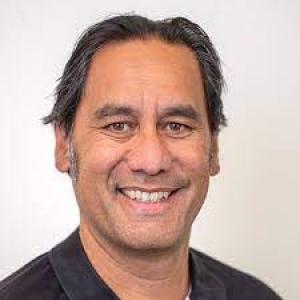
Dr Shaun Awatere
Ētahi atu · Other projects
This project brought together a multidisciplinary Māori research team to identify tikanga-based strategies for climate change adaptation and mitigation. It consolidated Indigenous knowledge, promoted Māori-led solutions, and developed pathways for enhanced community wellbeing in the face of climate challenges.
View projectFuture Proofing Māori Development Opportunities: Huringa Rangi Huringa Oranga
This project brought together a multidisciplinary Māori research team to identify tikanga-based strategies for climate change adaptation and mitigation.
It consolidated Indigenous knowledge, promoted Māori-led solutions, and developed pathways for enhanced community wellbeing in the face of climate challenges.
Kairangahau · Researchers
-
Dr Shaun Awatere
Dr Shaun Awatere
Shaun Awatere (Ngāti Porou) is a resource economist for Landcare Research in Hamilton. He has been working to improve the incorporation of Mātauranga Māori (Māori knowledge and values) into local government planning by developing the systems and processes that will enable Māori values to be integrated into urban design and development. -
 Dr John Pirker
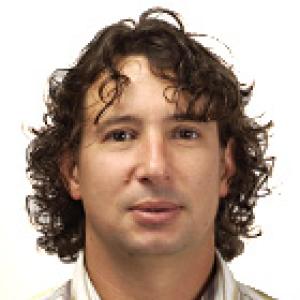
Dr John Pirker
John's fields of research include marine ecology, aquaculture and marine algae and his research interests centre around aquaculture. His disciplines include ecology, evolution and behaviour within marine ecological systems and he belongs to the Māori Research Advisory Group (MRAG) and Marine Ecology Research Group (MERG)
Exploring horticultural futures in Wairoa, this project identified saffron, feijoa, and gevuina as promising crops to protect whenua from erosion and support sustainable Māori land use.
View projectNgā Kōwhiringa Whenua Māori – Māori land-use opportunities
Exploring horticultural futures in Wairoa, this project identified saffron, feijoa, and gevuina as promising crops to protect whenua from erosion and support sustainable Māori land use.
Kairangahau · Researchers
-
Dr Shaun Awatere
Dr Shaun Awatere
Shaun Awatere (Ngāti Porou) is a resource economist for Landcare Research in Hamilton. He has been working to improve the incorporation of Mātauranga Māori (Māori knowledge and values) into local government planning by developing the systems and processes that will enable Māori values to be integrated into urban design and development.
The significance of this research project lies in its contribution to deeper understand what role Māori SMEs have as critical constituents of the Māori Economy. Recent years have seen attention paid to the merit of the Māori economy, based on the potential of an economy worth an estimated $42.6bn in 2013 (Nana, Khan, & Schulze, 2015). However, this type of…
View projectThe Intergenerational Reality for Māori Small and Medium sized Enterprises (SME): Building resilience of Māori SMEs for the future
Kairangahau · Researchers
-
 Professor Diane Ruwhiu
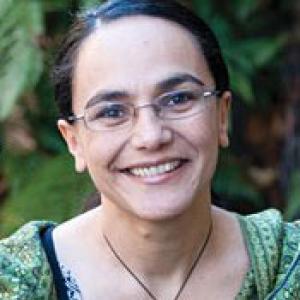
Professor Diane Ruwhiu
Diane Ruwhiu (Ngāpuhi) teaches strategic operations and supply chain management at under and post-graduate levels. In addition, she also introduces Māori values and practice into other areas, such as entrepreneurship, research methods, business communication, and organisations and sustainability.Diane's PhD, 'The Sleeping Taniwha: Exploring the practical utility of kaupapa Māori in firm performance', engaged with the premise that improved Māori firm performance and sustainable advantage, are not merely an outcome of economic activity, but are also determinants of the value derived from… -
Dr Shaun Awatere
Dr Shaun Awatere
Shaun Awatere (Ngāti Porou) is a resource economist for Landcare Research in Hamilton. He has been working to improve the incorporation of Mātauranga Māori (Māori knowledge and values) into local government planning by developing the systems and processes that will enable Māori values to be integrated into urban design and development.