About this research
What strategies and resources are effective in establishing te reo Māori in the home to raise first language Māori-speaking children?
Te Reo o te Pā Harakeke is a three year research project that seeks to understand the factors that contribute to successful intergenerational transmission of the Māori language in the home. The first three years will be a pilot project with a cohort of couples who have excellent proficiency in te reo Māori. The home includes related environments that families function in such as the supermarket, beach, playground, swimming pool, etc. Therefore, this project aims to develop a comprehensive programme complete with a plan and set of resources including a documentary, which can be adopted by communities, whānau, hapū and iwi committed to the intergenerational transmission of the Māori language and arresting language decline in their rohe (region). This programme is not designed to teach the language; it is designed for parents who though they were not been raised in a home where their first language was Māori have gone on to become proficient 2nd Language speakers themselves. Their next task is to ensure that their children are raised in te reo Māori in the modern world. They need support to ensure that the language journey they embarked upon becomes a life journey for their whānau and for subsequent generations. Given their own experience as children where the use of the language had been disrupted in their own families they are aware of the need to sustain intergenerational transmission of the Māori language. These participants will be enhanced as language leaders within their own communities and with support from Te Ipukarea and NPM, they can offer the programme within these communities.
The research team will track the participants over the course of the project using both qualitative and quantitative research methods. Participants will be supported throughout the project in their efforts to establish the Māori language as the dominant language of the home. This support will be in the form of regular wānanga held in communities facilitated by the research team and instructed by the mentors who will provide practical advice regarding raising children in the Māori language across family environments. These wānanga will provide an opportunity for participants to connect with other like-minded Māori speakers, thereby fostering a sense of collegiality and a network of support.
The results of this research project will inform future Māori language strategies and plans, influence an entire generation of 2nd Language proficient Māori-speaking parents, and aid in the revitalisation of the Māori language as a language learnt through intergenerational language transmission. It will foster the regeneration of native speakers in our homes and communities so we can see native speakers of te reo Māori as part of our future; not just our past. The project will be important for endangered languages throughout the world in their efforts to reverse language loss.
Kairangahau · Researchers
 Professor Tania Ka'ai
Ngāti Porou, Ngāi Tahu, Hawaiian, Cook Islands, Samoan
Auckland University of Technology (AUT)
Professor Tania Ka’ai came to AUT in 2007 with a goal to form the National Māori Language Institute, which was…
Professor Tania Ka'ai
Ētahi atu · Other projects
The project aims to contribute to the intellectual infrastructure of the discipline of te reo Māori revitalisation by collating oral, visual digital and written sources, including a dictionary, thesaurus and repositories of waiata, haka, and narrative recordings. The project will answer the following research questions: How can mātauranga and tikanga Māori…
View projectTe Whare Matihiko o te Reo
Kairangahau · Researchers
-
Professor Tania Ka'ai
Professor Tania Ka'ai
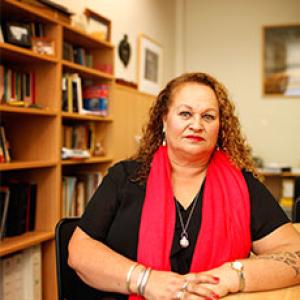
Professor Tania Ka’ai came to AUT in 2007 with a goal to form the National Māori Language Institute, which was established in 2008. The International Centre for Language Revitalisation was then launched in 2011.Tania was born and raised in New Zealand. She is of Hawaiian, Cook Islands, and Samoan descent through her father’s side and she is of Māori descent on her mother’s side.Tania completed a Bachelor of Education from the University of Waikato and a Master of Philosophy at the University of Auckland. The focus of her thesis was the transition of children from Te Kōhanga Reo to school and…
Tangi is the ultimate form of Māori cultural and community expression. Addressing the dearth of scholarly information, this study considers tangi practice, whakapapa, changing environments, community values, sharing knowledge, ritual and what it means to be Māori. The research team has been examining the life-values, beliefs and practices related to…
View projectAituā: Death in a changing Māori World
Kairangahau · Researchers
-
 Professor Linda Waimarie Nikora FRSNZ, HFNZPS
Professor Linda Waimarie Nikora FRSNZ, HFNZPS
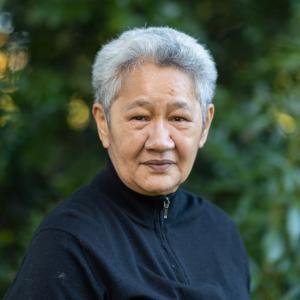
Researcher and academic, Professor Linda Waimarie Nikora was formerly the Director of the Māori & Psychology Research Unit in the School of Psychology at the University of Waikato in New Zealand. In 2017, she became a Professor Indigenous Studies at the University of Auckland where she was also Co-Director of Ngā Pae o te Māramatanga, New Zealand’s Māori Centre of Research Excellence (2017-2025). She presently teaches in the Master's of Indigenous Studies programme and supervises dissertations, master's theses and PhDs.Her specialty interests are in the development of indigenous psychologies…
A new report from Ngā Pae o te Māramatanga (NPM) and Manaaki Whenua Landcare Research provides guidance for Te Ao Māori on climate change adaptation and mitigation. He huringa āhuarangi, he huringa ao: a changing climate, a changing world was produced by a multidisciplinary Māori research team working across many research institutions. Using a novel kaupapa…
View project