About this research
Project Summary
Sea level rise resulting from climate change poses significant threats to coastal resources, including mahinga kai, culturally significant sites like wāhi tapu or marae, and projects like wetland habitat restoration. Threats include not just rising sea levels, but also increased frequency and intensity of storm-related effects like storm surge and flooding (e.g., Cyclone Gabrielle). These threats are complex to model, and to fully understand or interpret the outputs of such models often requires technical knowledge beyond the grasp of most people. Additionally, many models are large scale, so they do not offer more fine-grained or local pictures, nor do they incorporate culturally significant areas. Dynamic visualisation at the local community or hapū level can support such understanding.
Many marae communities, including those of Te Tai o Araiteuru (East Coast of Otago), are at risk. Building on the relationship with Aukaha, the environmental consultancy arm of 5 rūnaka, this project developed a pilot model to visualise possible effects of sea level rise by superimposing them onto a 3D model of the Otago coastline, focusing particularly on areas significant to Ōtakou rūnaka. This supports marae decision-making in terms of mitigation or adaptation strategies as they develop their inter-generational climate change strategies.
The project team have undertaken preliminary phases to test and co-design the approach and model with their partner, Aukaha. The project built further on this research to create an interactive and dynamic visualisation (i.e., showing change over time) of potential sea level rise, combined with storm surge and flooding.
This model is a first for Araiteuru rūnaka, combining local cultural data from Kāi Tahu’s GIS-based cultural mapping website Kā Huru Manu (https://www.kahurumanu.co.nz/) with publicly available geophysical data (also see data sovereignty statement). The usefulness of the model to support decision-making for rūnaka will be assessed by Aukaha.
Research Question
How can we create effective visualisations of projected effects of sea level rise, that are readily understandable by marae communities of Te Tai o Araiteuru to support inter-generational decision-making?
Lead Researcher
Associate Professor Katharina Ruckstuhl, Kāi Tahu, Rangitāne
Research Team
Dr Nigel Stanger, University of Otago
Dr Brendon Woodford, University of Otago
Owyn Aitken, Ngāti Raukawa, Tainui, University of Otago
Highlights
- Collaborated with Aukaha to co-design model using local cultural and environmental data
- Gave presentations to rūnaka and regional council (Otago Regional Council + Boffa Miskell)
- Strengthened relationship between Otago’s School of Computing and Aukaha
- Contributed to student advancement into Master’s research on climate change visualisation
- Delivered a visualisation resource now used by rūnaka to assess sea-level rise impacts on cultural and physical assets
Sea level rise is threatening many marae and coastal cultural sites across Te Tai o Araiteuru. Yet existing climate models are complex and often not locally relevant or easy to understand. This project created a dynamic, culturally grounded 3D visualisation of the Otago coastline, integrating Kāi Tahu cultural data with environmental modelling to support hapū and marae in making inter-generational climate decisions.
Kairangahau · Researchers
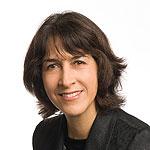 Dr Katharina Ruckstuhl
Ngāi Tahu, Rangitāne
Research and Enterprise - University of Otago
Katharina is a Senior Research Analyst and Researcher at the University of Otago. She uses a kaupapa Māori framework to…
Dr Katharina Ruckstuhl
Ngāi Tahu, Rangitāne
Research and Enterprise - University of Otago
Katharina is a Senior Research Analyst and Researcher at the University of Otago. She uses a kaupapa Māori framework to…
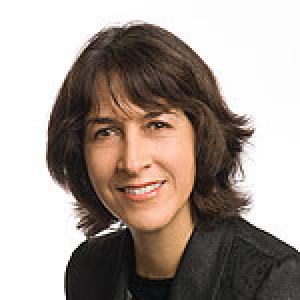
Dr Katharina Ruckstuhl
Ētahi atu · Other projects
Project SummaryThis project is part of a ‘circular economy’ research project based on a Jobs for Nature’ [J4N] river restoration programme, Toitū te Hakapupu, being undertaken by Kāti Huirapa Rūnaka ki Puketeraki (Puketeraki) in East Otago. A CE aims to optimize circular material flows to reduce resource consumption and environmental impacts and is said to…
View projectToitū te Hakapupu: Restoration of the Pleasant River – a documentary journey
PhD Candidate: Jennifer Tokomauri McGregor (Ngati Raukawa (Waikato)) Primary Supervisor(s): Dr. Alayne Mikahere-Hall Background: Despite being a long-term government priority, the inequity of Māori nurses in the health workforce is long-standing, suggesting that that recruitment and retention of Māori into the nursing workforce is problematic. Māori nurses…
View projectKawa Whakaruruhau: Culturally-safe spaces for Māori nurse practice development
Kairangahau · Researchers
-
 Dr Alayne Mikahere-Hall
Dr Alayne Mikahere-Hall
This research programme dives beneath the surface to expose how efforts to address racism in Aotearoa can be symbolic, sidelining Māori worldviews and limiting true transformation. Led through a kaupapa Māori lens, this programme challenges narrow, imported definitions of racism and equity, and confronts how dominant systems create and maintain Māori…
View projectResearch to Interrupt Racism and (In)equity (RIRI)
This research programme dives beneath the surface to expose how efforts to address racism in Aotearoa can be symbolic, sidelining Māori worldviews and limiting true transformation.
Led through a kaupapa Māori lens, this programme challenges narrow, imported definitions of racism and equity, and confronts how dominant systems create and maintain Māori ‘vulnerability’. It aims to reframe equity on Māori terms—grounded in rangatiratanga, Indigenous knowledge, and the realities of colonisation.
Kairangahau · Researchers
-
 Associate Professor Donna Cormack
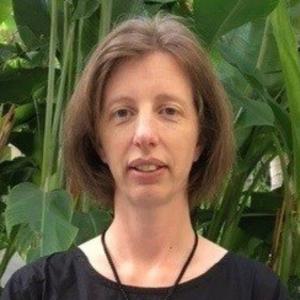
Associate Professor Donna Cormack
Dr Donna Cormack (Kai Tahu, Kāti Māmoe) is an Associate Professor at Te Kupenga Hauora Māori, University of Auckland.Donna is course director for the postgraduate papers MAORIHTH 710 Kaupapa Māori Theory, and MAORIHTH 709 Transformative Research for Māori Health, and co-convenes MAORIHTH711 Kaupapa Māori quantitative research. Donna teaches into other undergraduate and postgraduate papers in the Faculty of Medical and Health Sciences. She is also an active member of Tōmaiora Research Centre within Te Kupenga Hauora Māori. Her research focuses on racism and other forms of oppression… -
 Professor Sarah-Jane Paine
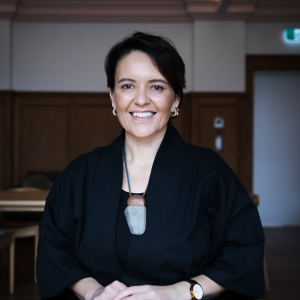
Professor Sarah-Jane Paine
Professor Sarah-Jane Paine (Tūhoe) is a leading Māori health researcher and internationally respected authority on Indigenous child wellbeing. She is Research Director and Principal Investigator of Growing Up in New Zealand, Aotearoa’s flagship longitudinal study of child development, and a Professor at Te Kupenga Hauora Māori, Waipapa Taumata Rau, University of Auckland.Her work in Kaupapa Māori epidemiology has influenced national policy in maternal and child health, racism and child wellbeing, food security, and youth wellbeing. Known for combining scientific rigour with strong community… -
 Professor Papaarangi Reid
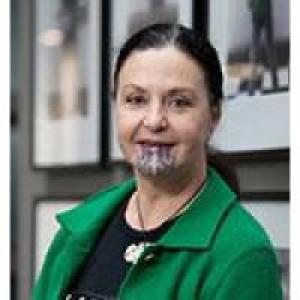
Professor Papaarangi Reid
Papaarangi is Tumuaki and Head of Department of Maori Health at the Faculty of Medical and Health Sciences, University of Auckland, New Zealand. She holds science and medical degrees from the University of Auckland and is a specialist in public health medicine. She has tribal affiliations to Te Rarawa in the Far North of Aotearoa and her research interests include analysing disparities between indigenous and non-indigenous citizens as a means of monitoring government commitment to indigenous rights. -
 Professor Ricci Harris

Professor Ricci Harris
Professor Ricci Harris (Ngāti Kahungunu, Ngāi Tahu, Ngāti Raukawa) is a public health physician and Kaupapa Māori epidemiologist at Te Rōpū Rangahau Hauora a Eru Pōmare.Her research is primarily concerned with upholding Māori rights to health and health equity as ensured by Te Tiriti o Waitangi and in-line with International Indigenous Rights.She draws on Kaupapa Māori Research theory to undertake and develop decolonial approaches to epidemiology that centre Māori and are contextualised within systems of ongoing racism and colonialism. This has included research into the classification of… -
 Dr Arama Rata
Dr Arama Rata
Arama is of Ngāti Maniapoto, Taranaki, and Ngāruahine descent. She completed her PhD in Psychology at Victoria University of Wellington in 2012, which focused on Māori cultural engagement, identity, and psychological well-being in State secondary schools. Arama then lectured at Te Kawa a Māui (the School of Māori Studies), where she received a Research Establishment Grant to study Māori collective remembering of the New Zealand Wars. Dr Rata is currently involved with research relating to Māori health experiences, Māori in rural communities, as well as iwi consultancy. -
Hana Burgess
Hana Burgess
Hana (Ngäpuhi, Te Roroa, Te Ätihaunui a Päpärangi, Ngäti Tüwharetoa) (she/her) is doing a PhD in Mäori health, with supervision from Donna (Käi Tahu, Käti Mämoe) (she/her) and Papaarangi (Te Rarawa) (she/her)