About this research
Project Summary
This project is part of a ‘circular economy’ research project based on a Jobs for Nature’ [J4N] river restoration programme, Toitū te Hakapupu, being undertaken by Kāti Huirapa Rūnaka ki Puketeraki (Puketeraki) in East Otago.
A CE aims to optimize circular material flows to reduce resource consumption and environmental impacts and is said to have 3 principles:
- design out waste and pollution;
- keep products and materials in use;
- regenerate nature.
Using Tuck & McKenzie’s (2015) ‘critical place enquiry’ that puts Indigenous theories, methodologies, and methods at the centre of research, CE project funding is supporting Puketeraki to develop a visual documentary of the process. This includes capturing both direct engagement activities with the river as well as associated cultural engagement through waiata, pūraku, whakatauki, and taoka puoro.
Research and filming aim to reflect how rural Māori communities conceptualise and practise CE thereby extending and redefining the concept, particularly in relation to the third CE principle: regenerate nature. The longer objective is that, through both physical and creative cultural engagement, there will be an inter-generational desire to sustain the health and well-being of the river and the wider communities and hapū who make up the Puketeraki takiwā.
Project Lead
Katharina Ruckstuhl, Ngāi Tahu, Rangitāne ki Wairau, University of Otago
Kairangahau · Researchers
 Dr Katharina Ruckstuhl
Ngāi Tahu, Rangitāne
Research and Enterprise - University of Otago
Katharina is a Senior Research Analyst and Researcher at the University of Otago. She uses a kaupapa Māori framework to…
Dr Katharina Ruckstuhl
Ngāi Tahu, Rangitāne
Research and Enterprise - University of Otago
Katharina is a Senior Research Analyst and Researcher at the University of Otago. She uses a kaupapa Māori framework to…
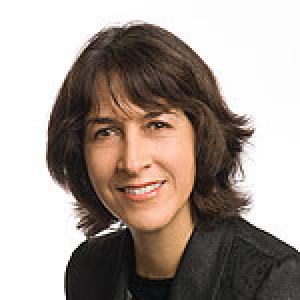
Dr Katharina Ruckstuhl
Ētahi atu · Other projects
Sea level rise is threatening many marae and coastal cultural sites across Te Tai o Araiteuru. Yet existing climate models are complex and often not locally relevant or easy to understand. This project created a dynamic, culturally grounded 3D visualisation of the Otago coastline, integrating Kāi Tahu cultural data with environmental modelling to support…
View projectMō Ngā Uri a Muri Ake Nei: Supporting Te Tai o Araiteuru Inter-generational Decision-making Through Sea-rise Visualisation
Sea level rise is threatening many marae and coastal cultural sites across Te Tai o Araiteuru. Yet existing climate models are complex and often not locally relevant or easy to understand. This project created a dynamic, culturally grounded 3D visualisation of the Otago coastline, integrating Kāi Tahu cultural data with environmental modelling to support hapū and marae in making inter-generational climate decisions.
Kairangahau · Researchers
-
 Dr Nigel Stanger
Dr Nigel Stanger
-
Dr Brendon Woodford
Dr Brendon Woodford
Dr Brendon Woodford lectures in the diverse areas of knowledge engineering, machine learning, information systems development, and health informatics.He conducts research for the Knowledge, Intelligence and Web Informatics (KIWI) Laboratory in the areas of artificial neural networks, fuzzy systems, data visualisation, and image processing and recognition. Since 1998 the overall aim of this research is in the area of computational intelligence. The main objective of his work has been to create adaptive learning systems which generate new knowledge from data that they process and allow for… -
Owyn Aitken
Owyn Aitken
He oranga whānau: mahi ngātahi: Whānau livelihoods within the context of work and Māori economies of wellbeing. These groundbreaking works celebrate Māori futures rooted in kaupapa Māori values while fostering pathways for responsible relationships, meaningful lives, and flourishing Indigenous wellbeing economies. By emphasising the central role of whānau…
- Mana Touchstones
- Te Ahunga atu ki ngā Ōhanga Oranga Māori: Towards Māori Economies of Wellbeing
- He Rauhī Kupu
He oranga whānau: mahi ngātahi: Whānau livelihoods within the context of work and Māori economies of wellbeing
He oranga whānau: mahi ngātahi: Whānau livelihoods within the context of work and Māori economies of wellbeing. These groundbreaking works celebrate Māori futures rooted in kaupapa Māori values while fostering pathways for responsible relationships, meaningful lives, and flourishing Indigenous wellbeing economies. By emphasising the central role of whānau, these publications provide actionable insights and inspiration for transformative change in economic and cultural systems.
- Mana Touchstones
- Te Ahunga atu ki ngā Ōhanga Oranga Māori: Towards Māori Economies of Wellbeing
- He Rauhī Kupu
Kairangahau · Researchers
-
 Professor Chellie Spiller
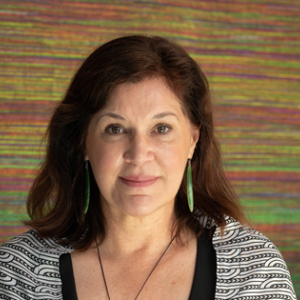
Professor Chellie Spiller
Dr Chellie Spiller, of Matawhaiti Iwitea, Ngāti Kahungunu ki Wairoa, is Professor of Management and Leadership, and Associate Dean Māori at the University of Waikato. She was previously a senior lecturer and Associate Dean Māori and Pacific at the University of Auckland Business School. She has over 30 years of corporate experience in tourism, finance and marketing, holding senior executive positions in New Zealand and abroad, and brings this experience to her academic work and leadership and management development programmes. Her research explores how Māori and indigenous businesses create… -
 Professor Jarrod Haar
Professor Jarrod Haar
Professor Jarrod Haar (PhD) is a Professor of Human Resource Management in the Department of Management and has tribal affiliations of Ngati Maniapoto and Ngati Mahuta. In 2018, Professor Haar was appointed as a Member of the Marsden Fund Council and is the Convenor of the Marsden Economics and Human Behavioural Sciences panel. He is a Fellow of the Royal Society of New Zealand Te Apārangi (2020), a Research Fellow of the Australia & New Zealand Academy of Management (since 2012), and Chartered Fellow of the Human Resource Institute of New Zealand (HRINZ). He won the inaugural HRINZ HR… -
 Dr John Reid
Dr John Reid
John is a Senior Research Fellow at the University of Canterbury’s Ngai Tahu Research Centre. He is a specialist in leading and developing multi-disciplinary research and development programmes focused on addressing interrelated social, economic, and environmental problems. His research explores the way in which Indigenous and Western cultures shape identity, sense of place, and approaches to social and economic development. John's current research interests are focused on sustainable development within indigenous tribal communities and in fostering novel approaches to development through… -
 Professor Jason Paul Mika
Professor Jason Paul Mika
Jason Paul Mika Ko Ranginui e tū iho nei, ko Papatūānuku e takoto nei, ko te ira tangata kei waenganui i raro i te kaitiakitanga o ngā atua, o te manaakitanga o te Runga Rawa. Tīhei mauri ora! Ko Ngāi Tūhoe, ko Ngāti Awa, ko Te Whakatōhea, ko Ngāti Kahungunu ōku iwi. Ko Jason Mika ahau. I was born in Whakatāne and raised mainly in Rotorua. In November 2024, I was fortunate join Waipapa Taumata Rau University of Auckland as a Professor of Māori Management and Associate Dean Māori in He Manga Tauhokohoko Auckland Business School. My research, teaching, writing, and practice centres on Māori and… -
 Dr Matthew Rout
Dr Matthew Rout
Matt works on indigenous socio-economic development and environmental sustainability initiatives and projects with a focus on applied outcomes through theoretical synthesis. He has a particular interest in how philosophical insights from ontology and epistemology can be used in practical ways to aid indigenous development. Indigenous and modernist ontology and epistemology Institutional economics Postcolonial psychology Settler colonisation Sustainable development
This internship compiled a database of traditional Māori food preservation practices to better understand archaeological midden sites and mahinga kai history. Working with Otago’s SPAR team, the project links historical knowledge with contemporary preservation techniques across Aotearoa.
View projectInvestigating traditional mahinga kai practices of preservation throughout Aotearoa
This internship compiled a database of traditional Māori food preservation practices to better understand archaeological midden sites and mahinga kai history.
Working with Otago’s SPAR team, the project links historical knowledge with contemporary preservation techniques across Aotearoa.