About this research
Awardee: Lisa Jean Kremer, University of Otago
The Awardee will undertake the Whakaaweawe Impact and Transformation Grant titled Creating digital assets and illustrations for whānau who have pēpi in the neonatal unit.
In the neonatal intensive care setting, whānau receive a significant amount of written and verbal information about multiple procedures, screening tests and diagnoses, medication use, and more. Most of the written medical information is created from a Western perspective. Retinopathy of prematurity (ROP) A collaboration with a Māori artist led to the development of illustrations for a written resource on the diagnosis and treatment of ROP, as part of a 2024 honours project.
Kairangahau · Researchers

Ētahi atu · Other projects
He oranga whānau: mahi ngātahi: Whānau livelihoods within the context of work and Māori economies of wellbeing. These groundbreaking works celebrate Māori futures rooted in kaupapa Māori values while fostering pathways for responsible relationships, meaningful lives, and flourishing Indigenous wellbeing economies. By emphasising the central role of whānau…
- Mana Touchstones
- Te Ahunga atu ki ngā Ōhanga Oranga Māori: Towards Māori Economies of Wellbeing
- He Rauhī Kupu
He oranga whānau: mahi ngātahi: Whānau livelihoods within the context of work and Māori economies of wellbeing
He oranga whānau: mahi ngātahi: Whānau livelihoods within the context of work and Māori economies of wellbeing. These groundbreaking works celebrate Māori futures rooted in kaupapa Māori values while fostering pathways for responsible relationships, meaningful lives, and flourishing Indigenous wellbeing economies. By emphasising the central role of whānau, these publications provide actionable insights and inspiration for transformative change in economic and cultural systems.
- Mana Touchstones
- Te Ahunga atu ki ngā Ōhanga Oranga Māori: Towards Māori Economies of Wellbeing
- He Rauhī Kupu
Kairangahau · Researchers
-
 Professor Chellie Spiller
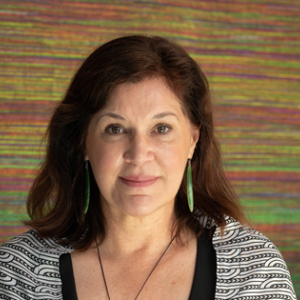
Professor Chellie Spiller
Dr Chellie Spiller, of Matawhaiti Iwitea, Ngāti Kahungunu ki Wairoa, is Professor of Management and Leadership, and Associate Dean Māori at the University of Waikato. She was previously a senior lecturer and Associate Dean Māori and Pacific at the University of Auckland Business School. She has over 30 years of corporate experience in tourism, finance and marketing, holding senior executive positions in New Zealand and abroad, and brings this experience to her academic work and leadership and management development programmes. Her research explores how Māori and indigenous businesses create… -
 Professor Jarrod Haar

Professor Jarrod Haar
Professor Jarrod Haar (PhD) is a Professor of Human Resource Management in the Department of Management and has tribal affiliations of Ngati Maniapoto and Ngati Mahuta. In 2018, Professor Haar was appointed as a Member of the Marsden Fund Council and is the Convenor of the Marsden Economics and Human Behavioural Sciences panel. He is a Fellow of the Royal Society of New Zealand Te Apārangi (2020), a Research Fellow of the Australia & New Zealand Academy of Management (since 2012), and Chartered Fellow of the Human Resource Institute of New Zealand (HRINZ). He won the inaugural HRINZ HR… -
 Professor John Reid

Professor John Reid
Professor John Reid is a researcher whose work focuses on the intersection of sustainability, indigenous knowledge systems, environmental governance, and technological innovation. Based within the Ngāi Tahu Research Centre, his research brings together systems thinking, te ao Māori, and interdisciplinary science to address complex social, economic, and environmental challenges facing Indigenous communities and wider society. His work spans environmental management, regenerative land use, Māori economic development, and the governance of emerging technologies, with particular interests in… -
 Professor Jason Paul Mika

Professor Jason Paul Mika
Jason Paul Mika Ko Ranginui e tū iho nei, ko Papatūānuku e takoto nei, ko te ira tangata kei waenganui i raro i te kaitiakitanga o ngā atua, o te manaakitanga o te Runga Rawa. Tīhei mauri ora! Ko Ngāi Tūhoe, ko Ngāti Awa, ko Te Whakatōhea, ko Ngāti Kahungunu ōku iwi. Ko Jason Mika ahau. I was born in Whakatāne and raised mainly in Rotorua. In November 2024, I was fortunate join Waipapa Taumata Rau University of Auckland as a Professor of Māori Management and Associate Dean Māori in He Manga Tauhokohoko Auckland Business School. My research, teaching, writing, and practice centres on Māori and… -
 Dr Matthew Rout

Dr Matthew Rout
Dr. Matthew Rout's research explores how Indigenous worldviews shape the institutions that govern economic activity, environmental management, and public decision-making. Working at the nexus of political, economic, social, cultural, and environmental domains, his research examines how values, knowledge systems, and social organisation influence the ways societies coordinate collective action and pursue development. A central focus of his work is the application of te ao Māori and mātauranga Māori to contemporary policy challenges, including environmental governance, disaster risk reduction…
This internship analysed how race and racism are framed in New Zealand’s social and traditional media around key issues like constitutional reform and Māori health. Guided by a research team, the intern conducted manual content analysis to uncover overt and subtle expressions of racism.
View projectSeparatism, or sovereignty? Exploring social media and news media narratives of Maaori tino-rangatiratanga in politics and health
This internship analysed how race and racism are framed in New Zealand’s social and traditional media around key issues like constitutional reform and Māori health.
Guided by a research team, the intern conducted manual content analysis to uncover overt and subtle expressions of racism.
This research explored how Kāi Tahu can strengthen control over kai systems, sources, and practices. By weaving together insights on Māori food and nutrition data sovereignty, it offers a foundation for future whānau- and hapori-led kai ora initiatives.
View projectTe Kai Ora a Kāi Tahu: Conceptualising Kāi Tahu kai sovereignty and Māori nutrition data sovereignty
This research explored how Kāi Tahu can strengthen control over kai systems, sources, and practices. By weaving together insights on Māori food and nutrition data sovereignty, it offers a foundation for future whānau- and hapori-led kai ora initiatives.