About this research
This proposed research will undertake a co-generative process with our community and collaborating researchers to scope and develop specific research questions that would form the basis of individual applications to three funding bodies. However, our meetings to date have broader research questions that have been discussed so far include:
- Is the Te Pā o Rākaihautū approach to decolonising education effective?
- What decolonizing methods are being implemented?
- What does success look like from and individual, whānau and community perspective?
- How can you measure success (what tohu can be implemented)?
- What does a Pā Wānanga look like?
Interventions to improve Māori educational achievement have, for the most part, fallen short of expectations as evidenced by the high percentage of Māori who are disengaged in education and an absence learning environments that are conducive and encompassing of Māori cultural constructs.
Te Pā o Rākaihautū (Te Pā) is a designated special character school that opened in Ōtautahi in 2015. Fundamentally this initiative is based on a Pā Wānanga approach, or a learning village, that embeds learning in an environment that is readily identifiable as Māori. Te Pā was established by a group of parents, none of whom were educationalists, but who were fundamentally concerned about the lack of Māori-medium education choice available for their tamariki where they can succeed in education and culturally. ‘Te Pā o Rākaihautū: Wetekia kia rere’ will empower a multidisciplinary discussion and rigorous research framework to describe the educational strategies being employed by a new educational imperative in Ōtautahi (Te Pā o Rākaihautū), and their impact on improving student achievement and well-being and wider whānau empowerment.
The collection framework and collected data will have immediate currency for strategy and decision-makers at Te Pā who are not currently collating any data, beyond the narrow testing frameworks currently prescribed by the MoE. This research will also assist Te Pā o Rākaihautū to further conceptualise the establishment of their permanent Pa Wānanga (learning village). Currently they are domiciled in a decommissioned school but have secured private investor funding to build a new site and are working with the Ministry of Education to determine an appropriate site.
The team of science and education researchers, and Māori-medium education practitioners will consolidate the results of this research through peer reviewed publications and strategic engagement in order to position applications to three fund providers.
Kairangahau · Researchers
 Professor Angus Macfarlane
Ngāti Whakaue
Angus Macfarlane is Professor of Māori Research at the University of Canterbury. He is an experienced educator and…
Professor Angus Macfarlane
Ngāti Whakaue
Angus Macfarlane is Professor of Māori Research at the University of Canterbury. He is an experienced educator and…
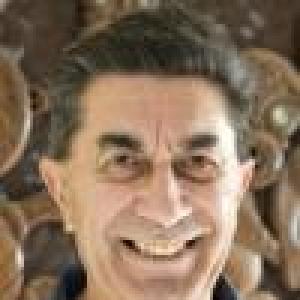
Professor Angus Macfarlane
Ētahi atu · Other projects
This project explored how tamariki, rangatahi, and their whānau thrived in a changing world by supporting Māori wellbeing and success in diverse workplaces. Through research, interviews, and stakeholder input, it aimed to create a Māori-led Change Management Model and policy framework to foster sustainable incomes, cultural revitalisation, and balanced…
View projectPractices of Sustenance: Collaborative explorations into the contours of wellness: Cultural reflections and contentions
This project explored how tamariki, rangatahi, and their whānau thrived in a changing world by supporting Māori wellbeing and success in diverse workplaces. Through research, interviews, and stakeholder input, it aimed to create a Māori-led Change Management Model and policy framework to foster sustainable incomes, cultural revitalisation, and balanced work–life wellbeing for Māori.
Kairangahau · Researchers
-
Professor Angus Macfarlane
Professor Angus Macfarlane
Angus Macfarlane is Professor of Māori Research at the University of Canterbury. He is an experienced educator and practitioner and has been an advisor and professional development provider for Special Education Services and the Ministry of Education on a number of national projects. His interest is the exploration of cultural concepts and strategies that affect positively on professional practice, on which he published widely. In 2010 Angus was presented with the Tohu Pae Tawhiti Award to acknowledge his significant contribution to Māori research. His most recent book, Responsive Pedagogy… -
 Dr Tia Neha
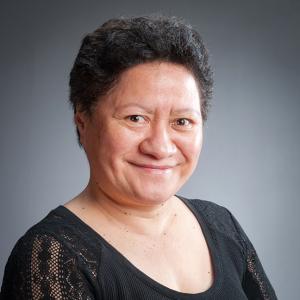
Dr Tia Neha
Tia is a lecturer at the school of psychology, Victoria University of Wellington. Her research interests include four key areas, broadly linked and overarched by relationships within Māori and Indigenous Developmental Psychology. These areas include: Indigenous and developmental psychology in the interdependent relations between whānau and their children’s learning Autobiographical memory with whanau Language research Māori pediatric health -
 Associate Professor Sonja Macfarlane

Associate Professor Sonja Macfarlane
Sonja’s research interest’s focus on the importance of culturally responsive, evidence based approaches in education, psychology, counselling, health and human development in order to enhance the social, cultural, educational and health outcomes that are achieved by Māori. The importance of exploring 'what works well' for Māori as a pathway to responding to disparity and unlocking potential guides most of her research endeavours. She argues that many of the solutions for reducing such disparities actually reside in 'te ao Māori' (the Māori world, which includes Māori knowledge, protocols and…
This summer internship investigated the evolution of te reo Māori by examining its linguistic structures, oral traditions, and the impact of historical and policy changes. The research aimed to enhance educational outcomes by analysing phonology, orthography, and teaching approaches, concluding with recommendations for compulsory curricula to better support…
View projectThe Science of Language: Examining the linguistic structure of te reo Maōri
This summer internship investigated the evolution of te reo Māori by examining its linguistic structures, oral traditions, and the impact of historical and policy changes. The research aimed to enhance educational outcomes by analysing phonology, orthography, and teaching approaches, concluding with recommendations for compulsory curricula to better support te reo Māori learners.
Kairangahau · Researchers
-
Professor Angus Macfarlane
Professor Angus Macfarlane
Angus Macfarlane is Professor of Māori Research at the University of Canterbury. He is an experienced educator and practitioner and has been an advisor and professional development provider for Special Education Services and the Ministry of Education on a number of national projects. His interest is the exploration of cultural concepts and strategies that affect positively on professional practice, on which he published widely. In 2010 Angus was presented with the Tohu Pae Tawhiti Award to acknowledge his significant contribution to Māori research. His most recent book, Responsive Pedagogy…
This Ngā Pae o te Māramatanga project incorporates most of the secondary schools and wharekura within the Rotorua school zone. From the literature, data gathered, and the matching and discussion of this information; the research team’s aim is that educators, parents and whānau will better understand the nature of teaching, learning and home socialisation…
View projectKa Awatea: An iwi case study of Māori students experiencing success
This Ngā Pae o te Māramatanga project incorporates most of the secondary schools and wharekura within the Rotorua school zone. From the literature, data gathered, and the matching and discussion of this information; the research team’s aim is that educators, parents and whānau will better understand the nature of teaching, learning and home socialisation patterns that support Māori student success.
Kairangahau · Researchers
-
Professor Angus Macfarlane
Professor Angus Macfarlane
Angus Macfarlane is Professor of Māori Research at the University of Canterbury. He is an experienced educator and practitioner and has been an advisor and professional development provider for Special Education Services and the Ministry of Education on a number of national projects. His interest is the exploration of cultural concepts and strategies that affect positively on professional practice, on which he published widely. In 2010 Angus was presented with the Tohu Pae Tawhiti Award to acknowledge his significant contribution to Māori research. His most recent book, Responsive Pedagogy…