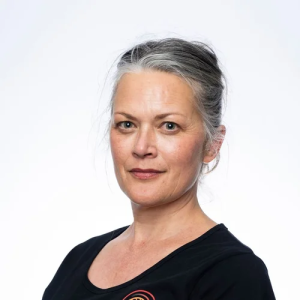
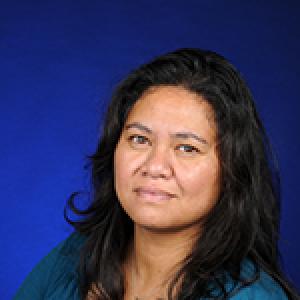
 Professor Bridgette Masters-Awatere
" loading="lazy" decoding="async">
Professor Bridgette Masters-Awatere
" loading="lazy" decoding="async">
Head, School of Health Equity and Innovation Health Equity and Innovation
Bridgette Masters-Awatere (Te Rarawa, Ngāi te Rangi, Tūwharetoa ki Kawerau) is a Professor in Te Kura Whatu Oho Mauri - School of Psychology - in the Division of Arts, Law, Psychology and Social Sciences at the University of Waikato. In addition to her role as Director of the Community Psychology postgraduate programme for registration as a psychologist, she is the Director of the Māori & Psychology Research Unit. Both Directorships are situated within the School of Psychology. Bridgette trained as a psychologist, with a special interest in community and Indigenous wellbeing. Before joining the academy she managed a successful private practice that refined her evaluation research skills within Indigenous contexts. She teaches some of these skills to postgraduate students at Waikato.
Projects that are Bridgette is currently involved with are: 'Rapua te Ara Rangatira' and 'He Waka Eke Noa', which are two projects situated within the Whakaue Research led Kia Puawai Programme grant that is funded by the Health Research Council of NZ; Bridgette leads the Waikato team who contribute to 'The expression, experience and transcendence of low skills in Aotearoa New Zealand' project led by Auckland University of Technology and funded as an MBIE Endeavour grant. Recently completed projects were funded within different National Science Challenges; 'Haumanu Hauora' within the Deep South challenge, ‘He Pikinga Waiora’ within the Healthier Lives challenge, 'He Taonga ke te Ngahere' within the Biological Heritage challenge. Other projects were: 'Tangata kāpō Māori and health service (non)delivery' and ‘Harti Hauora Tamariki’, funded by the Health Research Council of New Zealand, ‘Hospital Transfers’ and 'Kāpō COVID' funded by the Māori Centre of Research Excellence (Ngā Pae o te Māramatanga).
Bridgette did all her formal tertiary training at Waikato University. Since 2000 she has been registered and practicing as a Community Psychologist. In 2015 she completed her PhD in Psychology focused on indigenous evaluation. Her research tends to focus on generating information that is useful and is targeted towards making change in the context of existing inequality. Her research is always values-based and driven, which often includes consideration of a collective experience that engages multiple voices - eg whānau, hapū, iwi, agency, community - in the context of individual descriptions of experiences. She likes to take an ecological approach, which often includes systems and multilevel analysis, narrative inquiry and kaupapa Māori research.
Rangahau · Related projects
Since the arrival of visitors to Aotearoa, Māori have always been quick to assess and adapt language, technology and information. Contemporary society brings new languages, technology and information instantly to our fingertips. New pressures and demands can be a consequence of readily accessible knowledge. For all its advances, there are also…
View projectNgā whenu haumaru hei raranga: Social Wellbeing
Since the arrival of visitors to Aotearoa, Māori have always been quick to assess and adapt language, technology and information. Contemporary society brings new languages, technology and information instantly to our fingertips. New pressures and demands can be a consequence of readily accessible knowledge. For all its advances, there are also disadvantages. For rangatahi, those with addictions and Māori whānau connections and wellbeing can be negatively affected.
This programme of research investigates examples of Māori approaches to social wellbeing. Through a series of research activities undertaken by the research team, a case study will emerge reflective of collaborative interactions with key stakeholder organisations. Utilising qualitative methods such as key informant, wānanga, hui, photo elicitation and go along interviews, the research is primed to capitalise on the collaborative relationships to affect national policy and regional service delivery.
Kairangahau · Researchers
-
 Dr Pita King
Dr Pita King
-
Moana Rarere
Moana Rarere
-
Dr Rewi Nankivell
Dr Rewi Nankivell
-
Dr Eleanor Britain
Dr Eleanor Britain
Dr Eleanor (Elle) Brittain is Ngāti Kahungunu ki Te Wairoa and Ngāti Rakaipaaka. She is a Senior Lecturer in Te Kura Hinengaro Tangata, School of Psychology, based on the Pukeahu, Wellington campus. She is also a Clinical Psychologist.Her research focuses on issues pertinent to Māori, including research projects that have explored Māori psychology and wellbeing. With experience in implementing methodologies grounded in the values of Kaupapa Māori research theory, her research practice is predominantly qualitative. Ultimately she sees her work as in service of communities in order to… -
Hans Tiakiwai
Hans Tiakiwai
-
Megan Fitzpatrick
Megan Fitzpatrick
-
 Professor Darrin Hodgetts

Professor Darrin Hodgetts
Darrin Hodgetts is a Professor in Social Psychology at the University of Waikato. Previously he was a teaching fellow at Massey University, and then held a post-doctoral fellowship in Community Health at Memorial University, Canada, followed by a lectureship at the London School of Economics and Political Sciences. Darrin has published more than 70 peer-reviewed articles and three books relating to health, poverty, community and inequalities. He is an expert in the use of participative, action-orientated ethnographic research methods. Darrin is Co-Principal Investigator on the Ngā Pae o te… -
Tiana Watkins
Tiana Watkins
Climate change disproportionately affects Indigenous communities across the globe. In Aotearoa, Māori face these inequities while also holding deep-rooted knowledge systems that offer powerful, holistic responses to environmental transformation.
View projectExamining the contribution of mātauranga Māori to climate health in Aotearoa
Climate change disproportionately affects Indigenous communities across the globe. In Aotearoa, Māori face these inequities while also holding deep-rooted knowledge systems that offer powerful, holistic responses to environmental transformation.
Kairangahau · Researchers
-
Dr Ken Taiapa
Dr Ken Taiapa
-
 Professor Bridgette Masters-Awatere
Professor Bridgette Masters-Awatere
Bridgette Masters-Awatere (Te Rarawa, Ngāi te Rangi, Tūwharetoa ki Kawerau) is a Professor in Te Kura Whatu Oho Mauri - School of Psychology - in the Division of Arts, Law, Psychology and Social Sciences at the University of Waikato. In addition to her role as Director of the Community Psychology postgraduate programme for registration as a psychologist, she is the Director of the Māori & Psychology Research Unit. Both Directorships are situated within the School of Psychology. Bridgette trained as a psychologist, with a special interest in community and Indigenous wellbeing. Before joining… -
Associate Professor Christina Mckerchar
Associate Professor Christina Mckerchar
Christina Mckerchar is of Ngāti Kahungunu, Tūhoe, and Ngāti Porou descent. She trained as a nutritionist and worked for a number of years for Te Hotu Manawa Māori, a national Māori Health provider, before her academic career. Her research has focused broadly on the right to healthy food. She has researched the food environment, especially food availability and marketing, food security and food sovereignty, and other aspects of public health that impact hauora Māori, including alcohol, transport, and housing.Christina is a member of Climate Health Aotearoa, and is on the Food Expert panel for… -
Summer Rangimaarie Wright
Summer Rangimaarie Wright
Western views on disability & underfunding of Indigenous health marginalises kāpō Māori. New research aims to change this & centre kāpō Māori lifeworlds Traditional forms of Māori story-telling describe strong and knowledgeable kāpō Māori. Ongoing processes of colonisation has seen experiences of marginalisation, invisibility, and ‘othering’ become the norm…
View project"Seeing" kāpō Māori: Documenting the oft invisibilized experiences of kāpō Māori during and post-COVID-19
Kairangahau · Researchers
-
Professor Bridgette Masters-Awatere
Professor Bridgette Masters-Awatere
Bridgette Masters-Awatere (Te Rarawa, Ngāi te Rangi, Tūwharetoa ki Kawerau) is a Professor in Te Kura Whatu Oho Mauri - School of Psychology - in the Division of Arts, Law, Psychology and Social Sciences at the University of Waikato. In addition to her role as Director of the Community Psychology postgraduate programme for registration as a psychologist, she is the Director of the Māori & Psychology Research Unit. Both Directorships are situated within the School of Psychology. Bridgette trained as a psychologist, with a special interest in community and Indigenous wellbeing. Before joining…
This summer internship joins and contributes to a research project on Māori whānau experience of Hospital Transfers by being involved and undertaking literature review, in depth analysis of interview data and considering and reflecting on their research and the research impact and contribution. Publicly-funded hospitals are large healthcare institutions…
View projectMāori whānau experience of Hospital Transfers
Kairangahau · Researchers
-
Professor Bridgette Masters-Awatere
Professor Bridgette Masters-Awatere
Bridgette Masters-Awatere (Te Rarawa, Ngāi te Rangi, Tūwharetoa ki Kawerau) is a Professor in Te Kura Whatu Oho Mauri - School of Psychology - in the Division of Arts, Law, Psychology and Social Sciences at the University of Waikato. In addition to her role as Director of the Community Psychology postgraduate programme for registration as a psychologist, she is the Director of the Māori & Psychology Research Unit. Both Directorships are situated within the School of Psychology. Bridgette trained as a psychologist, with a special interest in community and Indigenous wellbeing. Before joining…
While all hospitalisations can be stressful for patients and their whānau, hospitalisations involving transfers away from home can be even more so and can present unique issues in terms of how whānau negotiate distance, unfamiliarity, active engagement and help-seeking. In this study, we are interested in better understanding how whānau facilitate support…
View projectHospital transfers: Whānau involvement in the healing equation
Kairangahau · Researchers
-
Professor Bridgette Masters-Awatere
Professor Bridgette Masters-Awatere
Bridgette Masters-Awatere (Te Rarawa, Ngāi te Rangi, Tūwharetoa ki Kawerau) is a Professor in Te Kura Whatu Oho Mauri - School of Psychology - in the Division of Arts, Law, Psychology and Social Sciences at the University of Waikato. In addition to her role as Director of the Community Psychology postgraduate programme for registration as a psychologist, she is the Director of the Māori & Psychology Research Unit. Both Directorships are situated within the School of Psychology. Bridgette trained as a psychologist, with a special interest in community and Indigenous wellbeing. Before joining… -
 Associate Professor Donna Cormack
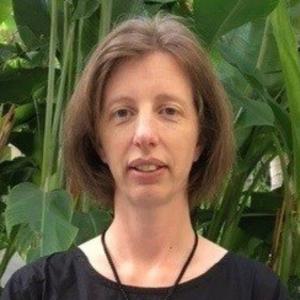
Associate Professor Donna Cormack
Dr Donna Cormack (Kai Tahu, Kāti Māmoe) is an Associate Professor at Te Kupenga Hauora Māori, University of Auckland.Donna is course director for the postgraduate papers MAORIHTH 710 Kaupapa Māori Theory, and MAORIHTH 709 Transformative Research for Māori Health, and co-convenes MAORIHTH711 Kaupapa Māori quantitative research. Donna teaches into other undergraduate and postgraduate papers in the Faculty of Medical and Health Sciences. She is also an active member of Tōmaiora Research Centre within Te Kupenga Hauora Māori. Her research focuses on racism and other forms of oppression…
Ētahi atu · Other people
 Professor Sarah-Jane Paine
Waipapa Taumata Rau, University of Auckland
Professor Sarah-Jane Paine (Tūhoe) is a leading Māori health researcher and internationally respected authority on…
Professor Sarah-Jane Paine
Waipapa Taumata Rau, University of Auckland
Professor Sarah-Jane Paine (Tūhoe) is a leading Māori health researcher and internationally respected authority on…
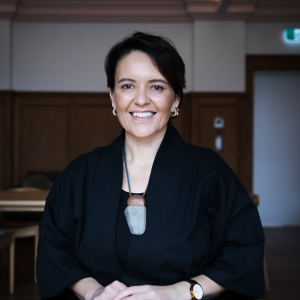
Professor Sarah-Jane Paine
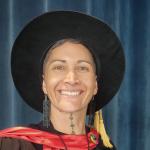 Associate Professor Deborah Heke
Ngā Puhi, Te Arawa
Te Whare Wananga o Wairaka Unitec
Associate Professor Deborah Heke (Ngā Puhi, Te Arawa) is the Director of Ngā Wai a Te Tūī Māori and Indigenous Research…
Associate Professor Deborah Heke
Ngā Puhi, Te Arawa
Te Whare Wananga o Wairaka Unitec
Associate Professor Deborah Heke (Ngā Puhi, Te Arawa) is the Director of Ngā Wai a Te Tūī Māori and Indigenous Research…
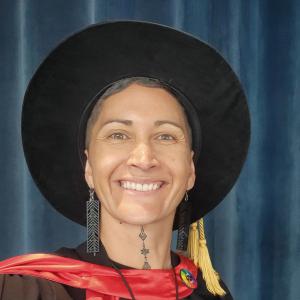
Associate Professor Deborah Heke
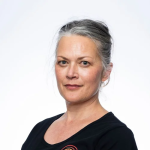 Kiri Edge
Te Wānanga o Aotearoa
Kiri has contributed to a wide range of interdisciplinary research and evaluation projects across both academic and…
Kiri Edge
Te Wānanga o Aotearoa
Kiri has contributed to a wide range of interdisciplinary research and evaluation projects across both academic and…