 Associate Professor Lara Greaves
" loading="lazy" decoding="async">
Associate Professor Lara Greaves
" loading="lazy" decoding="async">
Associate Professor
Associate Professor Lara Greaves (Ngāpuhi, Pākehā, Tararā) is an associate professor in politics at Victoria University of Wellington and a senior research fellow in statistics at the University of Auckland.
She is a Royal Society of New Zealand Rutherford Discovery Fellow (2024-2029), investigating improvements to democracy and participation in New Zealand, particularly focusing on Māori and intersectionality.
With colleague Dr Rituparna Roy, she co-leads a work package or EU-CIEMBLY, funded by Horizon Europe. The project seeks to make citizens' assemblies more inclusive, also focusing on intersectionality.
She is currently finishing up a project (a Marsden fast start), which asked 2,000 Māori why they choose to vote on the Māori roll or General roll.
Her recent work includes a history of inequity for Māori women (1950-2000) for the Waitangi Tribunal, work on data policy, Māori politics, and identity, health, and wellbeing (including an HRC Emerging Researcher grant completed in 2022). In 2021 she edited the seventh edition of Government and Politics in Aotearoa New Zealand (Oxford University Press) with Janine Hayward and Claire Timperley.
Lara also regularly appears in national and international media. She has served on various advisory groups and panels. This includes Te Pokapū of Te Mana Raraunga and as a governance intern on the Healthier Lives National Science Challenge board. She also recently concluded work as a panellist for the Independent Electoral Review, a once in a generation review of New Zealand's electoral law.
Rangahau · Related projects
Māori doctoral scholars often face significant challenges in universities dominated by Western academic traditions. These environments can clash with Māori cultural values and needs, reflecting colonial legacies that marginalise Indigenous knowledge and methodologies. To address these challenges, the Te Kupenga o MAI (MAI) programme was created in the late…
View projectTahatū-o-te-rangi: a study of the experiences and contributions of MAI Te Kupenga PhD scholars
Māori doctoral scholars often face significant challenges in universities dominated by Western academic traditions. These environments can clash with Māori cultural values and needs, reflecting colonial legacies that marginalise Indigenous knowledge and methodologies. To address these challenges, the Te Kupenga o MAI (MAI) programme was created in the late 1990s by Professor Graham Smith. This initiative supports Māori and Indigenous PhD students across Aotearoa New Zealand, providing mentorship, resources, and community connections grounded in Māori cultural values. MAI helps reduce isolation and creates culturally safe spaces for Māori scholars to succeed academically while maintaining their cultural identity.
This research focuses on understanding the long-term impact of the MAI programme by examining the experiences of recent Māori PhD graduates. It aims to explore their motivations, challenges, and the role MAI played in supporting them, as well as their career pathways and contributions to their communities after completing their studies. The findings will inform future efforts to support Māori doctoral scholars, ensuring they thrive in academia and contribute meaningfully to their whānau, hapū, iwi, and society.
Kairangahau · Researchers
-
 Associate Professor Deborah Heke
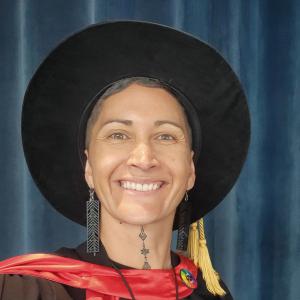
Associate Professor Deborah Heke
Associate Professor Deborah Heke (Ngā Puhi, Te Arawa) is the Director of Ngā Wai a Te Tūī Māori and Indigenous Research Centre at Unitec. With a background in Exercise Physiology, Psychology, and Public Health, her current research centres on Mana Wahine scholarship. Recent work includes an exploration of Māori and Indigenous women’s embodied practices and physical activity in te taiao as a means for connecting, communicating, and healing. Deborah is also passionate about building the capability and capacity of Māori and Indigenous (future) scholars and providing spaces for Indigenous… -
 Associate Professor Hinekura Smith

Associate Professor Hinekura Smith
Dr Hinekura Smith (Te Rarawa, Ngāpuhi) is NPM's Emerging Researchers’ Leader, providing further national leadership and coordination of MAI Te Kupenga and developing and nurturing initiatives that contribute to the outcomes and objectives of NPM’s Capability and Capacity Strategy.Hinekura was initially a secondary school te reo Māori teacher then moved into teacher education research almost 10 years ago, when she commenced her postgraduate studies. She has worked as a professional development facilitator in Māori medium schools, te reo Māori facilitator in English-medium schools and a… -
 Dr Tim West-Newman
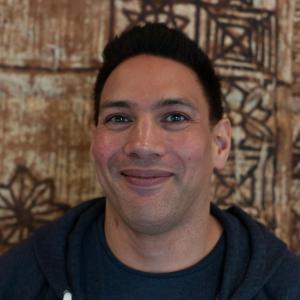
Dr Tim West-Newman
Tim West-Newman develops and implements technical business solutions including websites for Ngā Pae o te Māramatanga. Tim has a PhD in Human Computer Interaction and has worked mainly in web and information technology systems development, having worked in The University of Auckland and AUT University, as well as an independent contractor for various organisations. -
 Associate Professor Lara Greaves
Associate Professor Lara Greaves
Associate Professor Lara Greaves (Ngāpuhi, Pākehā, Tararā) is an associate professor in politics at Victoria University of Wellington and a senior research fellow in statistics at the University of Auckland.She is a Royal Society of New Zealand Rutherford Discovery Fellow (2024-2029), investigating improvements to democracy and participation in New Zealand, particularly focusing on Māori and intersectionality.With colleague Dr Rituparna Roy, she co-leads a work package or EU-CIEMBLY, funded by Horizon Europe. The project seeks to make citizens' assemblies more inclusive, also focusing on…
This kaupapa Māori project addresses one of the most devastating impacts of colonisation in Aotearoa – the forced institutionalisation of Māori children between 1950–1999. Drawing on the Abuse in Care Royal Commission of Inquiry and leveraging large-scale data sets like the IDI, this study developed innovative methodologies to trace historical trauma and…
View projectDeveloping methodological approaches to tracking historical trauma
This kaupapa Māori project addresses one of the most devastating impacts of colonisation in Aotearoa – the forced institutionalisation of Māori children between 1950–1999. Drawing on the Abuse in Care Royal Commission of Inquiry and leveraging large-scale data sets like the IDI, this study developed innovative methodologies to trace historical trauma and its intergenerational effects. Without burdening affected whānau through direct contact, the research seeks to highlight systemic harm, measure outcomes such as reduced life expectancy, and support future tools of justice, healing, and whānau empowerment.
Kairangahau · Researchers
-
 Dr Emerald Muriwai
Dr Emerald Muriwai
Emerald Muriwai (Ngāti Ira, Ngai Tamahaua, Ngāti Patumoana, Te Whakatōhea, Airihi) is a Clinical Psychologist with a background in kaupapa Māori research, public health, indigenous psychology and sport psychology.She is a Clinical Psychologist at Te Whatu Ora Te Toka Tumai Auckland in Adult Mental Health. She also serves as co-chair on the Executive Governance Board for Ngā Pou Mana Tangata Whenua Allied Health, which was established to provide a forum for Māori allied health professionals to discuss Māori allied health issues within and between professions. Emerald is also a certified Les… -
 Professor Tracey McIntosh
Professor Tracey McIntosh
Tracey McIntosh (Ngāi Tūhoe) is Professor of Indigenous Studies and Co-Head of Te Wānanga o Waipapa at the University of Auckland. She previously taught in the sociology and criminology programme at the University of Auckland. Tracey brings a high level of experience to her roles in international work, community development, student equity and in her wider contributions to the academic community. Tracey has lectured at the University of the South Pacific in Fiji, was a Fulbright Visiting Lecturer in New Zealand Studies at Georgetown University in Washington D.C. in 2004, and has served on… -
Associate Professor Lara Greaves
Associate Professor Lara Greaves
Associate Professor Lara Greaves (Ngāpuhi, Pākehā, Tararā) is an associate professor in politics at Victoria University of Wellington and a senior research fellow in statistics at the University of Auckland.She is a Royal Society of New Zealand Rutherford Discovery Fellow (2024-2029), investigating improvements to democracy and participation in New Zealand, particularly focusing on Māori and intersectionality.With colleague Dr Rituparna Roy, she co-leads a work package or EU-CIEMBLY, funded by Horizon Europe. The project seeks to make citizens' assemblies more inclusive, also focusing on… -
Dr Jose Romeo
Dr Jose Romeo
Jose Romeo (Pepe), is a researcher in Statistics, specialised in survival analysis, interested in applying statistical models for decision-making in public-health and social sciences. He holds a Statistical Engineering degree (University of Santiago, Chile) and a PhD in Statistics (University of Sao Paulo, Brazil). Since December 2016, he works at SHORE providing statistical expertise on quantitative research projects led by social and public-health researchers on topics including alcohol consumption and policy and drugs trends. He provides advice on research design and analyses as grant…
Ētahi atu · Other people
Arianna Nisa-Waller
Ngāi te Rangi, Ngāti Ranginui
Te Herenga Waka Victoria University of Wellington
Arianna Nisa-Waller (Ngāi Te Rangi / Ngāti Ranginui) is a Māori researcher, Indigenous health educator, and…
Arianna Nisa-Waller
Awatea Waimārie Moxon
Ngāti Kahungunu, Ngati Pahauwera , Ngāi Tahu
Te Herenga Waka Victoria University of Wellington
Awatea Waimārie Moxon's PhD adopts a mixed-methods research approach to provide a thorough understanding of the…
Awatea Waimārie Moxon
Alyssa Thomas
Te Herenga Waka Victoria University of Wellington
Alyssa’s research engages with the rangatahi of her hapū, Patuharakeke; with additional funding support from New…