About this research
Project Summary
This research project explored the utilisation of sonic mapping and LiDar scanning of Motiti marae and Tapuiwahine A12 landblocks, located 7 km south-west of Te Kūiti, on Mangatea Road. The principal hapū associated with Mōtiti marae are Ngāti Te Puta-i-te-muri, Ngāti Tauhunu, Ngāti Urunumia and Ngāti Kinohaku. The wharepuni are named Ko Te Hunga-iti and Te Hāpainga. The marae connects ancestrally to the Tainui waka, the maunga Kakepuku and Pirongia, the awa Mangapū and the tribal collective of Ngāti Maniapoto.
The whenua of Motiti marae and Tapuiwahine A12 are full of sounds that are shared by organisms and humans which can be defined as sound ecology. With sonic and land ecologies, a sonic map is defined as an entire sonic energy produced by distinct sonic sources such as geophonies, biophonies and anthrophonies (Farina, 2014).
LiDar technology, airborne laser scanning offers the ability to map the ground hidden by vegetation, whether it be forest, scrub or long grass. Laser pulses find gaps through to the ground and returns accurate data for the creation of digital terrain models and contours. LiDar opens up a number of difficult environments to the powerful benefits of 3D surveying. Little is known about the role and importance of the sound acoustic context and LiDar scanning to support the health and vitality and sustainability of the whenua and the awa.
This research project took advantage of recent advances in sound and LiDar technologies to utilise a broad collection of different audio/sonic and vibrational digital sound files and 3D scanning to respond to how this sonic and LiDar mapping information can be analysed to support the well-being and health of whenua and awa.
Research Question
How can sonic mapping and LiDar scanning technologies contribute to the sustainability and cultural conservation of Motiti Marae and Tapuiwahine A12 whenua landblock, wtaerways and ecosystems?
Lead Researcher
Dr Maree Sheehan, Ngāti Maniapoto, Waikato, Ngāti Tuwharetoa, Ngāti Tahu-Ngāti Whāoa, Ngāti Pākehā
Research Team
Dr Valance Smith, Ngāpuhi, Waikato, Ngāti Haina, Ngāti Pākehā, AUT
Assoc Prof Māui Hudson, Te Whakatohea, Ngā Ruahine, Te Mahurehure, University of Waikato
Dr Claudio Aguayo, AUT
Jeremy Neilson, Recon Advanced Spatial
Emiko Sheehan, Ariana Sheehan, Kamelia Te Amohanga, Ngāti Maniapoto – Motiti marae and Tapuiwahine A12
Highlights
- Combined mātauranga Māori with sonic mapping and LiDar for multi-layered ecological insights
- Worked in partnership with local hapū, marae trustees, and research institutions
- Revealed new ways of understanding mauri through vibrational sound data
- Contributed to historical archives for future generations of Ngāti Maniapoto
- Opened a new pathway for Māori-led environmental monitoring using cutting-edge tools
Motiti Marae and Tapuiwahine A12 whenua are full of unseen stories, rhythms, and vibrational energies. This research brought together cutting-edge sonic mapping and LiDar scanning technologies to explore the ecosystems and acoustic heritage of these ancestral lands. In partnership with local hapū, marae, and iwi, the project captured both the seen and the unheard — illuminating the mauri of the whenua and awa in powerful new ways.
Kairangahau · Researchers
 Professor Maui Hudson
Whakatōhea, Ngāruahine, Te Mahurehure
University of Waikato
Maui Hudson (Whakatōhea, Ngāruahine, and Te Māhurehure) is an interdisciplinary researcher working on Indigenous…
Professor Maui Hudson
Whakatōhea, Ngāruahine, Te Mahurehure
University of Waikato
Maui Hudson (Whakatōhea, Ngāruahine, and Te Māhurehure) is an interdisciplinary researcher working on Indigenous…
Professor Maui Hudson
Associate Professor Claudio Aguayo
Auckland University of Technology (AUT)
Claudio Aguayo is an Associate Professor in Digital Innovation in Education at Te Ara Poutama, the Faculty of Māori and…
Associate Professor Claudio Aguayo
Ētahi atu · Other projects
This kaupapa explored the relationships between environmental tohu (signs) observed in reporepo (swamplands), the phases of the maramataka, and the health of local ecosystems in the Hokianga.
View projectTe Kōrero a te Reporepo – Understanding the Connection Between Tohu, te Maramataka and the Health of te Taiao
This kaupapa explored the relationships between environmental tohu (signs) observed in reporepo (swamplands), the phases of the maramataka, and the health of local ecosystems in the Hokianga.
Kairangahau · Researchers
-
Dr Isaac Warbrick
Dr Isaac Warbrick
-
Dr Valance Smith
Dr Valance Smith
-
Rereata Makiha
Rereata Makiha
-
Allah Williams
Allah Williams
-
Pairama Wood
Pairama Wood
Inspired by an ancient mōteatea and grounded in the living whenua of Ngāti Porou, He Uru Mānuka is a creative cultural mapping project breathing new life into ancestral knowledge. As climate shifts reshape the Waiapu River, we pair traditional practice with modern technologies to document, protect, and uplift the mauri of the land, the waters, and the…
View projectHe Uru Mānuka — Creative cultural mapping and ‘restorying’ networked relations on the Waiapu River
Inspired by an ancient mōteatea and grounded in the living whenua of Ngāti Porou, He Uru Mānuka is a creative cultural mapping project breathing new life into ancestral knowledge. As climate shifts reshape the Waiapu River, we pair traditional practice with modern technologies to document, protect, and uplift the mauri of the land, the waters, and the stories in between.
Kairangahau · Researchers
-
Graeme Atkins
Graeme Atkins
-
Lionel Matenga
Lionel Matenga
-
Associate Professor Alex Monteith
Associate Professor Alex Monteith
Alex MonteithBorn Béal Feirste Belfast, Na Sé Chontae Northern Ireland;Lives at Te Piha, Aotearoa New Zealand. Alex Monteith is a multi-disciplinary artist, filmmaker, and Associate Professor whose practice intersects environmental activism, oceanic geographies, and contemporary art. Born in Éire/Ireland during the Na Trioblóidí (the troubles) she migrated to Aotearoa/New Zealand in the ‘80’s with family. A former Irish National Women's Surfing Champion (2001), she draws on her intimate knowledge of marine environments to create large-scale artistic interventions addressing colonial impacts… -
Dr Maree Sheehan
Dr Maree Sheehan
-
Dean Savage
Dean Savage
Universities in Aotearoa hold a vast, largely unmapped, collection of Māori data. With that, these institutions are in positions of power to control the ways in which Māori data is collected, stored, accessed and used, often without meaningful involvement from Māori communities. Organised across three objectives, this project explores how Māori data…
View projectActivating Māori Research Data Sovereignty in universities
Universities in Aotearoa hold a vast, largely unmapped, collection of Māori data. With that, these institutions are in positions of power to control the ways in which Māori data is collected, stored, accessed and used, often without meaningful involvement from Māori communities. Organised across three objectives, this project explores how Māori data governance can be strengthened within academic policy and institutional contexts in ways which give effect to Māori Data Sovereignty for Māori hāpori, hapū and iwi.
The first objective investigates the potential for Machine Learning to identify and locate Māori research data held within universities.
Objective two examines existing approaches to Māori data governance within a university context and identifies opportunities to bring institutional policies and practices into alignment with Te Kāhui Raraunga's Māori Data Governance Model.
The third objective focuses on the relationships between Māori rightsholders and their data, exploring how Māori aspirations for MDSov can be at the centre of all decision-making.
Kairangahau · Researchers
-
Dr Paul Brown
Dr Paul Brown
-
Dr Dion O’Neale
Dr Dion O’Neale
Dion O’Neale is a Principal Data Scientist at Nicholson Consulting. With a background in Mathematics and Physics, Dion is interested in all things network science-related. This has spanned from using networks for economic geography (to understand how scientific innovations cluster within regions leading to technological specialisation); archaeology (using networks of co-occurring obsidian artefacts to infer social networks in pre-European Aotearoa); through to behavioural ecology (using networks of species and traits to understand the mating systems of spiders). Much of his recent work has… -
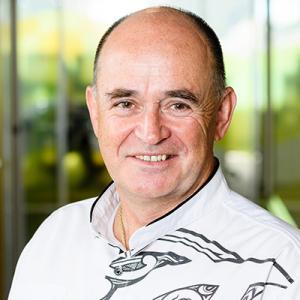
 Professor Te Taka Keegan
Professor Te Taka Keegan
Nō Waikato-Maniapoto, nō Ngāti Porou, nō Ngāti Whakaue hoki.Kei Ngāhinapōuri e noho ana, kei te pūtake o te maunga o Pirongia.Kua roa ia e mahi ana ki te Whare Wānanga o Waikato, me tana aro ki te whai huarahi mō te reo rangatira ki te ao hangarau.Te Taka received a Diploma in Computer Engineering from CIT (Wellington) in 1987. He spent six years working as a hardware engineer for Datacom and Digital before returning to the Waikato and Waikato University. He received a BA through the Te Tohu Paetahi stream (Māori immersion) and in 1996 was awarded an MA having completed a thesis on… -
 Dr Daniel Wilson
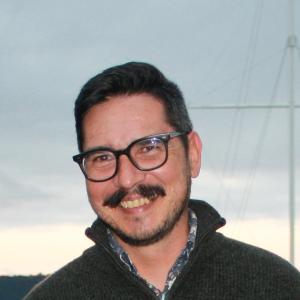
Dr Daniel Wilson
Daniel Wilson (Ngāpuhi, Ngāti Pikiao) is a lecturer in Computer Science at Waipapa Taumata Rau | University of Auckland. His teaching and research are in the areas of AI, Māori Data Sovereignty, Māori Algorithmic Sovereignty, and AI ethics. Daniel is a member of Te Pokapū in The Māori Data Sovereignty Network Te Mana Raraunga, Co-Director of the Centre of Machine Learning for Social Good, member of the Kāhui Māori for the AI Forum, treasurer of the AI Researchers Association, and an establishment member of the AI in Health Research Network. Daniel has a PhD in Philosophy and a Master of… -
Tracey Maniapoto
Tracey Maniapoto
-
Dr Maree Sheehan
Dr Maree Sheehan
-
Te Mihinga Komen
Te Mihinga Komen
-
Dr Kim Southey
Dr Kim Southey
-
Aamon Hāwea Apiata
Aamon Hāwea Apiata
Hāwea Apiata (Ngāti Kura, Ngāpuhi, Ngāti Toarangatira) currently works as the Poukōkiri Mātauranga Toi based in Te Iho o Te Manawataki|Library. In this role he works across both the University’s art & taonga collections as well as the open research space (research dissemination & publishing).In his work in the arts space he curates exhibitions, advises on and contributes to the campus gallery’s exhibition program, and applies an Indigenous lens to collection care, management, and research alongside the Poutiaki Taonga and Kaitiaki Mātangireia.In the open research space, he supports…