About this research
Māori have a long association with the natural environment and are well-positioned to make important contributions to sustainably managing natural resources in New Zealand and the world.
Kaitiakitanga and other practices provide a powerful foundation for developing paradigms in governance, management, caring, development and benefit-sharing of land, water (freshwater and marine) and other natural resources.
Focusing on the theme of healthy people/healthy places, the overall aim of Te Aho Tapu is to build knowledge around mātauranga Māori-driven theory, research, decision making and action through working across community-driven projects, based on aspirations and actions generated by those communities.
Te Aho Tapu involves collaborations of a number of initiatives as they design and implement action research cycles of specific studies that address the key aspirations and opportunities in relation to environmental integrity and health and wellbeing. Methods vary from site to site but will include interviews, monitoring and evaluation of initiatives.
A key outcome is to provide sustainable solutions (cultural, economic, social and environmental) for the benefit of the numerous stakeholders, their whānau and the wider community. The project will allow for expansion over time, with potential for new sites to join with established work. The project involves multiple national and international linkages, enabling sharing of indigenous knowledge and approaches to a global issue.
The specific questions Te Aho Tapu will address are:
- What are the links between environmental integrity and the health, wellbeing and wealth of indigenous communities?
- What evidence and actions in this domain are needed to improve Māori and national health?
- What are the dimensions of an environment based experience that can be applied to promote Maori health and wellbeing?
By focusing on these questions, Te Aho Tapu will provide learnings specific to the project and contribute learnings to answer the overall theme questions. In addition, during the planning phase, specific questions will be developed with the site communities.
Whakaahua & Ataata · Images & Videos
Kairangahau · Researchers
 Professor Helen Moewaka Barnes
Ngāti Wai, Ngāti Hine, Ngāti Manu
Massey University
Professor Helen Moewaka Barnes is based out of Massey University and is currently Director of Whāriki and Co-director…
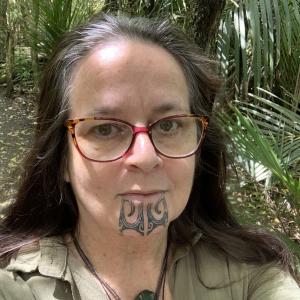
Professor Helen Moewaka Barnes
 Mr. Garth Harmsworth
Te Arawa, Ngti Tuwharetoa, Ngāti Raukawa
Manaaki Whenua
Garth Harmsworth is a senior environmental scientist based in Palmerston North and has worked for Manaaki…
Mr. Garth Harmsworth
Wendy Henwood
Te Rarawa
WHARIKI Māori Health Research Group Alcohol & Public Health Research Unit
Wendy Henwood lives and works from home in the Hokianga. She has a background in community health and development, and…
Wendy Henwood
Dr Gail Tipa
Ngāi Tahu
Tipa & Associates
Gail Tipa (Kai Tahu) completed a BA at the University of Otago and taught for six years at schools in Dunedin and the…
Dr Gail Tipa
Ētahi atu · Other projects
This internship used drone technology to capture aerial imagery of the Tapuwae block, exploring how cultural mapping and environmental monitoring can support Māori-led approaches to understanding and responding to landscape change.
View projectTe Kaahurewa: Drones in Māori environmental strategies
This internship used drone technology to capture aerial imagery of the Tapuwae block, exploring how cultural mapping and environmental monitoring can support Māori-led approaches to understanding and responding to landscape change.
Kairangahau · Researchers
-
Wendy Henwood
Wendy Henwood
Wendy Henwood lives and works from home in the Hokianga. She has a background in community health and development, and research and formative/process evaluation of community public health and community development type programmes. She also is provides evaluation and planning training with community providers in the north. Wendy is actively involved with marae/hapu developments and iwi affairs. Recent research projects have included Te Mauri O Te U-kai-po: intergenerational experiences of environment and wellbeing of an iwi, and Interconnections: the links between whānau and marae in Te…
This project explores how mātauranga Māori can strengthen climate change responses in Aotearoa. By analysing policy and interviewing experts working in te taiao initiatives, the research aims to identify how government approaches support—or limit—Māori-led action. The findings aim to enhance Māori decision-making and climate health outcomes through…
View projectStrengthening the place and practice of mātauranga to support climate health outcomes in Aotearoa.
This project explores how mātauranga Māori can strengthen climate change responses in Aotearoa. By analysing policy and interviewing experts working in te taiao initiatives, the research aims to identify how government approaches support—or limit—Māori-led action. The findings aim to enhance Māori decision-making and climate health outcomes through Indigenous knowledge and leadership.
Kairangahau · Researchers
-
Summer Wright
Summer Wright
-
Assoc Professor Rhys Jones
Assoc Professor Rhys Jones
Dr Rhys Jones (Ngāti Kahungunu) is a Public Health Physician and Associate Professor in Te Kupenga Hauora Māori (TKHM). As Co-Director of Teaching in TKHM, he contributes to oversight of Māori Health teaching, learning and assessment in the Faculty of Medical and Health Sciences. He has a strong track record of leadership in teaching and learning, which was nationally recognised when he received the Prime Minister’s Supreme Award for Tertiary Teaching Excellence in 2020.Rhys’s research broadly addresses Indigenous health and health equity. In 2005-06, he was a Harkness Fellow in Health Care… -
Professor Helen Moewaka Barnes
Professor Helen Moewaka Barnes
Professor Helen Moewaka Barnes is based out of Massey University and is currently Director of Whāriki and Co-director of the SHORE and Whariki Research Centre. She has worked on research in many areas; more recently relationships between the health of people and the health of environments, sexual coercion, alcohol and youth well-being and identity.Her work is both qualitative and quantitative and she is also involved in developing research within Māori paradigms. Helen is a long time NPM researcher and is now a NPM Theme Leader (Te Tai Ao - Natural Environment ) and member of our Research… -
Associate Professor Christina Mckerchar
Associate Professor Christina Mckerchar
Christina Mckerchar is of Ngāti Kahungunu, Tūhoe, and Ngāti Porou descent. She trained as a nutritionist and worked for a number of years for Te Hotu Manawa Māori, a national Māori Health provider, before her academic career. Her research has focused broadly on the right to healthy food. She has researched the food environment, especially food availability and marketing, food security and food sovereignty, and other aspects of public health that impact hauora Māori, including alcohol, transport, and housing.Christina is a member of Climate Health Aotearoa, and is on the Food Expert panel for…
Māori (and Indigenous) women engage in embodied relationship with the natural environment in a range of ways, such as raranga, rongoā, or physical activity. This research explored what these embodied relationships can teach us about the potential for reciprocal healing between wahine and whenua, person and place, by developing a network of Māori and…
View projectWhakarongo, titiro, korikori kōrero ki ngā wāhine – exploring embodied and reciprocal healing relationship with our natural environments
Māori (and Indigenous) women engage in embodied relationship with the natural environment in a range of ways, such as raranga, rongoā, or physical activity. This research explored what these embodied relationships can teach us about the potential for reciprocal healing between wahine and whenua, person and place, by developing a network of Māori and Indigenous women and prioritising mātauranga wāhine.
Kairangahau · Researchers
-
Professor Helen Moewaka Barnes
Professor Helen Moewaka Barnes
Professor Helen Moewaka Barnes is based out of Massey University and is currently Director of Whāriki and Co-director of the SHORE and Whariki Research Centre. She has worked on research in many areas; more recently relationships between the health of people and the health of environments, sexual coercion, alcohol and youth well-being and identity.Her work is both qualitative and quantitative and she is also involved in developing research within Māori paradigms. Helen is a long time NPM researcher and is now a NPM Theme Leader (Te Tai Ao - Natural Environment ) and member of our Research… -
Meretini Bennett-Huxtable
Meretini Bennett-Huxtable
I was born in Whanganui and raised in Taihape, where I now live as a mum to three young mana wahine on our ancestral lands in Mōkai Pātea. I'm raising our girls in the lessons of sustainability and survival with the whenua whether as a gardener, hunter, gatherer or diver immersed in our taiao. We live flanked by the landmarks and sites of significance as told through our whakapapa.An eagerness from a young age to learn the intricate art of whakapapa, under my mother's watchful eye, has helped to acquire transferable skills in building relationships, networking and collaborating. I have always… -
Assistant Professor Melissa Vera
Assistant Professor Melissa Vera
Dr. Vera is an Assistant Professor in the College of Nursing and The Institute for Research and Education to Advance Community Health (IREACH).As a citizen of the Tsm’syen and Yaqui First Nations, her research focuses on Indigenous health and climate change and is heavily grounded in Indigenous research methods and Indigenous knowledges. She focuses on social determinants of health, anti-racist praxis, and amplifying marginalized voices in health literature and policy.EducationBachelor of Arts (BA), Creative Writing, Seattle University, Seattle, WABachelor of Science (BSN), Nursing, Boise… -
Dr. Lillian Bartlett
Dr. Lillian Bartlett