About this research
Project Summary
Social media platforms enable people to connect, communicate, and stay informed. However, they are also off-shore repositories of ‘Big Data’ in an open data environment, which poses a significant threat towards Māori Data Sovereignty (MDSov) – the recognition that data should be subject to Māori governance. One solution towards realising MDSov is to build Māori-governed IT applications. A test version of a Māori social media platform – Tōku Whānau – has been developed by Māori with the objective to provide kaupapa Māori content that caters to Māori communities’ aspirations.
The research will involve engaging with a specific Māori community through wānanga/whakawhiti kōrero in order to ascertain the key elements required to develop it into a more Māori-specific and -friendly platform. The findings will directly inform the feasibility elements of the platform for further testing and refinement, with the view for a full public launch of the application. The project anticipates that the development of Tōku Whānau will also be a major step towards further realising MDSov by understanding the enablers and barriers to advance Māori aspirations in the world of IT and Big Data.
Research Question
What would a kaupapa Māori based social media platform for Māori communities and whānau look and feel like?
Lead Researcher
Moana Rarere, Rongomaiwahine, Ngāti Kahungunu, Tūhoe, Ngāti Whare, Whakatōhea, University of Waikato
Research Team
BJ Walbaekken, Waikato-Tainui, Mana Digital
The project will explore the research question: What would a kaupapa Māori based social media platform for Māori communities and whānau look and feel like? The research will involve engaging with a specific Māori community through wānanga/whakawhiti kōrero in order to ascertain the key elements required to develop it into a more Māori-specific and -friendly platform.
Kairangahau · Researchers
 BJ Walbaekken
Tōku Whānau
BJ Walbaekken builds digital things that actually work — for organisations, for communities, and for whānau. Over 25…
BJ Walbaekken
Tōku Whānau
BJ Walbaekken builds digital things that actually work — for organisations, for communities, and for whānau. Over 25…
BJ Walbaekken
Ētahi atu · Other projects
Since the arrival of visitors to Aotearoa, Māori have always been quick to assess and adapt language, technology and information. Contemporary society brings new languages, technology and information instantly to our fingertips. New pressures and demands can be a consequence of readily accessible knowledge. For all its advances, there are also…
View projectNgā whenu haumaru hei raranga: Social Wellbeing
Since the arrival of visitors to Aotearoa, Māori have always been quick to assess and adapt language, technology and information. Contemporary society brings new languages, technology and information instantly to our fingertips. New pressures and demands can be a consequence of readily accessible knowledge. For all its advances, there are also disadvantages. For rangatahi, those with addictions and Māori whānau connections and wellbeing can be negatively affected.
This programme of research investigates examples of Māori approaches to social wellbeing. Through a series of research activities undertaken by the research team, a case study will emerge reflective of collaborative interactions with key stakeholder organisations. Utilising qualitative methods such as key informant, wānanga, hui, photo elicitation and go along interviews, the research is primed to capitalise on the collaborative relationships to affect national policy and regional service delivery.
Kairangahau · Researchers
-
Dr Pita King
Dr Pita King
Pita King is a Kaupapa Māori Senior Lecturer in the School of Psychology at Massey University. -
Moana Rarere
Moana Rarere
-
Dr Rewi Nankivell
Dr Rewi Nankivell
Rewi Nankivell is a lecturer in psychology at the University of Waikato. He contributes to the intersection between lecturing and Kaupapa Māori psychology, Indigenous development, and te reo Māori revitalisation. His contributions are supported by the practical application of his research, aiming to provide tangible benefits for Māori. Currently, Rewi is advancing his scholarship through a doctorate in education, complementing his background in educational leadership and management. His profile highlights a commitment to integrating mātauranga Māori with contemporary psychological research… -
Dr Eleanor Britain
Dr Eleanor Britain
Dr Eleanor (Elle) Brittain is Ngāti Kahungunu ki Te Wairoa and Ngāti Rakaipaaka. She is a Senior Lecturer in Te Kura Hinengaro Tangata, School of Psychology, based on the Pukeahu, Wellington campus. She is also a Clinical Psychologist.Her research focuses on issues pertinent to Māori, including research projects that have explored Māori psychology and wellbeing. With experience in implementing methodologies grounded in the values of Kaupapa Māori research theory, her research practice is predominantly qualitative. Ultimately she sees her work as in service of communities in order to… -
Hans Tiakiwai
Hans Tiakiwai
Ko Hāmua, ko Ngāti Mura, ko Te Mahurehure ngā hapū. Ko Waikirikiri, ko Te Putere o Potaka, ko Te Rewarewa ngā marae. Ko Tūhoe te iwi. I have spent more than 30 years in Māori education as a teacher, Deputy Principal, and for over a decade as Tumuaki of Te Wharekura o Rūātoki, building a kura where tamariki, whānau, and staff felt safe, valued, and connected to who they are. Grounded in te reo Māori, tikanga, and mātauranga Māori, my leadership has always centred on one belief: when people feel seen, and their strengths are recognised, they are capable of extraordinary things. Along the way, I… -
Megan Fitzpatrick
Megan Fitzpatrick
-
 Professor Darrin Hodgetts

Professor Darrin Hodgetts
Darrin Hodgetts is a Professor in Social Psychology at the University of Waikato. Previously he was a teaching fellow at Massey University, and then held a post-doctoral fellowship in Community Health at Memorial University, Canada, followed by a lectureship at the London School of Economics and Political Sciences. Darrin has published more than 70 peer-reviewed articles and three books relating to health, poverty, community and inequalities. He is an expert in the use of participative, action-orientated ethnographic research methods. Darrin is Co-Principal Investigator on the Ngā Pae o te… -
Tiana Watkins
Tiana Watkins
PhD Candidate: Jennifer Tokomauri McGregor (Ngati Raukawa (Waikato)) Primary Supervisor(s): Dr. Alayne Mikahere-Hall Background: Despite being a long-term government priority, the inequity of Māori nurses in the health workforce is long-standing, suggesting that that recruitment and retention of Māori into the nursing workforce is problematic. Māori nurses…
View projectKawa Whakaruruhau: Culturally-safe spaces for Māori nurse practice development
Kairangahau · Researchers
-
Associate Professor Alayne Mikahere-Hall
Associate Professor Alayne Mikahere-Hall
Rātonga Hapori | Community ServiceAssociate Professor Mikahere-Hall (Ngāti Whatua, Te Rarawa, Tainui-Maniapoto) maintains a strong commitment to her whānau and hapū marae and has provided long‑standing leadership within Whaiora Marae in Ōtara, serving on the Board of Trustees since 2014 and as Chair for the past eight years. She is deeply involved in Māori communities through both urban and rural marae and is an active member of Te Kotahi a Tāmaki, an Auckland‑based marae collective "The mission of Te Kotahi a Tāmaki is to reinforce marae as centres of cultural excellence and enterprise. The…
This research programme dives beneath the surface to expose how efforts to address racism in Aotearoa can be symbolic, sidelining Māori worldviews and limiting true transformation. Led through a kaupapa Māori lens, this programme challenges narrow, imported definitions of racism and equity, and confronts how dominant systems create and maintain Māori…
View projectResearch to Interrupt Racism and (In)equity (RIRI)
This research programme dives beneath the surface to expose how efforts to address racism in Aotearoa can be symbolic, sidelining Māori worldviews and limiting true transformation.
Led through a kaupapa Māori lens, this programme challenges narrow, imported definitions of racism and equity, and confronts how dominant systems create and maintain Māori ‘vulnerability’. It aims to reframe equity on Māori terms—grounded in rangatiratanga, Indigenous knowledge, and the realities of colonisation.
Kairangahau · Researchers
-
 Associate Professor Donna Cormack
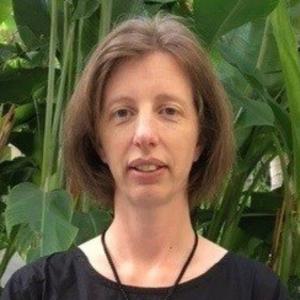
Associate Professor Donna Cormack
Dr Donna Cormack (Kai Tahu, Kāti Māmoe) is an Associate Professor at Te Kupenga Hauora Māori, University of Auckland.Donna is course director for the postgraduate papers MAORIHTH 710 Kaupapa Māori Theory, and MAORIHTH 709 Transformative Research for Māori Health, and co-convenes MAORIHTH711 Kaupapa Māori quantitative research. Donna teaches into other undergraduate and postgraduate papers in the Faculty of Medical and Health Sciences. She is also an active member of Tōmaiora Research Centre within Te Kupenga Hauora Māori. Her research focuses on racism and other forms of oppression… -
 Professor Sarah-Jane Paine
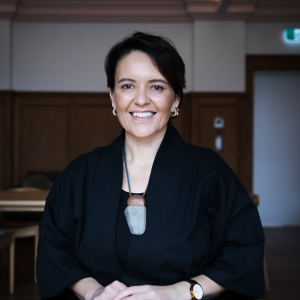
Professor Sarah-Jane Paine
Professor Sarah-Jane Paine (Tūhoe) is a leading Māori health researcher and internationally respected authority on Indigenous child wellbeing. She is Research Director and Principal Investigator of Growing Up in New Zealand, Aotearoa’s flagship longitudinal study of child development, and a Professor at Te Kupenga Hauora Māori, Waipapa Taumata Rau, University of Auckland.Her work in Kaupapa Māori epidemiology has influenced national policy in maternal and child health, racism and child wellbeing, food security, and youth wellbeing. Known for combining scientific rigour with strong community… -
 Professor Papaarangi Reid
Professor Papaarangi Reid
Papaarangi is Tumuaki and Head of Department of Maori Health at the Faculty of Medical and Health Sciences, University of Auckland, New Zealand. She holds science and medical degrees from the University of Auckland and is a specialist in public health medicine. She has tribal affiliations to Te Rarawa in the Far North of Aotearoa and her research interests include analysing disparities between indigenous and non-indigenous citizens as a means of monitoring government commitment to indigenous rights. -
 Professor Ricci Harris

Professor Ricci Harris
Professor Ricci Harris (Ngāti Kahungunu, Ngāi Tahu, Ngāti Raukawa) is a public health physician and Kaupapa Māori epidemiologist at Te Rōpū Rangahau Hauora a Eru Pōmare.Her research is primarily concerned with upholding Māori rights to health and health equity as ensured by Te Tiriti o Waitangi and in-line with International Indigenous Rights.She draws on Kaupapa Māori Research theory to undertake and develop decolonial approaches to epidemiology that centre Māori and are contextualised within systems of ongoing racism and colonialism. This has included research into the classification of… -
 Dr Arama Rata
Dr Arama Rata
Arama Rata is of Ngāti Maniapoto, Taranaki, and Ngāruahine descent. She completed her PhD in Psychology at Victoria University of Wellington in 2012, which focused on Māori cultural engagement, identity, and psychological well-being in State secondary schools. Arama then lectured at Te Kawa a Māui (the School of Māori Studies), where she received a Research Establishment Grant to study Māori collective remembering of the New Zealand Wars. Dr Rata is currently involved with research relating to Māori health experiences, Māori in rural communities, as well as iwi consultancy. -
Hana Burgess
Hana Burgess
Hana Burgess (Ngāpuhi, Te Roroa, Te Ātihaunui-a-Pāpārangi, Ngāti Tūwharetoa) is a queer Kaupapa Māori researcher, teacher, gardener and creative. Hana’s research interests are in Māori health, Kaupapa Māori theory, and critical and decolonial research methodologies. Her work explores how through being in good relation with our mokopuna and tūpuna we can navigate shifts in Western science and technology, and envision futures beyond colonialism.