 Dr Maree Sheehan
" loading="lazy" decoding="async">
As a researcher, educator, and composer, I have the privileged role of responding to the educational aspirations of many communities. My personal belief is that outstanding achievements are invariably the result of planned and sustained collaboration. This is especially true when the team has diverse skills and are kaupapa-driven, committed and hardworking, therefore I also acknowledge those who work with me. I especially have had the benefit of many mentors in my lifetime and want to acknowledge those who have supported me to be where I am today. Over the last 15 years, I have worked as a lecturer, academic convenor and supervisor at Te Ara Poutama and as Head of Postgraduate Studies for School of Art and Design an AUT, then transitioned to Ngā Pae o Te Māramatanga as Pou Whakaaweawe role and now have the privileged position of Kai Rangahau Matua at Te Manawahoukura, TWoA.
Research
I am privileged to work for Te Manawahoukura Research Centre at Te Wānanga o Aotearoa as Kairangahau Matua (Toi) research fellow. My practice-led research reflects a deep devotion to the development of Māori and Indigenous scholarship. I seek to contribute in ways that my research enhances Māori communities, academic and artistic communities.
Leading on from the PhD, Ōtairongo was included in Māori Curator, Nigel Borell’s groundbreaking Toi Tū Toi Ora: Contemporary Māori Art at Auckland Art Gallery Toi o Tāmaki (2021) as the only sonic artist. Ōtairongo achieved the distinguished Toitanga Purple Pin and three Gold Pins at the Designers Institute of New Zealand Best Awards in 2020.
Throughout 2024, 2025, Sheehan’s research deepens the interplay between Māori sonic practices, ecological sound studies, and compositional practice, contributing to innovative Indigenous-led rangahau. Sheehan was honoured for her research from Royal Society Te Kōpūnui Māori Research Award recognises innovative Māori research with a promising trajectory for her innovative scholarship, focused on audio portraiture and sonic practices that has elevated the voices and identities of wāhine Māori.
I am privileged to work for Te Manawahoukura Research Centre at Te Wānanga o Aotearoa as Kairangahau Matua (Toi) research fellow. My practice-led research reflects a deep devotion to the development of Māori and Indigenous scholarship. I seek to contribute in ways that my research enhances Māori communities, academic and artistic communities.
Leading on from the PhD, Ōtairongo was included in Māori Curator, Nigel Borell’s groundbreaking Toi Tū Toi Ora: Contemporary Māori Art at Auckland Art Gallery Toi o Tāmaki (2021) as the only sonic artist. Ōtairongo achieved the distinguished Toitanga Purple Pin and three Gold Pins at the Designers Institute of New Zealand Best Awards in 2020.
Throughout 2024, 2025, Sheehan’s research deepens the interplay between Māori sonic practices, ecological sound studies, and compositional practice, contributing to innovative Indigenous-led rangahau. Sheehan was honoured for her research from Royal Society Te Kōpūnui Māori Research Award recognises innovative Māori research with a promising trajectory for her innovative scholarship, focused on audio portraiture and sonic practices that has elevated the voices and identities of wāhine Māori,
Currently, Sheehan is working as a collaborator in Toiaa Taiao with Tihikura Hohaia (Taranaki Iwi) Alex Monteith (Born in Béal Feirste (Belfast), Na Sé Chontae (The Six Counties), their exhibition ‘Whiria ko te iwi tuna: Underwater worlds of the tuna in Te Whanganui, Taranaki (working title)” and Te Kāhui o Taranaki Kaitiaki Taiao, delve into visual and sonic immersive storytelling of the underwater world of Te Whanganui, Taranaki. Here, the HMS West Niger attacked the undefended village of Warea kainga and the entirety of the village was forced to flee inland. This project responds to threats facing aquatic life and marine biodiversity exacerbated by settler-colonial mismanagement. The project engages Te Whanganui, Taranaki geographies and relational artistic research paradigms, emphasising iwi and hapū relationships and knowledges that reflect their responsibilities to the environmental, emphasising kaitiakitanga and the research artistic communities that encompasses both human and more-than-human entities. This will be exhibited at Govett Brewster Gallery in New Plymouth, Opening February 28th, 2026.
As a contributing artist for Artists for Waiapu Action (AWA), their installation He Uru Mānuka, He Uru Kānuka 2024 lead by Dr Natalie Robertson (Ngāti Porou/ Clann Dhònnchaidh ) and Graham Atkins (Ngāti Porou, Rongomaiwahine). AWA revitalises customary net-making and stone fishing weir-building, enabling members of their hapū (clan) and iwi (tribe) to reconnect with the river and its health. They aim ‘to “re-story” lifeways, linking creative practices with ecology to perpetuate cultural and environmental relationships to the lower reaches of the Waiapu’. Sheehan contributes to the sonic soundscape that brings forth Te hā o te awa, te hā o Waiapu — Amplifying the breath of the river through sound and vision in He Manako He Pānga Pōuri, He Kōingo — Afflicted with desire, sadness, and yearning 2024 with Monteith and Robertson, and in a Single-channel 4K Video projection. Exhibited at 11th Asia Pacific Triennial. Gallery of Modern Art, Brisbane / Queensland Art Museum / Gallery of Modern Art. Retrieved from https://www.qagoma.qld.gov.au/exhibition/the-11th-asia-pacific-triennial-of-contemporary-art-apt11
Thailand Biennale 2025 in collaboration with Dr Alex Monteith (University of Auckland) and Apiwat Thongyoun. An immersive audio-visual installation for the Phuket Biennale 2025-2026 will document and relate the healthy mangrove systems of Surin Islands with the threatened mangrove ecosystems of Phuket. The installation will feature multi-channel underwater videography, soundscapes, and focus on marine life, mangrove root systems using underwater visual perspectives, and consider the impacts of fishing technology, addressing the ethics of the blue economy and advocating for legislative improvements to protect marine habitats. The installation's audio soundscape led by Dr. Maree Sheehan, will use hydrophone recordings to capture natural mangrove sounds, as well as industrial sonic pollution from shipping and boat traffic. This will highlight the impact of noise pollution and human activities on the health of mangrove ecosystems.
In 2022, Sheehan was invited by Dr Valance Smith to join Te Reo o Waonui a Tāne as Research Leader for the Te Oro o te Ngāhere strand, funded by Te Tira Whakamātaki and MBIE. Focused on supporting kauri ora in Te Tai Tokerau, this collaboration centres the revitalisation of te reo, tikanga, and mātauranga Māori to ensure these cultural knowledges remain integral to both the research and its outcomes.
In 2022, I received external research funding from Ngā Pae o te Māramatanga (NPM) Matakitenga Research Fund to explore whenua and waterways ecosystems through Lidar scanning sonic-mapping at Motiti Marae. The collaborative research project offers deep temporal and spatial insights that can help to re-shape our understanding of ecosystems, and sustainability for the future of our whenua.
In 2021, I had the honour of being appointed the kaitaiaki and creative leadership role in the Song(s) of Solomon project that draws together the works of Ralph Hotere and Cilla McQueen with fourteen prestigious Māori singer songwriters, poets, spoken word artists and performers. Within this project, Kaupapa Māori research practices are intrinsic in the ways I develop and build relationships with communities. As noted in RE, this project has acquired both external funding and internal AUT funding.
The invitation to write a chapter for The Routledge Handbook on Women's Work in Music (2021) provided a platform to honour and affirm the contributions of wāhine Māori in Aotearoa music industry. My 2020 articles, Contemporary popular Waiata provide a place of Belonging (MAI Journal); Mana Wahine: Māori Women in Music (Te Kaharoa Journal); Audio Portraiture –The Sound of Identity, an Indigenous Artistic Enquiry (Audio Engineering Society) focus my interest in sonic portraiture, Māori women in music, sonic artistic practices and sound technologies.
Rangahau · Related projects
Universities in Aotearoa hold a vast, largely unmapped, collection of Māori data. With that, these institutions are in positions of power to control the ways in which Māori data is collected, stored, accessed and used, often without meaningful involvement from Māori communities. Organised across three objectives, this project explores how Māori data…
View projectActivating Māori Research Data Sovereignty in universities
Universities in Aotearoa hold a vast, largely unmapped, collection of Māori data. With that, these institutions are in positions of power to control the ways in which Māori data is collected, stored, accessed and used, often without meaningful involvement from Māori communities. Organised across three objectives, this project explores how Māori data governance can be strengthened within academic policy and institutional contexts in ways which give effect to Māori Data Sovereignty for Māori hāpori, hapū and iwi.
The first objective investigates the potential for Machine Learning to identify and locate Māori research data held within universities.
Objective two examines existing approaches to Māori data governance within a university context and identifies opportunities to bring institutional policies and practices into alignment with Te Kāhui Raraunga's Māori Data Governance Model.
The third objective focuses on the relationships between Māori rightsholders and their data, exploring how Māori aspirations for MDSov can be at the centre of all decision-making.
Kairangahau · Researchers
-
Dr Paul Brown
Dr Paul Brown
Ko Karioi tōku maungaKo Whāingaroa me Kāwhia ōku moanaKo Tainui tōku wakaKo Tainui me Ngāti Hikairo ōku iwiKei te noho au ki KirikiriroaKo Paul Brown tāku ingoaI am an early career researcher in Statistics, with research interests in computational Bayesian inference and statistical modelling. Currently, I am working on projects with police on a range of projects, including statistical modelling crime and crime patterns in Kirikiriroa (Hamilton). As the use of data and algorithms in society become more prevalent, it is important that we understand the benefits and pitfalls that this may cause… -
Dr Dion O’Neale
Dr Dion O’Neale
Dion O’Neale is a Principal Data Scientist at Nicholson Consulting. With a background in Mathematics and Physics, Dion is interested in all things network science-related. This has spanned from using networks for economic geography (to understand how scientific innovations cluster within regions leading to technological specialisation); archaeology (using networks of co-occurring obsidian artefacts to infer social networks in pre-European Aotearoa); through to behavioural ecology (using networks of species and traits to understand the mating systems of spiders). Much of his recent work has… -
 Professor Te Taka Keegan
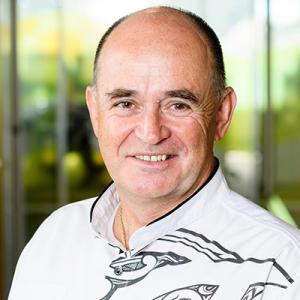
Professor Te Taka Keegan
Nō Waikato-Maniapoto, nō Ngāti Porou, nō Ngāti Whakaue hoki.Kei Ngāhinapōuri e noho ana, kei te pūtake o te maunga o Pirongia.Kua roa ia e mahi ana ki te Whare Wānanga o Waikato, me tana aro ki te whai huarahi mō te reo rangatira ki te ao hangarau.Te Taka received a Diploma in Computer Engineering from CIT (Wellington) in 1987. He spent six years working as a hardware engineer for Datacom and Digital before returning to the Waikato and Waikato University. He received a BA through the Te Tohu Paetahi stream (Māori immersion) and in 1996 was awarded an MA having completed a thesis on… -
 Dr Daniel Wilson
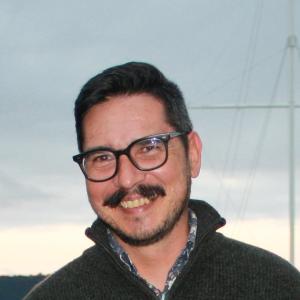
Dr Daniel Wilson
Daniel Wilson (Ngāpuhi, Ngāti Pikiao) is a lecturer in Computer Science at Waipapa Taumata Rau | University of Auckland. His teaching and research are in the areas of AI, Māori Data Sovereignty, Māori Algorithmic Sovereignty, and AI ethics. Daniel is a member of Te Pokapū in The Māori Data Sovereignty Network Te Mana Raraunga, Co-Director of the Centre of Machine Learning for Social Good, member of the Kāhui Māori for the AI Forum, treasurer of the AI Researchers Association, and an establishment member of the AI in Health Research Network. Daniel has a PhD in Philosophy and a Master of… -
Tracy Maniapoto
Tracy Maniapoto
Te Āti Haunui-a-PāpārangiNgāti TūwharetoaNgāti PorouNgāti Kahungunu ki Te Wairoa I draw inspiration for my designs from my love of weaving kete whakairo and kākahu, having learned with the Hetet School of Māori Art for a number of years.I also draw inspiration from te reo Māori, the Māori language. I did not grow up learning te reo and have struggled to reclaim this learning. As a full-time post-graduate student with Te Pūtahi-a-Toi, Massey University, I have been gifted the opportunity to engage with te reo through research. My doctoral research explores the revitalisation of te reo Māori in… -
Dr Maree Sheehan
Dr Maree Sheehan
As a researcher, educator, and composer, I have the privileged role of responding to the educational aspirations of many communities. My personal belief is that outstanding achievements are invariably the result of planned and sustained collaboration. This is especially true when the team has diverse skills and are kaupapa-driven, committed and hardworking, therefore I also acknowledge those who work with me. I especially have had the benefit of many mentors in my lifetime and want to acknowledge those who have supported me to be where I am today. Over the last 15 years, I have worked as a… -
Te Mihinga Komen
Te Mihinga Komen
Neke atu i te 25 tau kua whakaako a Te Mihinga i te reo Māori me ngōna tikanga, kōhungahunga mai, pakeke mai, puta i ngā tūmomo akomanga katoa. Hei tāna, “Ko tōku reo tōku oranga.” Kātahi anō ia ka wehe i tōna tūranga hei Pou Ārahi i academyEX ki te whai i tana tohu kairangi. I reira, i whakangungua e ia ngōna hoamahi me ngāna ākonga ki ngā tini āhuatanga o tōna ao Māori, arā, ko te reo Māori, tikanga, karakia, waiata, ngā āhuatanga o te Kaupapa Māori, hautūtanga Māori, mātauranga Māori me te whakaako i te tauira Māori i te kura. Nāna hoki i kōkiri Te Ara Kōtihi, te rautaki ako o te kamupene… -
Dr Kim Southey
Dr Kim Southey
Dr Kim Southey (Ngāti Porou, Ngāti Kuia, Ngāti Koata) serves on the Rangahau team of Te Manawahoukura, based in Kirikiriroa. She is a Ngā Pūanga Pūtaiao Fellow, bringing a kaupapa-driven research programme grounded in mātauranga Māori and community-connected practice.Kim is a registered community psychologist with experience across government and Māori provider organisations. Her mahi has focused on advancing health equity through policy development and frontline roles grounded in Whānau Ora principles. She has led community and iwi-based research across a range of kaupapa, including child… -
Aamon Hāwea Apiata
Aamon Hāwea Apiata
Hāwea Apiata (Ngāti Kura, Ngāpuhi, Ngāti Toarangatira) currently works as the Poukōkiri Mātauranga Toi based in Te Iho o Te Manawataki|Library. In this role he works across both the University’s art & taonga collections as well as the open research space (research dissemination & publishing).In his work in the arts space he curates exhibitions, advises on and contributes to the campus gallery’s exhibition program, and applies an Indigenous lens to collection care, management, and research alongside the Poutiaki Taonga and Kaitiaki Mātangireia.In the open research space, he supports…
Inspired by an ancient mōteatea and grounded in the living whenua of Ngāti Porou, He Uru Mānuka is a creative cultural mapping project breathing new life into ancestral knowledge. As climate shifts reshape the Waiapu River, we pair traditional practice with modern technologies to document, protect, and uplift the mauri of the land, the waters, and the…
View projectHe Uru Mānuka — Creative cultural mapping and ‘restorying’ networked relations on the Waiapu River
Inspired by an ancient mōteatea and grounded in the living whenua of Ngāti Porou, He Uru Mānuka is a creative cultural mapping project breathing new life into ancestral knowledge. As climate shifts reshape the Waiapu River, we pair traditional practice with modern technologies to document, protect, and uplift the mauri of the land, the waters, and the stories in between.
Kairangahau · Researchers
-
Graeme Atkins
Graeme Atkins
Graeme currently serves as a Kaitieki Ranger in the Raukūmara Pae Maunga Restoration Project, a Māori-led initiative dedicated to the revitalisation of indigenous landscapes. In this role, he is an essential leader and pou in ongoing developments, collaborating closely with local communities, and sharing Mātauranga Māori (Māori knowledge) to guide restoration efforts. Graeme's work exemplifies a deep respect for the cultural and ecological significance of the whenua (land). -
Lionel Matenga
Lionel Matenga
-
Associate Professor Alex Monteith
Associate Professor Alex Monteith
Alex MonteithBorn Béal Feirste Belfast, Na Sé Chontae Northern Ireland;Lives at Te Piha, Aotearoa New Zealand. Alex Monteith is a multi-disciplinary artist, filmmaker, and Associate Professor whose practice intersects environmental activism, oceanic geographies, and contemporary art. Born in Éire/Ireland during the Na Trioblóidí (the troubles) she migrated to Aotearoa/New Zealand in the ‘80’s with family. A former Irish National Women's Surfing Champion (2001), she draws on her intimate knowledge of marine environments to create large-scale artistic interventions addressing colonial impacts… -
Dr Maree Sheehan
Dr Maree Sheehan
As a researcher, educator, and composer, I have the privileged role of responding to the educational aspirations of many communities. My personal belief is that outstanding achievements are invariably the result of planned and sustained collaboration. This is especially true when the team has diverse skills and are kaupapa-driven, committed and hardworking, therefore I also acknowledge those who work with me. I especially have had the benefit of many mentors in my lifetime and want to acknowledge those who have supported me to be where I am today. Over the last 15 years, I have worked as a… -
Dean Savage
Dean Savage
Motiti Marae and Tapuiwahine A12 whenua are full of unseen stories, rhythms, and vibrational energies. This research brought together cutting-edge sonic mapping and LiDar scanning technologies to explore the ecosystems and acoustic heritage of these ancestral lands. In partnership with local hapū, marae, and iwi, the project captured both the seen and the…
View projectMotiti Marae and Tapuiwahine A12 whenua landblocks: The seen and the unseen – Exploring whenua and waterways ecosystems through sonic mapping and LiDar scanning technologies.
Motiti Marae and Tapuiwahine A12 whenua are full of unseen stories, rhythms, and vibrational energies. This research brought together cutting-edge sonic mapping and LiDar scanning technologies to explore the ecosystems and acoustic heritage of these ancestral lands. In partnership with local hapū, marae, and iwi, the project captured both the seen and the unheard — illuminating the mauri of the whenua and awa in powerful new ways.
Kairangahau · Researchers
-
Dr Maree Sheehan
Dr Maree Sheehan
As a researcher, educator, and composer, I have the privileged role of responding to the educational aspirations of many communities. My personal belief is that outstanding achievements are invariably the result of planned and sustained collaboration. This is especially true when the team has diverse skills and are kaupapa-driven, committed and hardworking, therefore I also acknowledge those who work with me. I especially have had the benefit of many mentors in my lifetime and want to acknowledge those who have supported me to be where I am today. Over the last 15 years, I have worked as a… -
Dr Valance Smith
Dr Valance Smith
Dr Valance Smith (Ngāpuhi, Waikato, Ngāti Haina, Ngāti Pākehā) has recently been appointed to Assistant Pro-Vice Chancellor (Māori Advancement) and leads the Mātauranga Māori Strategy at AUT. Valance provides cultural leadership to AUT, his whānau and abroad, this year accompanying the Pacific Mission Delegation to Vanuatu and the Solomon Islands alongside Rt Hon Deputy Prime Minister Winston Peters. While his doctoral thesis looked at the role of contemporary Māori music in promoting te reo Māori (2014), his most recent research applies mātauranga Māori across many disciplines of research… -
Professor Maui Hudson
Professor Maui Hudson
Maui Hudson (Whakatōhea, Ngāruahine, and Te Māhurehure) is an interdisciplinary researcher working on Indigenous ethics, Indigenous data sovereignty, and the challenges of working at the interface of mātauranga Māori and science. He is currently the Co-Director of the Te Kotahi Research Institute working on projects around Indigenous Trade, benefit sharing, and improving research practices when working with Indigenous communities. Maui is a founding member of Te Mana Raraunga Māori Data Sovereignty Network and the Global Indigenous Data Alliance as well as a co-author of the CARE Principles… -
Associate Professor Claudio Aguayo
Associate Professor Claudio Aguayo
Claudio Aguayo is an Associate Professor in Digital Innovation in Education at Te Ara Poutama, the Faculty of Māori and Indigenous Development at Auckland University of Technology (AUT). With a background in Biology and a PhD in Science & Technology Education, Claudio’s work bridges human-computer interaction (HCI), user experience (UX) design, cross-cultural responsive design, and critical design in digital learning environments. As Director of AUT's AppLab, Claudio leads projects exploring emerging technologies for educational transformation and curriculum innovation. His research-driven…
Ētahi atu · Other people
Dr Kim Southey
Ngāti Porou, Ngāti Kuia, Ngāti Koata
Te Whare Wānanga o Aotearoa
Dr Kim Southey (Ngāti Porou, Ngāti Kuia, Ngāti Koata) serves on the Rangahau team of Te Manawahoukura, based in…
Dr Kim Southey
Dr Kimiora Raerino
Ngāti Awa, Ngāti Rangiwewehi, Kōtimana
Te Whare Wānanga o Aotearoa
Kimiora’s research centres on Māori wellbeing in relation to the design and function of built environments -…