About this research
PhD Candidate: Stacey Ruru (Ngāti Haua, Ngāti Raukawa)
Primary Supervisor(s): Professor Chellie Spiller
Throughout Aotearoa there are examples of wahine rangatira in business, non-government organisations and government organisations who contribute to their whānau, iwi and hapū in governance. This project will investigate the experiences and mentorship of wāhine rangatira in New Zealand governance. The aims of the project are twofold:
1) contribute to a psychological theory, particularly Organisational Psychology, of Māori women leadership that is from a mana wāhine perspective and,
2) conceptualise a mentoring model of leadership and governance that is by wāhine for wāhine.
In response to an observed absence in these areas my research will be grounded in kaupapa Māori and mana wāhine theory. Narratives of wahine rangatira will be gathered using qualitative semi-structured interviews and photo-elicitation methods. Through this project I want to privilege wāhine perspectives in areas that are primarily considered the domain of men in order to contribute to Māori women leadership and mentorship.
What does Māori women’s leadership in governance look like when told through their own voices? This project centres wāhine rangatira experiences and mentorship to develop a mana wāhine-led model of leadership and governance—from wāhine, for wāhine.
Kairangahau · Researchers

 Professor Chellie Spiller
University of Waikato
Dr Chellie Spiller, of Matawhaiti Iwitea, Ngāti Kahungunu ki Wairoa, is Professor of Management and Leadership, and…
Professor Chellie Spiller
University of Waikato
Dr Chellie Spiller, of Matawhaiti Iwitea, Ngāti Kahungunu ki Wairoa, is Professor of Management and Leadership, and…
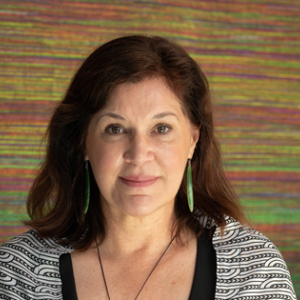
Professor Chellie Spiller
Ētahi atu · Other projects
What are the distinctive dimensions and drivers of innovative Māori leadership and integrated decision making, and how do these characteristics deliver pluralistic outcomes that advance transformative and prosperous Māori economies of wellbeing? A diverse range of Māori leadership practices have contributed to the development of a Māori economy with a…
View projectPromoting Effective Māori Leadership and Decision Making for Prosperous Economies of Wellbeing – Te Whakatairanga i te Ārahitanga Whai Hua me te Māori te Whakatau Kaupapa
Kairangahau · Researchers
-
 Associate Professor Rachel Wolfgramm

Associate Professor Rachel Wolfgramm
After two decades of initiating and leading multiple Sustainability and Māori initiatives locally and internationally, Rachel was appointed Associate Dean Māori, Associate Dean Pacific, and Director of the Dame Mira Szászy Research Centre at the University of Auckland Business School. Rachel was also appointed Director of Ngā Ara Whetu, Center for Climate, Biodiversity and Society along with fellow colleagues Professor Jaqueline Beggs, Professor JR Rowland, Professor David Noon, Professor Said Baroutian, Professor Rod McNaughton, Professor Niki Harre, A/Professor Maria Amoudian… -
Professor Chellie Spiller
Professor Chellie Spiller
Dr Chellie Spiller, of Matawhaiti Iwitea, Ngāti Kahungunu ki Wairoa, is Professor of Management and Leadership, and Associate Dean Māori at the University of Waikato. She was previously a senior lecturer and Associate Dean Māori and Pacific at the University of Auckland Business School. She has over 30 years of corporate experience in tourism, finance and marketing, holding senior executive positions in New Zealand and abroad, and brings this experience to her academic work and leadership and management development programmes. Her research explores how Māori and indigenous businesses create… -
 Professor Paul Tapsell

Professor Paul Tapsell
Professor Tapsell is a graduate of the University of Auckland (MA - Social Anthropology) and University of Oxford (DPhil - Museum Ethnography) and has had a distinguished career working within both the Museum community and also academia. He was Tumuaki/Director Māori of Tamaki Paenga Hira/Auckland Museum from 2000-2008, and was appointed as a Professor of Māori Studies in 2009 when he joined the University of Otago in Dunedin.
He oranga whānau: mahi ngātahi: Whānau livelihoods within the context of work and Māori economies of wellbeing. These groundbreaking works celebrate Māori futures rooted in kaupapa Māori values while fostering pathways for responsible relationships, meaningful lives, and flourishing Indigenous wellbeing economies. By emphasising the central role of whānau…
- Mana Touchstones
- Te Ahunga atu ki ngā Ōhanga Oranga Māori: Towards Māori Economies of Wellbeing
- He Rauhī Kupu
He oranga whānau: mahi ngātahi: Whānau livelihoods within the context of work and Māori economies of wellbeing
He oranga whānau: mahi ngātahi: Whānau livelihoods within the context of work and Māori economies of wellbeing. These groundbreaking works celebrate Māori futures rooted in kaupapa Māori values while fostering pathways for responsible relationships, meaningful lives, and flourishing Indigenous wellbeing economies. By emphasising the central role of whānau, these publications provide actionable insights and inspiration for transformative change in economic and cultural systems.
- Mana Touchstones
- Te Ahunga atu ki ngā Ōhanga Oranga Māori: Towards Māori Economies of Wellbeing
- He Rauhī Kupu
Kairangahau · Researchers
-
Professor Chellie Spiller
Professor Chellie Spiller
Dr Chellie Spiller, of Matawhaiti Iwitea, Ngāti Kahungunu ki Wairoa, is Professor of Management and Leadership, and Associate Dean Māori at the University of Waikato. She was previously a senior lecturer and Associate Dean Māori and Pacific at the University of Auckland Business School. She has over 30 years of corporate experience in tourism, finance and marketing, holding senior executive positions in New Zealand and abroad, and brings this experience to her academic work and leadership and management development programmes. Her research explores how Māori and indigenous businesses create… -
 Professor Jarrod Haar

Professor Jarrod Haar
Professor Jarrod Haar (PhD) is a Professor of Human Resource Management in the Department of Management and has tribal affiliations of Ngati Maniapoto and Ngati Mahuta. In 2018, Professor Haar was appointed as a Member of the Marsden Fund Council and is the Convenor of the Marsden Economics and Human Behavioural Sciences panel. He is a Fellow of the Royal Society of New Zealand Te Apārangi (2020), a Research Fellow of the Australia & New Zealand Academy of Management (since 2012), and Chartered Fellow of the Human Resource Institute of New Zealand (HRINZ). He won the inaugural HRINZ HR… -
 Professor John Reid
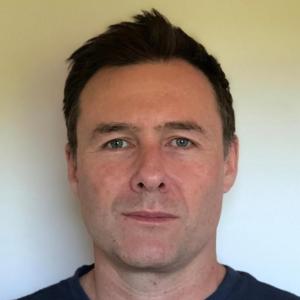
Professor John Reid
Professor John Reid is a researcher whose work focuses on the intersection of sustainability, indigenous knowledge systems, environmental governance, and technological innovation. Based within the Ngāi Tahu Research Centre, his research brings together systems thinking, te ao Māori, and interdisciplinary science to address complex social, economic, and environmental challenges facing Indigenous communities and wider society. His work spans environmental management, regenerative land use, Māori economic development, and the governance of emerging technologies, with particular interests in… -
 Professor Jason Paul Mika
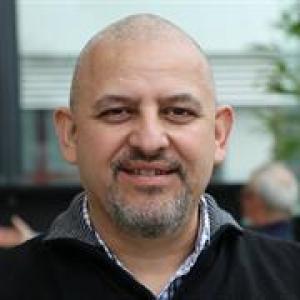
Professor Jason Paul Mika
Jason Paul Mika Ko Ranginui e tū iho nei, ko Papatūānuku e takoto nei, ko te ira tangata kei waenganui i raro i te kaitiakitanga o ngā atua, o te manaakitanga o te Runga Rawa. Tīhei mauri ora! Ko Ngāi Tūhoe, ko Ngāti Awa, ko Te Whakatōhea, ko Ngāti Kahungunu ōku iwi. Ko Jason Mika ahau. I was born in Whakatāne and raised mainly in Rotorua. In November 2024, I was fortunate join Waipapa Taumata Rau University of Auckland as a Professor of Māori Management and Associate Dean Māori in He Manga Tauhokohoko Auckland Business School. My research, teaching, writing, and practice centres on Māori and… -
 Dr Matthew Rout

Dr Matthew Rout
Dr. Matthew Rout's research explores how Indigenous worldviews shape the institutions that govern economic activity, environmental management, and public decision-making. Working at the nexus of political, economic, social, cultural, and environmental domains, his research examines how values, knowledge systems, and social organisation influence the ways societies coordinate collective action and pursue development. A central focus of his work is the application of te ao Māori and mātauranga Māori to contemporary policy challenges, including environmental governance, disaster risk reduction…
This internship created a 3D-printed Tekoteko trophy using a biodegradable harakeke filament to honor the memory of Dr Paora Mato. The project blends traditional Māori carving with contemporary art, sparking conversations about tikanga and cultural practice.
View projectHe Tohu Maumahara ki a Paora Mato
This internship created a 3D-printed Tekoteko trophy using a biodegradable harakeke filament to honor the memory of Dr Paora Mato.
The project blends traditional Māori carving with contemporary art, sparking conversations about tikanga and cultural practice.